
How to Keep Your Closet Organized Long-Term
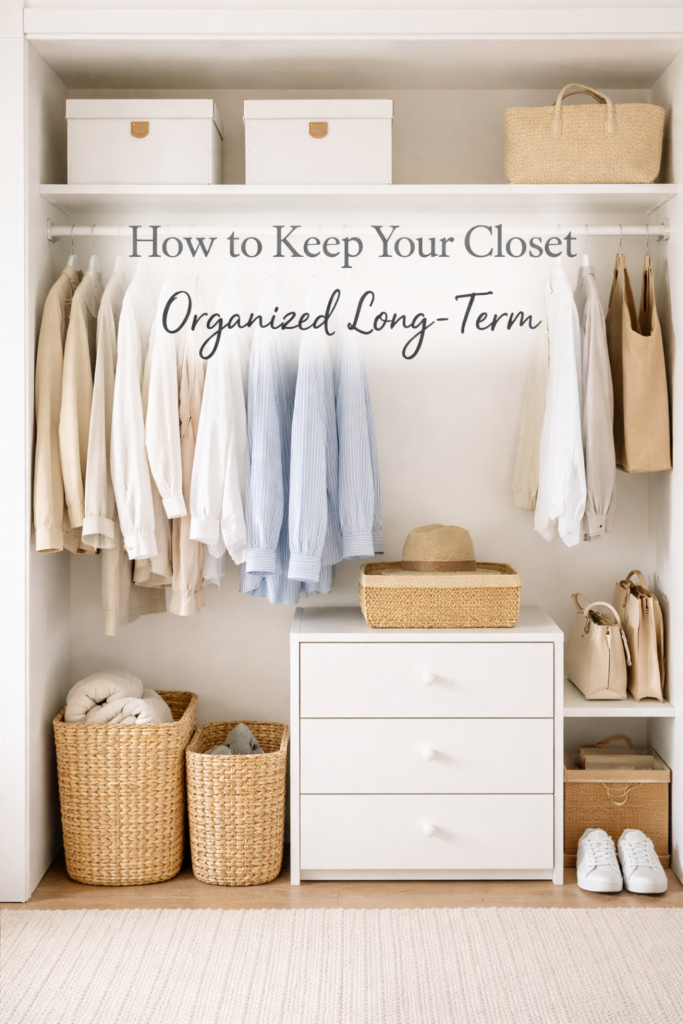
There’s a specific kind of satisfaction that comes from organizing your closet. You step back, look at the clean lines of neatly hung clothes, maybe even color-coordinated, and think, “This time it’s going to stay like this.”
For a while, it does.
Mornings feel smoother. You’re not digging through piles or wondering where that one shirt disappeared to. Everything has a place, and you actually use it.
But then life speeds up. A busy week. Laundry that sits a little too long. An impulse purchase that quietly slips onto the rack. And without realizing it, the structure starts to soften.
Keeping your closet organized long-term isn’t about maintaining that “day one” perfection. It’s about designing a system that survives real life.
Shift From Ideal Wardrobe to Real Wardrobe
One of the biggest mindset changes is letting go of the fantasy closet.
We all have it — the version of ourselves who dresses differently. Maybe more polished, more formal, more adventurous. And sometimes our closet reflects that version instead of who we actually are Monday through Friday.
If you live in comfortable basics but dedicate half your prime space to “someday” outfits, your closet will constantly feel misaligned.
Long-term organization begins with honesty.
Notice what you actually wear in a typical week. Which pieces do you reach for without thinking? Which ones feel effortless?
Those are your core wardrobe. They deserve the easiest access — the center rod, the most reachable shelf, the top drawer.
When your closet supports your real routine instead of your imagined one, maintaining order stops feeling like discipline and starts feeling logical.
Make Editing a Habit, Not an Event
Most people approach decluttering like a dramatic seasonal ritual. Everything comes out. Big decisions get made. There’s a donation pile and maybe a little regret.
And while that can be refreshing, it’s hard to repeat consistently.
A more sustainable approach is quiet editing.
When you put something on and it doesn’t fit quite right, don’t ignore that feeling. When you skip over the same dress for months, pay attention. When something feels worn out or uncomfortable, trust that signal.
Instead of shoving it back into rotation, remove it gently. Keep a small bag tucked away in your closet. Add to it gradually.
This removes the pressure of making dozens of decisions in one day. You’re simply responding in real time.
Over months, this small habit keeps your closet from filling with “almost” pieces — the ones you don’t love but haven’t let go of.
Protect Space Like It’s Valuable
Closet space is limited. But more importantly, it’s functional.
When everything is crammed tightly together, even simple actions become annoying. Sliding a hanger feels like a workout. Folding a sweater feels pointless because the stack topples anyway.
That friction matters.
If putting clothes away feels inconvenient, you’ll delay it. If reaching for something feels like digging, you’ll create small messes just trying to get dressed.
Long-term organization depends on protecting breathing room.
You should be able to move hangers easily. You should see the front of every folded item. You shouldn’t have to shove drawers closed.
That extra bit of space isn’t wasted. It’s what allows the system to stay intact without constant effort.
Understand Your Personal Clutter Patterns
Everyone has patterns.
Some people struggle with holding onto clothes “just in case.” Others buy frequently but rarely remove anything. Some let clean laundry pile up instead of returning it immediately.
If you want your closet to stay organized long-term, it helps to be honest about your pattern.
Do you tend to overbuy basics? Maybe you need a rule about checking what you already own before shopping. Do you avoid letting go of sentimental items? Maybe those pieces need a separate memory box instead of hanging in daily rotation.
Organization isn’t about copying a perfect system from someone else. It’s about building one that compensates for your habits.
When you understand where disorder usually starts, you can gently interrupt it before it spreads.
And that’s the real secret — not constant effort, but small awareness repeated over time.
Build a Simple Weekly Reset
Even the most functional closet drifts a little during the week.
You try on two outfits before deciding. A sweater gets folded quickly instead of neatly. A pair of shoes ends up slightly out of line. None of it feels serious in the moment — and it isn’t. But small shifts, left alone, slowly turn into visible disorder.
This is where a short weekly reset makes all the difference.
It doesn’t need to be an hour-long project. Five or ten quiet minutes is enough. Realign your hangers. Refold anything that’s slouching. Put stray items back where they belong. Return empty hangers to their section.
Think of it like brushing your teeth for your closet. Maintenance, not transformation.
When you do this consistently, you prevent that overwhelming “I need to reorganize everything” feeling from ever showing up.
Store by Category First, Aesthetics Second
There’s nothing wrong with wanting your closet to look nice. In fact, visual order can make it more inviting to use.
But functionality comes first.
Group items by type — all your t-shirts together, all your jeans together, all your jackets in one area. This creates clarity. You know exactly where to look when you need something.
After that, if you enjoy it, organize by color or length. That extra layer can make the space feel calmer and more intentional.
The key is making sure your system reduces friction. When categories are clear, you’re less likely to toss something in the wrong spot. When things are easy to find, you’re less likely to pull everything out in frustration.
The easier it is to maintain, the longer it lasts.
Keep Laundry Inside the System
Laundry is often where organization quietly breaks down.
Clothes sit in a basket for days. Clean items get draped over a chair. You tell yourself you’ll fold them later, and later turns into the weekend.
But every time clothing stays outside the closet, it interrupts the system you built.
Try linking laundry to a specific rhythm. Maybe you fold while listening to a podcast. Maybe you put clothes away immediately after drying, even if it takes just a few extra minutes.
The important part is closure. Clothes should complete the full cycle — worn, washed, dried, returned.
When laundry flows smoothly, your closet stays stable.
Be Intentional About New Additions
New clothes are exciting. They bring novelty, possibility, maybe even a little boost of confidence.
But long-term organization depends on boundaries.
Before buying something new, pause. Do you already own something similar? Does it fit seamlessly into your current wardrobe? Can you picture wearing it in at least three different situations?
If the answer feels uncertain, give yourself time.
And when something new does come in, decide what it replaces. Not because you’re forcing minimalism, but because you’re protecting balance.
Closets rarely become chaotic from one big purchase. It’s the slow accumulation of “just one more” that fills the space.
Accept That It Will Never Be Frozen in Time
An organized closet isn’t a finished product. It evolves.
Your style changes. Your body changes. Your lifestyle shifts. What worked last year might not make sense this year.
Instead of seeing that as failure, see it as normal.
Long-term organization isn’t about keeping everything exactly the same. It’s about adjusting thoughtfully instead of reacting in panic when things feel out of control.
Recommended Products
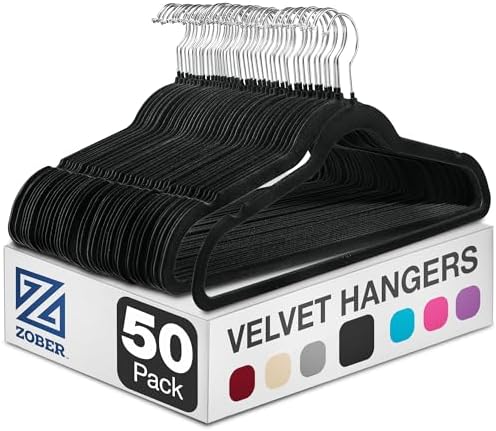
Slim Velvet Hangers
Switching to slim, non-slip velvet hangers instantly creates more space and visual consistency inside your closet. They keep clothes from sliding off and allow garments to hang evenly, which makes the entire rack look cleaner and easier to manage. A uniform set of hangers also reduces bulk and gives you extra breathing room without removing any clothing.


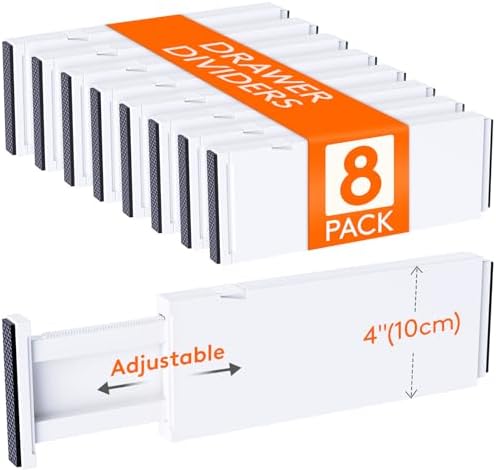
Drawer Dividers
Drawer dividers help prevent small items like socks, underwear, and accessories from turning into cluttered piles. Adjustable dividers allow you to customize each drawer based on your needs, keeping categories clearly separated. When everything has a defined section, putting laundry away becomes faster and less frustrating.



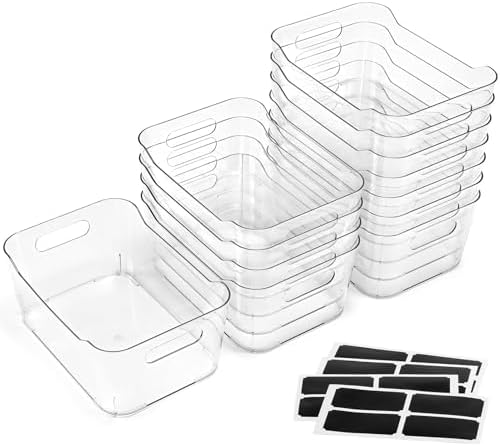
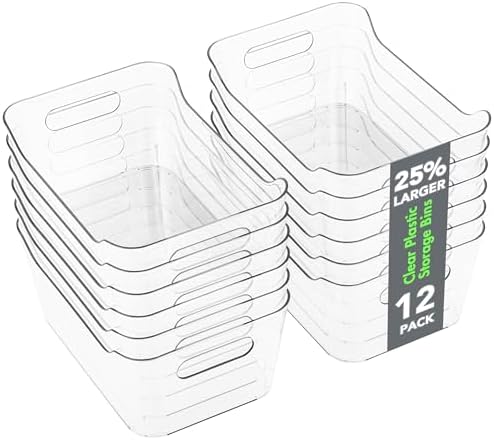
Clear Shelf Bins
For higher shelves that are harder to reach, clear storage bins keep items contained and visible. They’re especially useful for seasonal clothing, scarves, or workout gear. Instead of stacking loose piles that topple over, bins create structure and make it easier to pull items down without disrupting the entire shelf.


Over-the-Door Organizer
An over-the-door organizer is perfect for maximizing unused vertical space. It can hold shoes, accessories, small bags, or even folded items. This solution keeps frequently used pieces accessible without crowding your main hanging area.


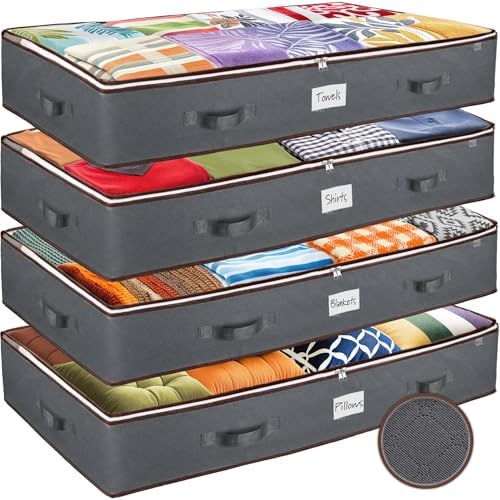
Under-Bed Storage Containers
If closet space is limited, under-bed storage containers provide extra room for off-season clothing. Choose low-profile, zippered containers that protect garments from dust while keeping them easy to slide in and out. Rotating seasonal items helps maintain breathing space inside your main closet year-round.



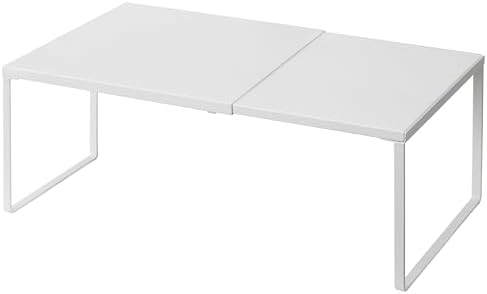
Closet Shelf Risers
Shelf risers help you make better use of vertical space inside your closet. They allow you to stack folded items in separate layers instead of piling everything into one tall, unstable stack. This small upgrade keeps sweaters and jeans organized and easy to access.


Clothing Rack or Freestanding Wardrobe
For closets that feel overcrowded, a minimalist clothing rack or freestanding wardrobe can act as an extension of your storage. It works well for daily essentials or outfit planning, while reducing pressure inside your main closet. Keeping overflow organized outside the closet is often better than forcing everything into a tight space.


Final Thoughts
Keeping your closet organized long-term has less to do with strict rules and more to do with rhythm.
Small edits. Gentle resets. Honest decisions. Space that reflects who you are today — not who you were five years ago.
When your closet feels aligned with your real life, it stops being a source of stress. Getting dressed becomes simple again. Maintenance feels light instead of exhausting.
And over time, you’ll realize something important: you’re no longer organizing from scratch every few months.
You’re simply maintaining a system that was built to support you, not impress anyone else.