Daily Habits That Keep Small Spaces Organized
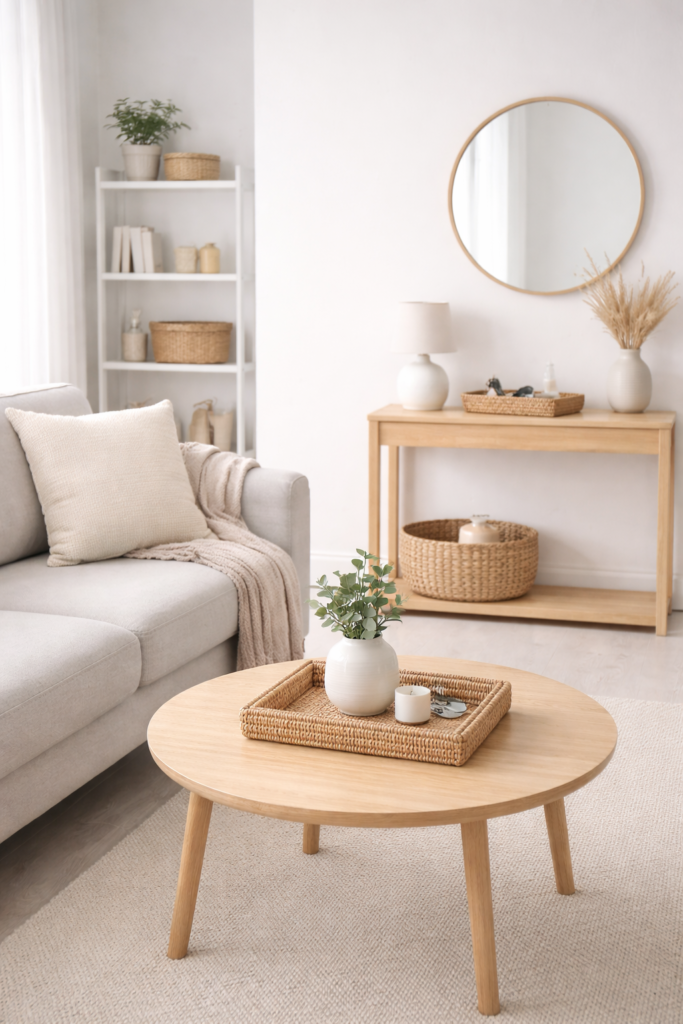
Keeping a small space organized isn’t really about storage bins, shelves, or expensive furniture.
It’s about what you do every day.
Because in a small apartment, studio, or compact home…
👉 Clutter doesn’t build slowly.
👉 It builds overnight.
The good news?
You don’t need hours of cleaning.
Just a few simple habits can keep your space consistently under control.
1️⃣ Reset the Room Before Bed
This habit is simple, almost boring…
…but incredibly powerful.
A 5-minute nightly reset can completely change how your small space feels day after day.
What a reset actually means (not deep cleaning)
We’re not talking about scrubbing floors or reorganizing closets.
Just small actions:
✔ Put items back where they belong
✔ Fold blankets or throws
✔ Clear coffee tables
✔ Wash or stack dishes
✔ Straighten pillows
✔ Toss obvious trash
Think of it as “closing the day.”
Why nighttime is the perfect moment
At night:
👉 You already see the day’s mess
👉 Tomorrow’s stress hasn’t started
👉 Small tasks feel manageable
And most importantly…
👉 You wake up to calm instead of chaos.
The psychological effect is real
Starting your morning with:
✨ A clear kitchen counter
✨ No random clutter
✨ A tidy sofa
…creates a subtle but noticeable sense of control.
Especially in small spaces where clutter feels amplified.
Pro tip
Set a timer for 5 minutes.
When the timer ends → stop.
Consistency beats perfection.
2️⃣ Follow the “One-Minute Rule”
If something takes less than a minute…
👉 Do it immediately.
No negotiations. No “later.”
Tiny tasks that qualify
✔ Hanging a jacket
✔ Putting shoes away
✔ Returning a remote
✔ Wiping a spill
✔ Throwing away packaging
✔ Putting dishes in the sink
✔ Folding a blanket
These actions feel insignificant…
…but they prevent clutter from snowballing.
Why clutter builds so fast
Because of micro-delays:
“I’ll do it later.”
“I’m tired.”
“It’s just one thing.”
One thing × 20 times per day = visible mess.
Why this rule works beautifully in small spaces
Small homes don’t have room to “absorb” temporary mess.
Every item left out is noticeable.
👉 Immediate action keeps surfaces clear
👉 Reduces weekend cleaning marathons
👉 Prevents visual overload
Mindset shift
Treat small tasks like brushing your teeth.
Automatic. Non-negotiable.
3️⃣ Never Leave a Room Empty-Handed
This habit turns everyday movement into effortless maintenance.
Every time you walk to another room…
👉 Carry something that belongs there.
Real-life examples
Leaving the living room:
✔ Take that coffee mug
✔ Grab empty glasses
✔ Pick up chargers
✔ Return books
Going to the bedroom:
✔ Bring folded laundry
✔ Put away clothes
✔ Take misplaced items
Heading to the kitchen:
✔ Toss trash
✔ Return dishes
Why this habit is so effective
Because you’re not adding extra cleaning time.
You’re stacking tidying onto actions you already perform.
👉 Movement becomes productive
👉 Clutter never settles
👉 Rooms stay naturally balanced
Why this matters more in small homes
In compact spaces:
✖ Clutter spreads faster
✖ Rooms overlap visually
✖ Mess feels overwhelming quickly
Constant micro-corrections prevent buildup.
Pro tip
Make it a personal rule:
“No empty hands.”
4️⃣ Assign Everything a “Home”
If an item doesn’t have a designated place…
It will drift endlessly.
The hidden cause of everyday mess
Not laziness.
But hesitation:
“Where should this go?”
“I’ll decide later.”
Later = item stays out.
Why this creates chaos
Because undefined items:
👉 Pile up on counters
👉 Migrate between rooms
👉 Create random clutter zones
Small spaces can’t handle “homeless” objects.
Fix the problem once
Assign clear destinations:
✔ Keys → tray or hook
✔ Bags → wall hook
✔ Mail → basket
✔ Remote → drawer
✔ Shoes → rack
✔ Blankets → basket
Decision made → friction removed.
Why this feels life-changing
Because cleanup becomes:
👉 Faster
👉 Easier
👉 Almost automatic
No thinking required.
Pro tip
If you repeatedly ask “Where do I put this?”
👉 That item needs a home.
5️⃣ Do Small Cleanups During “Dead Time”
You don’t need extra hours.
Just use moments that already exist.
Perfect “hidden cleaning windows”
✔ Waiting for coffee to brew
✔ Microwave running
✔ Brushing teeth
✔ Phone charging
✔ TV ads
✔ On hold during a call
These tiny pockets add up fast.
Micro-tasks that work perfectly
✔ Wipe bathroom sink
✔ Clear kitchen counter
✔ Fold laundry
✔ Toss expired products
✔ Organize one drawer
✔ Put items back
Why this habit works so well
Because:
👉 It removes the need for long cleaning sessions
👉 Prevents overwhelm
👉 Keeps clutter from accumulating
Small spaces thrive on constant light maintenance.
Why this feels easier mentally
You’re not “cleaning.”
You’re just using waiting time efficiently.
Pro tip
Pick one task per pause.
Not five.
Small wins keep momentum alive.
6️⃣ Control Paper Clutter Immediately
Paper is one of the fastest ways to make a small space feel messy.
Bills, receipts, packaging inserts, random notes…
They pile up quietly — then suddenly take over tables, counters, and desks.
Why paper clutter feels so overwhelming
Because paper:
👉 Spreads easily
👉 Stacks quickly
👉 Looks chaotic even in small amounts
👉 Rarely gets dealt with “later”
In a small space, even a thin pile can make the entire room feel disorganized.
Adopt the “touch it once” rule
When paper enters your home:
✔ Trash it
✔ File it
✔ Scan it
✔ Act on it
But don’t stack it.
Stacks turn into permanent clutter zones.
Simple tools that help
✔ Small mail tray
✔ Drawer folder
✔ Document organizer
✔ Recycling bin nearby
👉 The easier it is to process paper, the less it accumulates.
Reality check
Most paper doesn’t need saving.
Old receipts, unnecessary manuals, random flyers…
Let them go.
7️⃣ Adopt a “One In, One Out” Mindset
Small spaces don’t forgive constant accumulation.
Every new item competes for limited storage and visual space.
How clutter sneaks in
Not through big purchases.
But through steady trickles:
✔ Clothes
✔ Decor
✔ Kitchen gadgets
✔ Beauty products
✔ Random “useful” items
The balancing rule
Bring something new into your space?
👉 Remove something old.
New shirt → donate one
New mug → discard one
New pillow → rotate one out
Why this habit protects your space
Because organization fails when volume keeps increasing.
Even great storage systems have limits.
👉 Prevents overcrowding
👉 Keeps drawers functional
👉 Reduces visual heaviness
Mindset shift
You’re not “losing” items.
You’re maintaining breathing room.
8️⃣ Keep Flat Surfaces Mostly Empty
In small homes, surfaces act like magnets.
Tables, counters, dressers, nightstands…
They collect clutter faster than anywhere else.
Why surfaces matter so much
Because visible clutter:
👉 Makes rooms feel smaller
👉 Creates visual stress
👉 Signals “mess” instantly
Even if everything else is organized.
The “intentional surface” rule
Each surface should contain:
✔ Only essentials
✔ Or carefully chosen decor
Not random storage overflow.
Simple ways to maintain this
✔ Use trays sparingly
✔ Store daily items
✔ Limit decorative objects
✔ Reset surfaces daily
Visual trick
Clear surfaces = larger-feeling space.
It’s one of the fastest transformations you can make.
9️⃣ Do a Weekly 10-Minute Declutter
You don’t need marathon cleaning sessions.
Just a short weekly reset prevents chaos from creeping back.
Why weekly maintenance works
Because small spaces spiral quickly when ignored.
Tiny messes grow into big problems surprisingly fast.
What to target in 10 minutes
✔ Random piles
✔ Junk drawers
✔ Bathroom counters
✔ Entryway clutter
✔ Expired items
✔ Misplaced objects
Why this feels manageable
10 minutes feels:
👉 Easy to start
👉 Hard to avoid
👉 Sustainable long-term
Instead of overwhelming.
Pro tip
Set a timer.
Work fast.
Stop when it rings.
🔟 Accept “Maintained,” Not “Perfect”
Perfection is exhausting.
And completely unrealistic in real homes.
The healthier goal
Not flawless.
But functional.
✔ Mostly tidy
✔ Easy to reset
✔ Comfortable to live in
Why this mindset prevents burnout
Because chasing perfection:
✖ Creates frustration
✖ Leads to procrastination
✖ Makes cleaning feel heavy
Consistency beats intensity.
Truth about organized homes
They’re not always perfect.
They’re regularly maintained.
Freedom shift
Your home should feel:
✨ Calm
✨ Livable
✨ Under control
Not like a museum exhibit.
Recommended Products That Support Daily Organization Habits
Daily habits are the real backbone of an organized home — but the right tools make those habits easier to maintain.
You don’t need dozens of organizers.
Just a few practical, flexible items can remove friction and keep clutter from creeping back.
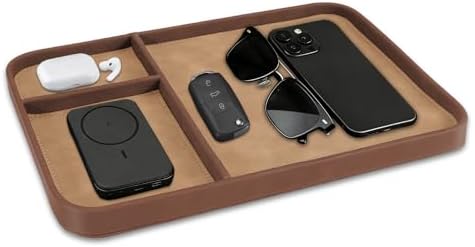
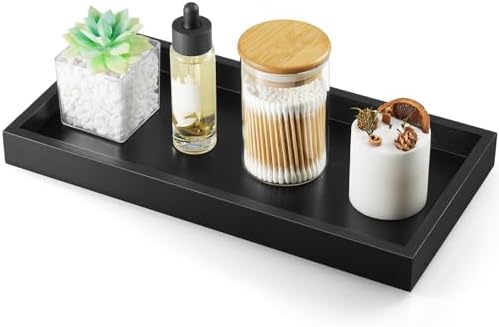
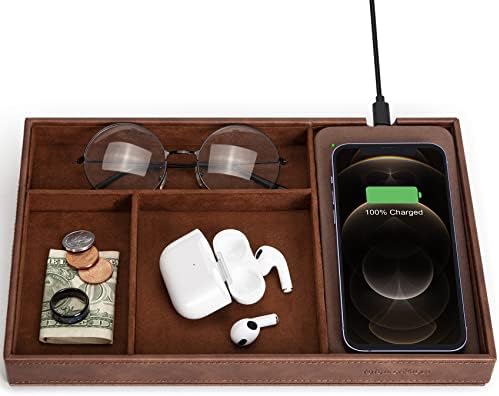
Catch-All Tray (Entryway / Nightstand / Desk)
Small items love to wander.
Keys, wallets, earbuds, loose change — they easily become visual clutter.
A simple tray:
✔ Creates an instant “drop zone”
✔ Prevents random piles
✔ Makes essentials easy to find
✔ Keeps surfaces looking intentional
Perfect for entry tables, dressers, or bedside areas.

Adhesive Hooks
Hooks are one of the most versatile organization tools.
Use them for:
✔ Bags
✔ Jackets
✔ Towels
✔ Headphones
✔ Accessories
They’re especially great for renters since no drilling is required.
👉 Tiny upgrade, huge daily impact.


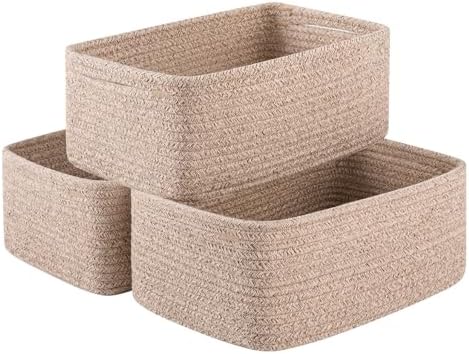
Small Storage Baskets
Baskets are ideal for containing everyday chaos.
Great for:
✔ Blankets
✔ Remotes
✔ Chargers
✔ Toiletries
✔ Random loose items
They help maintain the “everything has a home” rule.



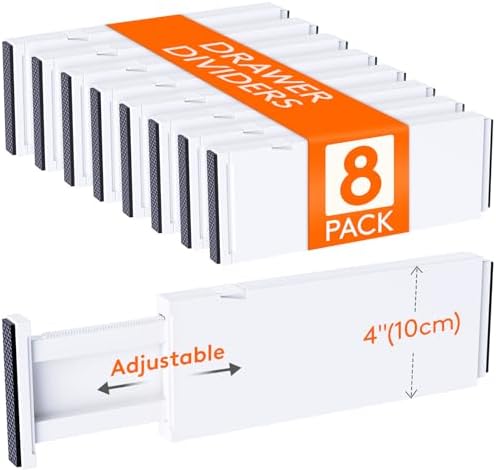
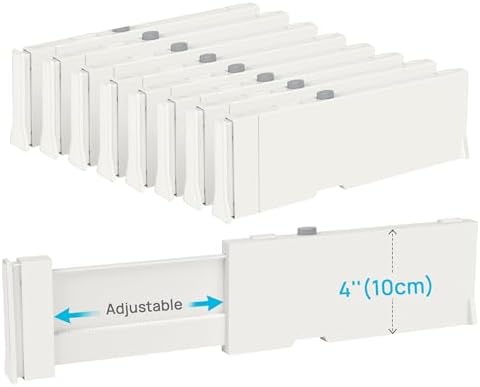
Drawer Dividers
Drawers without structure turn messy fast.
Dividers help:
✔ Separate categories
✔ Prevent clutter buildup
✔ Improve visibility
✔ Maximize small drawer space
Perfect for desks, bathrooms, kitchens, and closets.


Slim Laundry Hamper
Clothes on chairs = instant clutter.
A compact hamper:
✔ Encourages daily use
✔ Prevents clothing piles
✔ Fits tight corners
✔ Keeps bedrooms tidy
Look for narrow or foldable designs for small spaces.


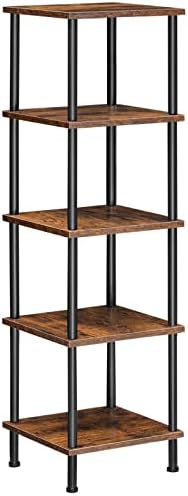
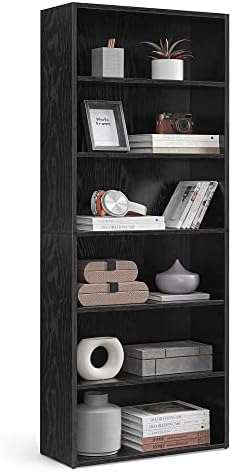
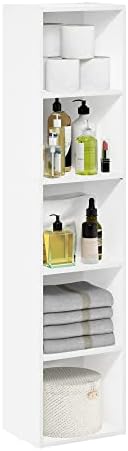
Vertical Shelving Unit
When floor space is limited, think upward.
Vertical shelves:
✔ Add storage without crowding
✔ Keep items visible
✔ Reduce surface clutter
✔ Work in bathrooms, bedrooms, kitchens
👉 One of the smartest upgrades for compact homes.

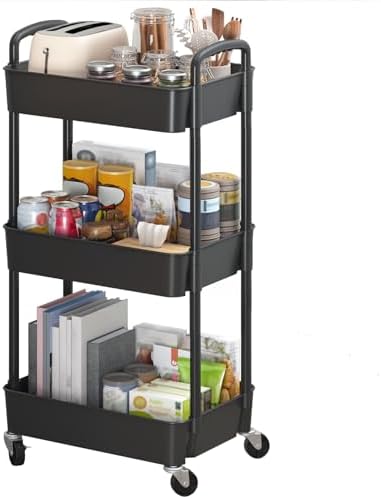
Rolling Storage Cart
Perfect for flexible storage.
Use it for:
✔ Office supplies
✔ Bathroom products
✔ Kitchen items
✔ Beauty/skincare
✔ Cleaning supplies
Bonus: movable and adaptable.



Final Thought
Small spaces don’t require more effort.
They require consistent, tiny actions.
Daily habits beat occasional deep cleans every time.
Because when clutter never gets the chance to build…
👉 Organization becomes easy.
👉 Cleaning becomes lighter.
👉 Your home feels calmer.