
How to Organize Clothes in a Tiny Apartment Closet

Living with a tiny closet can feel like trying to fit your whole life into a suitcase that never quite closes. If your apartment closet is packed, messy, or just plain frustrating, you’re not alone. The good news? You don’t need a bigger closet — you just need a smarter system.
Here’s how to make even the smallest closet work for your clothes and your daily routine.
Take Everything Out (Yes, Everything)
It might feel dramatic — and a little overwhelming — but the most effective way to organize a tiny apartment closet is to start with a completely empty space. Take out every single item: clothes, shoes, bags, hangers, boxes, and even things that somehow ended up there that aren’t clothing at all.
Seeing everything laid out on your bed or floor gives you a reality check. Most of us don’t realize how many clothes we own until they’re all in one giant pile. This moment is important, because it shifts your mindset from “I need more space” to “I need fewer, better things in this space.”
Before anything goes back into the closet, go piece by piece and ask:
- Do I wear this regularly?
- Does this fit my body and my current lifestyle?
- Do I feel good when I wear it?
- Would I choose this again if I saw it in a store today?
If the answer is no, it’s taking up valuable room in a closet that simply can’t afford dead weight. Create clear piles: keep, donate, and maybe. Be strict with the “maybe” pile — in small spaces, indecision becomes clutter very quickly.
This step alone can free up a surprising amount of room and makes every other organizing step much easier.
Sort Clothes by Category, Not Just Type
Once you’ve decided what you’re keeping, resist the urge to just throw everything back onto hangers. A tiny closet works best when it reflects how you actually get dressed in real life.
Instead of organizing only by clothing type (all shirts together, all pants together), group items by function and lifestyle. Think in terms of how you use your clothes:
- Work or school outfits
- Everyday casual wear
- Dressy or special-occasion clothes
- Lounge and sleepwear
- Workout clothes
- Outerwear like jackets and coats
This approach makes your daily routine smoother. When you’re getting dressed for work, you don’t have to dig past party outfits. When you’re staying home, you can quickly find your comfortable pieces.
Within each category, you can still organize by type or color if you like, but function should come first. In a tiny closet, visibility and accessibility matter more than aesthetic perfection.
If you live in a place with changing seasons, this is also the moment to rotate. Keep only the current season’s main categories in your closet and store the rest elsewhere. This prevents your limited space from being overcrowded year-round.
Use Matching Slim Hangers
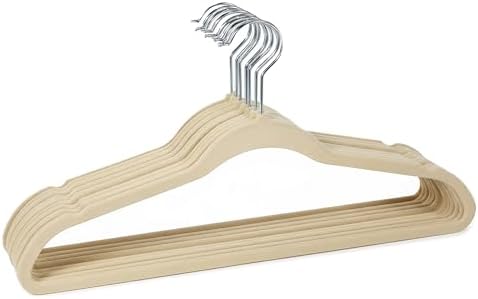
Hangers might seem like a small detail, but in a tiny apartment closet, they make a huge difference. Bulky plastic or wooden hangers eat up more horizontal space than you think. Switching to slim, non-slip hangers can instantly give you extra room without removing a single piece of clothing.
Slim hangers allow clothes to sit closer together while still hanging properly. This is especially helpful for lightweight items like shirts, blouses, and dresses, which don’t need heavy-duty support.
Matching hangers also improve visibility. When everything hangs at the same height and depth, your closet looks less chaotic, and you can scan your clothes more easily. That means fewer forgotten items and fewer “I have nothing to wear” moments.
Another bonus: slim, non-slip hangers help prevent clothes from sliding off and ending up in a pile on the closet floor — something that happens far too often in tight spaces. Keeping things off the floor is key when every inch counts.
Maximize Vertical Space
In a tiny closet, the real unused potential is often vertical space. Most people focus only on the hanging rod and maybe the top shelf, but there’s usually much more room to work with if you think upward and downward.
Start with the top shelf. Instead of loosely piling items, use bins, baskets, or small boxes to contain things like bags, seasonal clothing, or accessories. Containers keep stacks from collapsing and make it easier to pull one category down without disturbing everything else.
Next, look below your hanging clothes. Is there space between the bottom of your garments and the floor? That area is perfect for a low-profile shoe rack or storage bins.
You can also double your hanging capacity by adding a second hanging rod, especially for shorter items like shirts, folded pants on clip hangers, or skirts. This instantly creates two levels of hanging space instead of one.
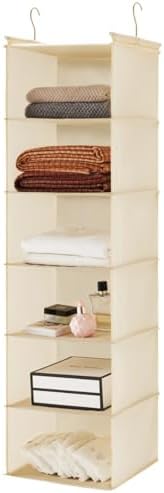
Fabric hanging shelf organizers are another great option. They hang from the rod and create vertical cubbies for folded clothes like sweaters, jeans, or handbags. Instead of stacking these on a shelf where they topple over, you give them their own structured space.
When you start viewing your closet in vertical zones — top, middle, and bottom — you’ll realize you can store much more without making it feel crammed.
Store Shoes Strategically (Not Just Wherever They Fit)
Shoes can quietly take over a tiny closet if you don’t give them a defined home. Instead of letting them scatter across the floor, treat shoe storage as its own mini system.
Start by choosing only the pairs you actually wear this season. Be honest — those “someday” heels or worn-out sneakers are using space your everyday shoes need. Once you narrow it down, think vertically and in layers.
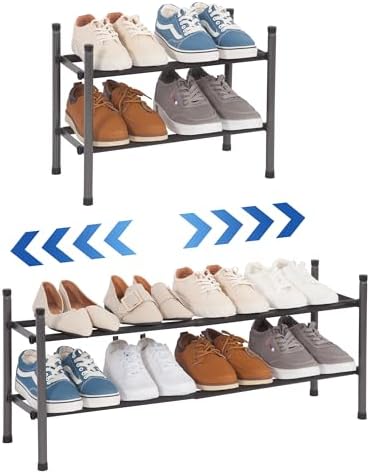
A low-profile shoe rack is ideal for the closet floor because it keeps pairs visible and easy to grab. If floor space is limited, consider a stackable rack so you build upward instead of outward. Another option is a hanging shoe organizer on the closet door or side wall — great for flats, sandals, and lightweight sneakers.
Boots can be tricky. To save space, store them upright using boot shapers or by stuffing them with rolled magazines so they don’t collapse and take up extra width. If they’re off-season, move them out of the closet entirely and store them under the bed or on a high shelf.
The goal is simple: when shoes have a clear, contained space, the whole closet instantly feels calmer and more functional.
Use Small Containers for Accessories
Accessories are often the reason a closet looks messy even when clothes are neatly hung. Belts, scarves, hats, and small bags tend to get shoved into corners — and once they’re out of sight, they’re basically forgotten.
Instead, give accessories boundaries using small containers and organizers. Baskets, clear bins, or fabric boxes work well on shelves because they group similar items together while still looking tidy.
You can organize by type:
- One bin for scarves
- One for belts
- One for hats or beanies
- One for small handbags or clutches
For frequently used items, visibility matters. Clear containers or open baskets make it easier to see what you have, which helps you actually use your accessories instead of buying duplicates.
Hooks are also incredibly useful. The inside of the closet door or empty wall space can hold adhesive or over-the-door hooks for belts, crossbody bags, or everyday hats. This keeps them accessible without taking up shelf or rod space.
When accessories are contained and categorized, you eliminate those small, messy piles that make a tiny closet feel overcrowded.
Rotate Seasonally to Prevent Overcrowding
One of the biggest mistakes in small closets is trying to store all seasons at once. Heavy coats, summer dresses, sweaters, and shorts fighting for the same rod space will always feel cramped.
Instead, treat your closet like a working wardrobe, not permanent storage.
Keep only the current season’s main clothing in your closet. As seasons change, do a simple rotation:
- Move off-season clothes into storage bins, suitcases, or vacuum bags
- Store them under the bed, on high shelves, or in another room if possible
- Bring forward the clothes you’ll actually be wearing in the coming months
This rotation doesn’t just create space — it also makes getting dressed easier. You see only what’s relevant right now, which reduces visual clutter and decision fatigue.
Seasonal rotation is also a great opportunity to reassess your clothes. When you pull items back out months later, it’s easier to notice what you didn’t miss wearing. That’s often a sign it’s time to let it go.
For a tiny apartment closet, this habit is a game-changing long-term strategy.
Build Simple Habits That Keep It Organized
Even the best closet system falls apart without small daily habits to support it. The good news? Maintenance doesn’t have to be complicated.
Start with the “one-minute reset.” At the end of the day or week, spend just a minute putting things back where they belong — hang clothes properly, return accessories to their bins, and put shoes back in their spot. Tiny resets prevent big messes.
Another powerful rule is one in, one out. When you buy a new clothing item, choose one to donate or remove. In a tiny closet, space is limited, so every new piece should earn its place.
Avoid the “chair pile” habit — where worn-but-not-dirty clothes end up draped over furniture. Instead, designate a small hook or a specific section of the closet for items you plan to re-wear. This keeps your room looking tidier and your closet system intact.
Finally, do a quick closet check every few months. Slide hangers to one side and notice what hasn’t been touched. If you didn’t wear it all season, it may not deserve space in a closet that’s working hard for you.
Organization in a tiny closet isn’t about perfection — it’s about creating a system that’s easy enough to maintain in real life. When your habits match your space, staying organized becomes much less stressful.
Recommended Products to Maximize a Tiny Closet
You don’t need a full closet makeover to make a big difference. A few smart, space-saving tools can help you use every inch more efficiently.
Slim, Non-Slip Hangers
These take up much less space than bulky plastic or wooden hangers, allowing you to fit more clothes on the same rod. The non-slip surface also helps keep silky or lightweight fabrics from sliding off.



Hanging Shelf Organizer
This is perfect for folded clothes like sweaters, jeans, or t-shirts. It adds vertical storage without needing extra furniture and keeps stacks from toppling over.


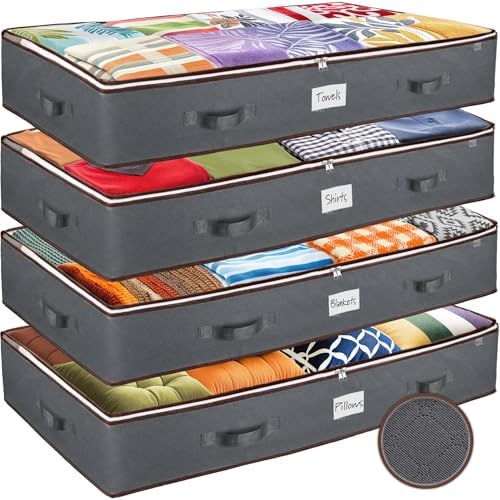
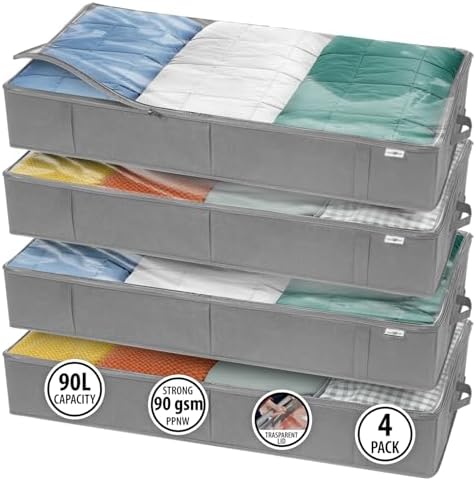
Under-Bed Storage Bins
Out-of-season clothes, extra bedding, or rarely worn items can be stored under the bed to free up valuable closet space. Look for low-profile bins with lids to keep dust away.


Over-the-Door Hook Rack
Great for bags, jackets, scarves, or tomorrow’s outfit. It uses space that would otherwise go unused and keeps frequently worn items within easy reach.


Small Storage Baskets or Fabric Bins
Ideal for accessories like belts, hats, or small handbags. They keep shelves looking tidy while preventing small items from turning into clutter.


Stackable Shoe Rack
Instead of a pile of shoes on the floor, a stackable rack keeps pairs visible and organized while using vertical space efficiently.



Final Thoughts
A tiny apartment closet can feel limiting, but it can absolutely be functional and stress-free. When you keep only what you truly wear, use vertical space wisely, and give everything a clear home, even the smallest closet can support your daily routine.
You may not have more space — but with the right setup, it can finally feel like enough.
As an Amazon Associate, I earn from qualifying purchases.