How to Organize Pots and Pans Without Wasting Space
Pots and pans are some of the hardest kitchen items to organize. They’re bulky, oddly shaped, and seem to multiply when you’re not looking. Stack them the wrong way, and every time you need one, you end up pulling out half the cabinet.
The goal isn’t just to store them — it’s to make them easy to grab without creating a noisy, frustrating mess. With a few smart adjustments, you can keep your cookware organized while actually freeing up space.
Stop Stacking Them in One Big Pile
Stacking pots and pans in one tall pile might seem like the easiest solution, but it’s usually the reason cabinets feel chaotic. Every time you need the pan at the bottom, you end up lifting heavy cookware, clanking metal together, and rearranging everything just to cook one meal.
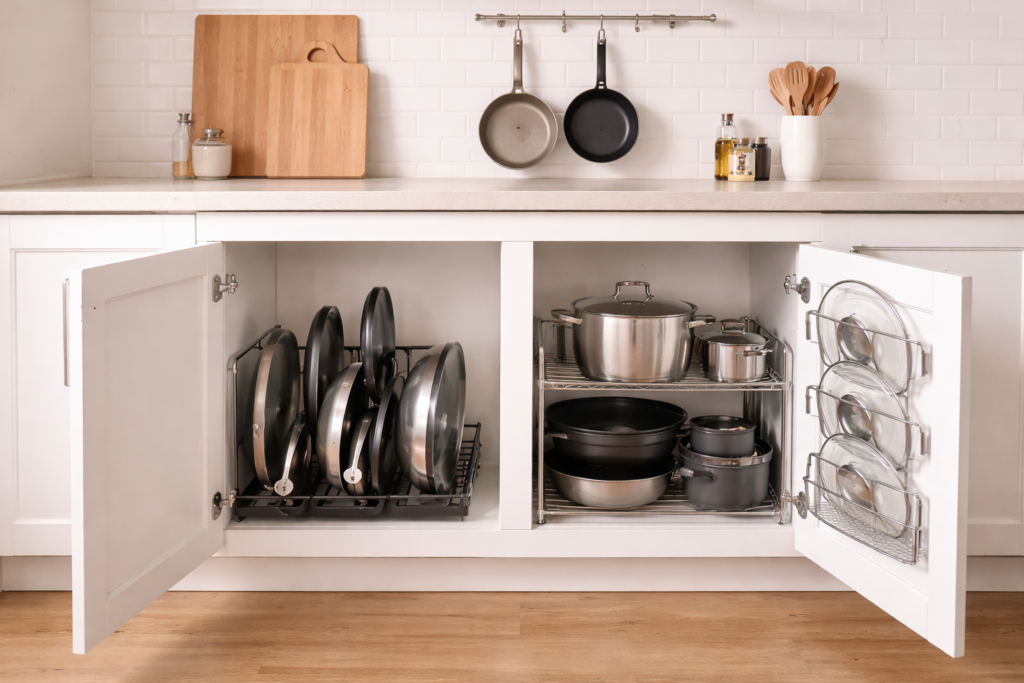
Storing pans vertically is a game changer. When pans are separated, you can grab exactly what you need without disturbing the rest. A simple vertical pan organizer rack inside your cabinet creates individual slots for each pan, which prevents scratching and keeps everything visible. It also makes putting pans away easier because each piece has a designated space.
If you don’t want to buy a specific organizer, tension rods can work just as well. Place them upright inside a cabinet to create dividers, and slide pans between them. It’s an inexpensive solution that instantly improves access and keeps stacks from toppling over.
Another benefit of vertical storage is airflow. When pans are tightly stacked, moisture can get trapped, especially if they weren’t fully dry before being stored. Storing them upright helps them stay dry and in better condition over time.
Helpful tip: Put your most-used pans toward the front of the cabinet so they’re the easiest to grab during busy cooking moments.
Store Lids Separately
Lids are often the most frustrating part of organizing cookware. Their round shape and bulky handles make them hard to stack neatly, and they tend to slide around or fall over whenever you move something nearby.
Storing lids separately from pots and pans can instantly make your cabinets feel more manageable. When lids are kept upright in a rack or divider, you can see every size at a glance instead of digging through a tangled pile. This also prevents the constant clattering noise that happens when stacked lids shift around.
One of the easiest solutions is a lid organizer that sits inside the cabinet or mounts to the inside of a cabinet door. This uses vertical space that usually goes unused. If you prefer a no-install option, a simple wire file organizer (the kind used for folders) works surprisingly well for holding lids upright.
Separating lids also protects them. When they’re stacked, the glass or metal surfaces can get scratched, and handles can loosen over time from constant shifting. Giving them their own space helps extend their lifespan.
Helpful tip: Group lids by size, keeping the ones that match your most-used pots in the most accessible spot.
Use the Space Above Your Cabinets
If your kitchen cabinets don’t reach the ceiling, that upper gap can become valuable storage space — especially for large or rarely used cookware. Instead of letting that area collect dust, you can turn it into a practical storage zone.
Large stockpots, roasting pans, pressure cookers, or specialty items like canning pots are perfect candidates for high storage. Since you don’t use them every day, keeping them up high frees up your main cabinets for the pans you reach for regularly.
To keep things looking neat, use matching baskets or bins. This prevents your kitchen from looking cluttered and makes it easier to pull items down safely. Covered bins also help protect cookware from grease and dust that can build up over time.
Just be mindful of safety. Only store lightweight or infrequently used items above cabinets, and use a sturdy step stool when accessing them.
Helpful tip: Label the bins if they’re not transparent, so you don’t have to pull everything down just to find one item.
Install a Pull-Out Cabinet Organizer
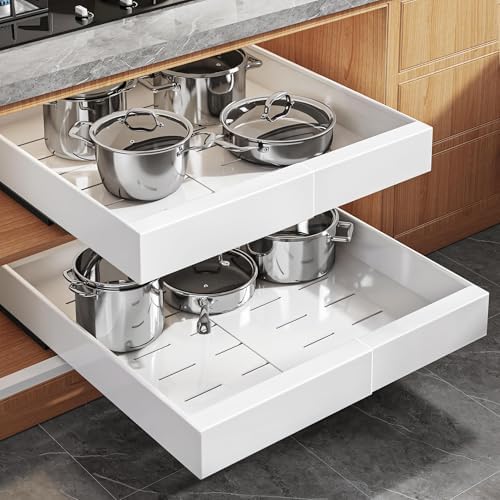
Deep cabinets can make even a well-organized kitchen feel frustrating. Pots and pans stored in the back often get forgotten simply because they’re hard to reach. A pull-out cabinet organizer solves this problem by bringing everything forward.
Sliding shelves allow you to see and access every pot and pan without crouching down or reaching into dark corners. This is especially helpful for heavy items like Dutch ovens, cast iron skillets, or large saucepans that can be awkward to lift from the back of a cabinet.
Pull-out systems also help you use vertical space more efficiently. Instead of stacking cookware high and creating unstable piles, you can spread items out across sliding levels that are easy to access.
For renters or those who don’t want permanent changes, there are removable or tension-based pull-out organizers that don’t require drilling. Even a simple pull-out basket can make a big difference in usability.
Helpful tip: Measure your cabinet interior carefully before buying any pull-out system to make sure it fits around hinges and door frames.
Hang Pans on a Wall or Rail
If cabinet space is limited, your walls can step in and do some of the heavy lifting. Hanging pots and pans on a wall-mounted rail or peg system not only frees up cabinet space but can also make your kitchen more functional while you cook.
Keeping frequently used pans within arm’s reach saves time and reduces the need to constantly open and close cabinets. A sturdy rail with S-hooks can hold frying pans, small saucepans, and even utensils. This works especially well near the stove, where you naturally reach for cookware while cooking.
The key is to be selective. Hanging every single pot and pan can quickly make the space feel cluttered. Instead, display only the pieces you use most often and store the rest elsewhere. Choosing cookware with a similar finish or color can also make the setup look more cohesive and intentional.
Wall storage can also help protect your pans. When they’re hanging individually, they’re less likely to get scratched compared to being stacked inside a cabinet.
Helpful tip: Make sure the wall anchors or mounting hardware are strong enough to support the weight of your cookware, especially cast iron pieces.
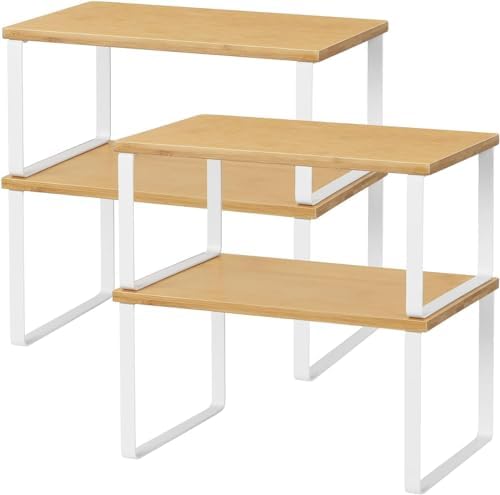
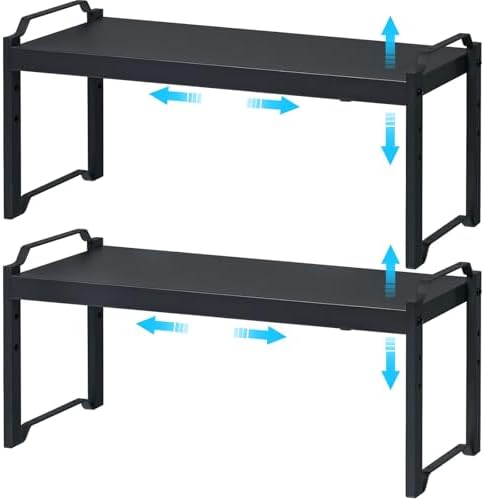
Use Shelf Risers to Double Cabinet Space
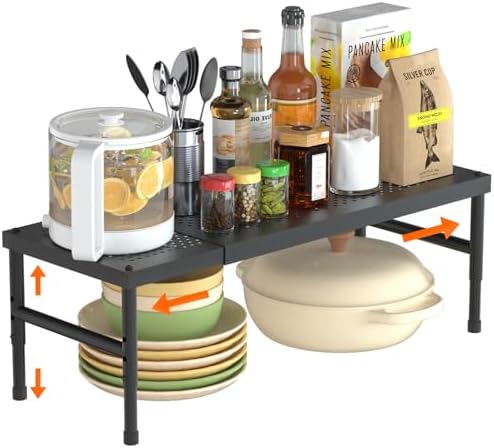
Cabinets often have a lot of unused vertical space between shelves. Shelf risers help you take advantage of that gap by creating an extra level for storage.
Instead of stacking smaller pans or lids in one tall, unstable pile, you can place larger pots on the bottom and use the riser to store lighter items above them. This makes everything easier to see and access while reducing the risk of things toppling over.
Shelf risers are especially helpful for storing items like small frying pans, saucepans, or lids that don’t need the full height of the cabinet. They’re also easy to move around, so you can adjust your setup as your storage needs change.
Because they don’t require installation, shelf risers are a renter-friendly solution that can be used in kitchens, pantries, and even closets.
Helpful tip: Choose sturdy metal or reinforced plastic risers that can handle the weight of cookware without bending.
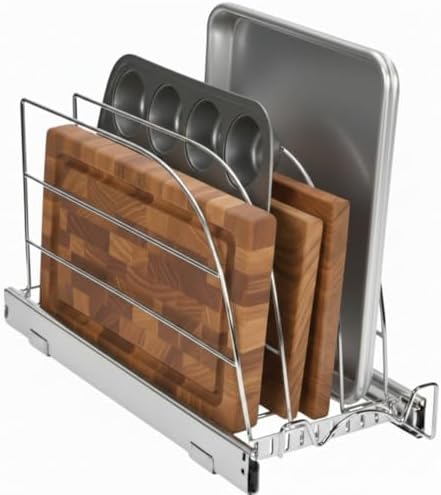
Store Baking Sheets and Flat Pans Vertically
Flat items like baking sheets, cutting boards, cooling racks, and muffin tins are notoriously awkward to store when stacked. You usually have to lift several pieces just to reach the one you need, which can be frustrating and noisy.
Storing these items vertically makes a huge difference. A vertical divider rack or a few tension rods placed inside a cabinet can create slots where each tray or board stands upright. This allows you to slide items in and out easily without disturbing the rest.
Vertical storage also helps protect nonstick and coated surfaces from scratches that happen when pans rub against each other. It keeps everything visible, so you don’t forget about items hidden at the bottom of a stack.
This method works especially well in narrow cabinets or the space beside the oven, where wide stacks wouldn’t fit comfortably.
Helpful tip: Group similar items together — baking sheets in one section, cutting boards in another — to make cooking and baking more efficient.
Keep Only What You Actually Use
No matter how good your storage system is, too much cookware will always make your cabinets feel cramped. Organizing becomes much easier when you start by reducing what you own.
Take everything out of your cabinets and look at each piece honestly. Do you use all those frying pans? Is that oversized pot only used once a year? If certain items rarely get used, they might be taking up valuable space that could be better used for everyday essentials.
Keeping only the cookware you truly use and enjoy makes your kitchen easier to maintain. It also means less stacking, less shifting, and less frustration when you’re trying to find the right pan.
Letting go of duplicates — like multiple similar-sized saucepans — can instantly free up space without affecting how you cook.
Helpful tip: If you’re unsure about an item, store it in a separate box for a few months. If you don’t reach for it, you probably don’t need to keep it.
Recommended Products to Organize Pots and Pans
You don’t need a full kitchen remodel to fix your cookware storage problems. A few smart, affordable organizers can completely transform how your cabinets function.
Adjustable Pot and Pan Organizer Rack
An adjustable rack is one of the most versatile tools for storing pots and pans. These organizers usually come with movable dividers, so you can customize the spacing based on the size of your cookware. Instead of stacking everything in one heavy pile, each pan gets its own slot, making it easier to grab what you need without shifting other items around.
They work well inside deep cabinets, on shelves, or even on countertops if you have the space. Look for sturdy metal options with non-slip feet to keep the rack stable.


Pull-Out Cabinet Organizer
Pull-out organizers are perfect for lower cabinets where items tend to get lost in the back. A sliding shelf allows you to bring your pots and pans out toward you, so you can see everything at once. This reduces the need to bend and reach awkwardly into dark cabinet corners.



Pan Lid Organizer or Lid Rack
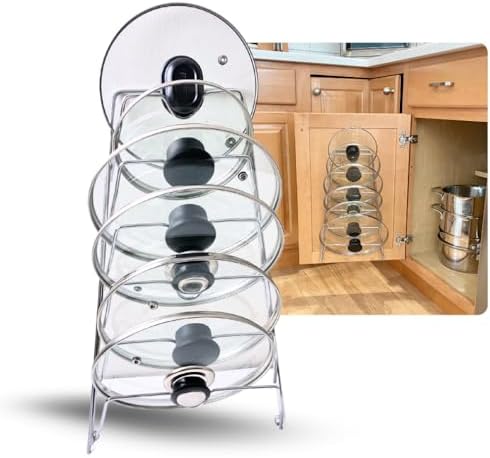
Lids are often harder to store than the pots themselves. A dedicated lid organizer keeps them upright and separated, so you’re not digging through a pile every time you need the right size.
You can find lid racks that mount to cabinet doors, sit on shelves, or attach to walls. Door-mounted options are great for using space that would otherwise go unused.

Wall-Mounted Pot Rail with Hooks
If you’re short on cabinet space, a wall-mounted rail with hooks can be a stylish and practical solution. It keeps frequently used pans within easy reach and frees up valuable storage inside cabinets.
Choose a strong metal rail and heavy-duty hooks, especially if you plan to hang heavier pieces. This option works best when you limit it to everyday essentials to avoid a cluttered look.


Shelf Risers for Cabinets
Shelf risers instantly double the usable space inside a cabinet by adding an extra level. They’re great for separating smaller pans, lids, or lightweight cookware so you don’t have to stack everything vertically.
Because they don’t require installation, they’re easy to move and adjust as your storage needs change.

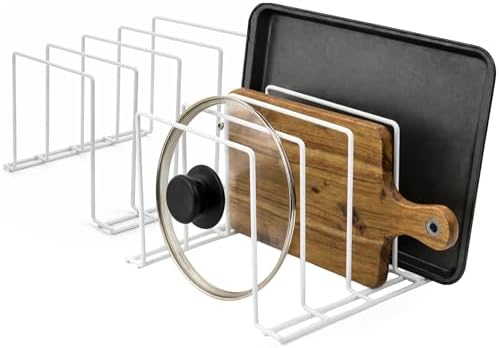
Vertical Divider Rack for Baking Sheets
A vertical rack or divider system is ideal for baking sheets, cutting boards, and flat pans. Storing these items upright makes them easier to grab and helps prevent scratches.
These racks can sit inside cabinets or be mounted, depending on your kitchen layout. They’re especially useful in narrow cabinets or next to the oven.
![Cutting Board Organizer and Baking Sheet Rack, [2-Pack] Black Hea...](https://m.media-amazon.com/images/I/41knthxfamL._AC_.jpg)

Final Thoughts
Organizing pots and pans isn’t just about making your cabinets look nicer — it’s about making your kitchen easier to use every single day. When your cookware is easy to see, reach, and put away, cooking becomes smoother and far less frustrating.
Small adjustments, like storing pans vertically, separating lids, or adding a simple pull-out shelf, can make a bigger difference than you might expect. You don’t need a huge kitchen to stay organized — you just need smart systems that work with your space instead of against it.
It also helps to be realistic about what you actually use. Keeping only the cookware you truly need gives your storage solutions room to work and keeps clutter from creeping back in.
With a few thoughtful changes, your pots and pans can go from being the messiest part of your kitchen to one of the most efficient. And when your kitchen feels easier to manage, cooking starts to feel more enjoyable too.
As an Amazon Associate, I earn from qualifying purchases.