
How to Organize Shoes in a Small Closet
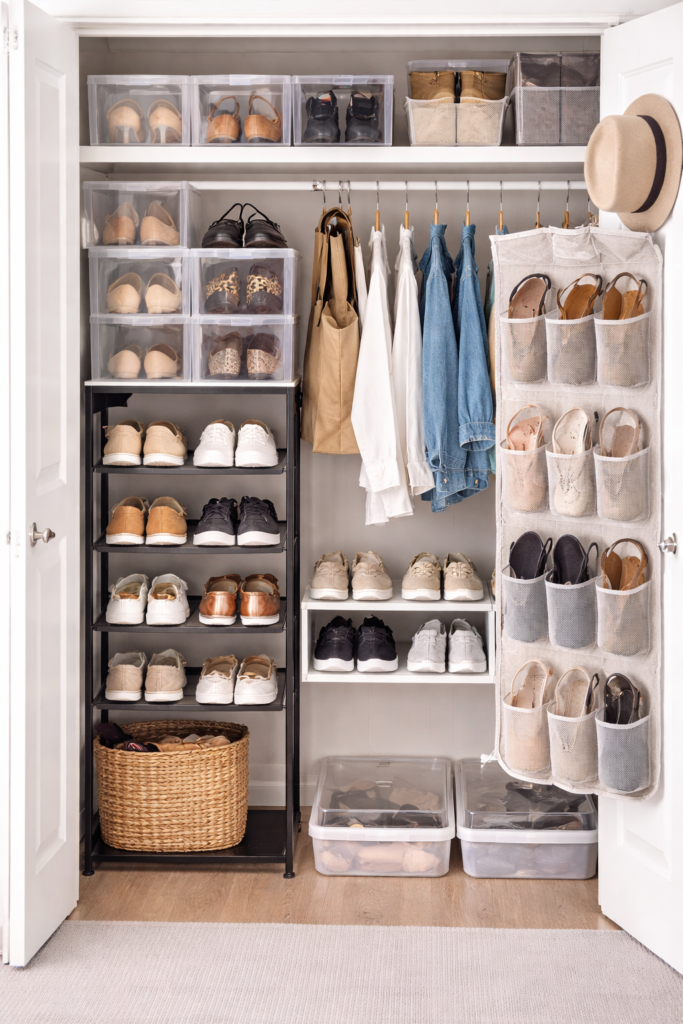
If your closet floor has slowly disappeared under a mountain of shoes, you’re not alone. Small closets and growing shoe collections don’t exactly get along. The good news? You don’t need a giant walk-in or fancy custom shelving to fix it. With a few smart adjustments, you can keep your shoes easy to see, easy to grab, and off the floor.
Here’s how to make a small closet work smarter — not harder.
Start by Editing Your Shoe Collection
Before you organize a single shelf, you need to know exactly what you’re working with. Take every pair of shoes out of the closet and put them in one big pile on the floor or bed. It might look a little overwhelming at first, but this step is where the real transformation begins.
Seeing all your shoes together helps you notice patterns you normally miss — like how many similar black flats you own or how many pairs you keep “just in case.” Pick up each pair and ask a few honest questions:
- When was the last time I wore these?
- Do they actually feel comfortable after an hour?
- Do they match my current lifestyle?
If you work from home now, you may not need five pairs of office heels. If a pair gives you blisters every time, it’s not worth the closet space. Shoes that are worn out, damaged beyond repair, or never used are just clutter in disguise.
Try to keep only the pairs you truly wear and love. Donate gently used shoes, recycle old ones if possible, and toss pairs that can’t be saved. The less crowded your collection, the easier every other organizing step becomes. Editing first means you’re building a system for the life you actually live — not the one you had years ago.
Use Vertical Space Inside the Closet
In a small closet, floor space disappears quickly — so the secret is to look up. Most closets have unused vertical space that can easily be turned into functional shoe storage with a few small changes.
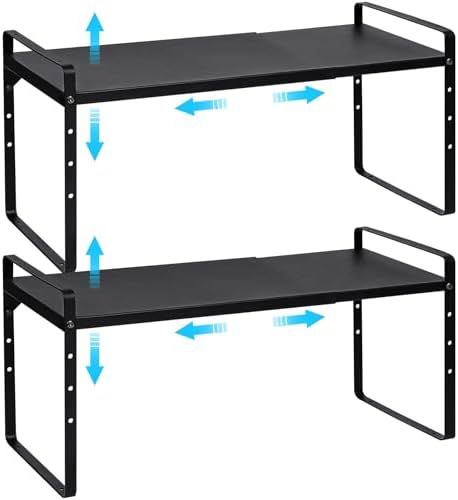
If you have shelves, avoid placing just one row of shoes on each. Add shelf risers to create two levels in the same space. This works especially well for sneakers, flats, and low heels. Suddenly, one shelf can hold twice as many pairs without feeling cramped.
Another great option is a stacking shoe rack that builds upward instead of outward. These are perfect for closet floors because they keep shoes contained in a vertical structure rather than spreading into a messy pile. Look for slim designs made for small spaces so you don’t block walking room.
You can also use hanging organizers that attach to the closet rod or back wall. Fabric or clear-pocket organizers are ideal for lighter shoes like sandals, flats, or slip-ons. This turns unused air space into storage and keeps everyday pairs visible and easy to grab.
When shoes are stored vertically, your closet instantly looks cleaner because everything has a defined place instead of blending into one cluttered layer on the floor.
Store Off-Season Shoes Elsewhere
One of the biggest reasons small closets feel overcrowded is that they’re trying to hold shoes for every season at once. But you don’t need snow boots and strappy sandals competing for the same space year-round.
Do a simple seasonal rotation. Keep only the shoes that match the current weather and your daily activities in the closet. Everything else can be stored somewhere less prime.
Place off-season shoes in:
- Clear plastic bins
- Labeled storage boxes
- Their original shoe boxes if they stack well
Store these containers under the bed, on a high shelf, or in another closet. If you use clear bins, you can still see what’s inside without opening everything. Adding a small label like “Winter Boots” or “Summer Sandals” makes switching seasons quick and painless.
This rotation system does two things: it creates breathing room in your closet and makes getting dressed easier because you’re only choosing from shoes that actually make sense right now.
Keep Everyday Shoes Easy to Reach
The shoes you wear most often should never be buried in the back of the closet. When your daily pairs are hard to access, you’re more likely to leave them on the floor — which is how clutter starts creeping back in.
Think about your routine. Maybe you rotate between two pairs of sneakers, work shoes, and casual flats. These should live in the most convenient spots:
- At eye level
- On the front edge of a shelf
- In an open rack near the closet entrance
Avoid putting everyday shoes in closed boxes or high shelves that require extra effort. Organization systems only work if they’re easy to maintain, especially on busy mornings when you’re rushing out the door.
Less frequently worn shoes — like formal heels or specialty footwear — can go on higher shelves or in labeled boxes. By giving your most-used shoes “priority real estate,” you make it much easier to put them back where they belong, keeping your small closet neat without constant effort.
Use Clear Boxes for a Clean, Uniform Look
Shoes are visually busy. Different colors, shapes, and styles all mixed together can make a small closet look cluttered, even when everything is technically “put away.” That’s where clear shoe boxes make a huge difference.
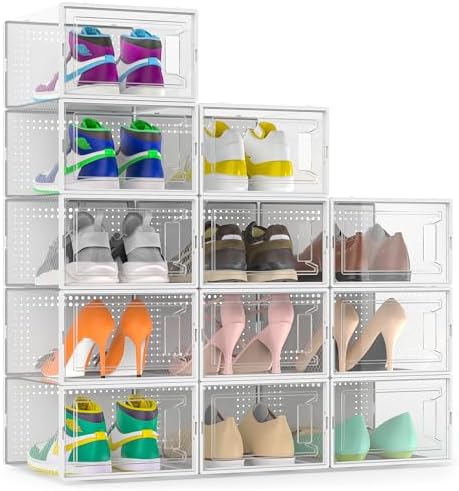
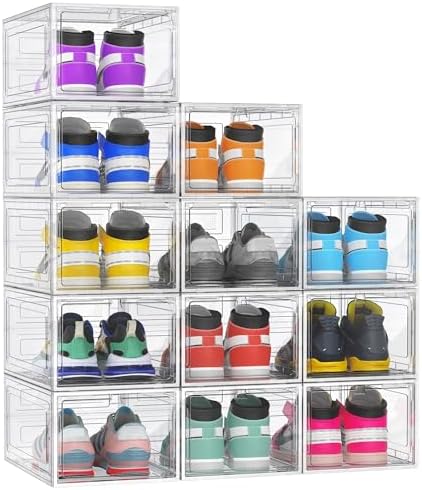
Stackable clear containers instantly create a more uniform and streamlined look. Instead of seeing a jumble of heels, sneakers, and sandals, you see clean lines and consistent shapes. Your closet feels calmer and more intentional — not like a storage unit.
They’re also incredibly practical. Clear boxes protect your shoes from dust, scuffs, and accidental damage from other pairs. At the same time, you can still see exactly what’s inside, so you’re not opening five boxes just to find your favorite black pumps.
Look for boxes with front-opening doors if possible. This lets you slide shoes in and out without unstacking everything, which is key in a small space. These are especially helpful for:
- Dress shoes
- Special occasion heels
- Seasonal shoes you don’t wear weekly
If buying boxes for every pair feels like too much, start with your nicer or less frequently worn shoes. Even partially switching to clear containers can make your closet look noticeably more organized.
Make the Closet Floor a “No-Pile Zone”
The closet floor is where good intentions go to die. One tired evening, you kick off your shoes and leave them there. The next day, you do the same. A week later, the floor has turned into a chaotic shoe pile you have to step over.
The fix is simple: give the floor a defined system so there’s no “random drop” area.
You could use:
- A low, narrow shoe rack
- A boot tray to contain taller shoes
- A single open bin for grab-and-go pairs
When shoes have a clear landing spot, you’re much more likely to put them there instead of tossing them loosely on the floor. The key is making it just as easy to be organized as it is to be messy.
Boots especially benefit from structure. Without support, they slump over and take up more space. Using boot shapers or standing them in a tray keeps them upright and prevents them from turning into a leaning tower of leather.
Once the floor is no longer a dumping ground, your whole closet instantly feels bigger and easier to use.
Use the Back of the Door
The back of your closet door is prime real estate that often goes completely unused. In a small closet, this hidden vertical surface can hold more than you think.
An over-the-door shoe organizer with pockets is perfect for lightweight, slim footwear. It keeps shoes visible without taking up shelf or floor space, which is especially helpful when your closet is already tight.
This works best for:
- Sandals
- Flip-flops
- Ballet flats
- Slippers
You can even organize by category — everyday casual shoes at eye level, seasonal or less-used pairs higher up. Because everything is visible at a glance, it also prevents you from forgetting about certain pairs.
If fabric pockets aren’t your style, there are also metal or plastic over-the-door racks that hold shoes horizontally. Either way, you’re turning unused space into functional storage, which is the golden rule of organizing small areas.
Do a Quick Reset Every Week
No organization system stays perfect on its own. Life gets busy, mornings get rushed, and shoes slowly migrate out of place. That’s why a small weekly reset makes such a big difference.
Set aside just five minutes once a week — maybe Sunday evening or laundry day — to quickly tidy your shoe area.
During your reset:
- Return stray shoes to their proper spots
- Wipe off dirt or dust from pairs you wore outside
- Check if any off-season shoes can be rotated out
This tiny habit prevents clutter from building up to the point where you need another full reorganization. It also gives you a chance to notice if your system isn’t working. Maybe one shelf is always messy or a certain rack is too hard to use — small tweaks over time keep your setup functional.
Think of it like brushing your teeth for your closet. A little regular maintenance is much easier than dealing with a big mess later.
Recommended Products for Organizing Shoes in a Small Closet
You don’t need a custom closet system to keep your shoes under control. A few smart, space-saving products can make a small closet feel much more functional.
Stackable Shoe Rack
A vertical, stackable shoe rack is one of the best tools for small closets. Instead of spreading shoes across the floor, it builds upward and keeps pairs neatly lined up. Look for slim designs that fit easily along the closet wall without blocking walking space.


Clear Stackable Shoe Boxes
Clear shoe boxes create a clean, uniform look while protecting your shoes from dust and damage. Front-opening styles are especially convenient because you can grab a pair without unstacking everything. Great for dress shoes, seasonal pairs, and less frequently worn styles.


Shelf Risers
Shelf risers instantly double the usable space on an existing shelf. They allow you to store one row of shoes on top and another underneath. These work especially well for sneakers, flats, and low-profile shoes.


Over-the-Door Shoe Organizer
An over-the-door organizer is perfect for lightweight footwear like sandals, slippers, and flats. It uses vertical space that would otherwise go to waste and keeps frequently worn casual shoes easy to see and reach.


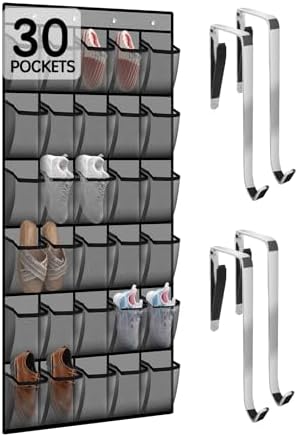
Boot Shapers or Boot Trays
Tall boots can flop over and take up too much space. Boot shapers help them stand upright, while a boot tray keeps dirt contained and prevents the closet floor from getting messy.


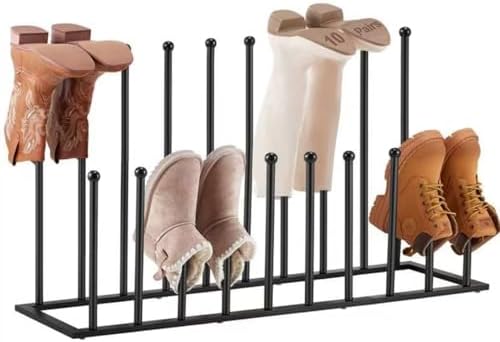

Under-Bed Storage Bins
For off-season shoes, flat under-bed bins are a great solution. They keep shoes protected and out of the way while freeing up valuable closet space for pairs you actually wear right now.

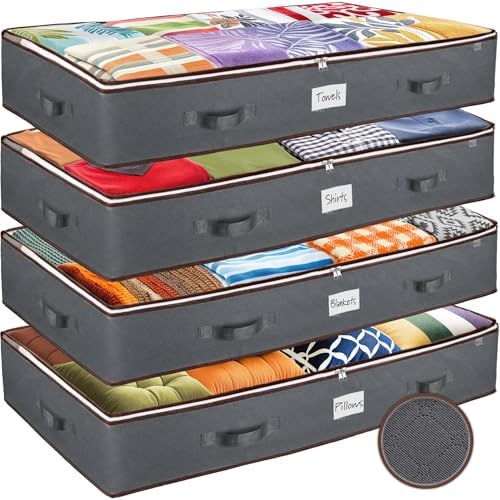


Closet Shelf Dividers
Shelf dividers help keep stacks of shoe boxes or folded items from toppling over. They’re especially useful if you’re storing shoes on higher shelves and want everything to stay neat and separated.


A small closet doesn’t mean you have to live with shoe clutter. With a little editing, smart vertical storage, and a system that makes daily life easier, your shoes can stay organized — and your closet floor can finally breathe again.
As an Amazon Associate, I earn from qualifying purchases.