
Small Kitchen Organization Hacks That Make a Big Difference
A small kitchen can feel like a daily puzzle. You open a cabinet and something falls out. Counter space disappears the second you start cooking. And somehow, no matter how often you clean, it never quite feels organized.
The good news? You don’t need a renovation or a bigger kitchen. A few smart adjustments can completely change how your space functions. Below are practical, realistic hacks that actually make a noticeable difference.
Use Vertical Space (Most People Seriously Underuse This)
When a kitchen is small, horizontal space disappears fast. But vertical space? That’s where the hidden storage lives.
Most cabinets have wasted air above dishes, mugs, or pantry items. Instead of stacking things into unstable towers, divide that space intentionally.
Smart ways to go vertical:
- Shelf risers to create double layers
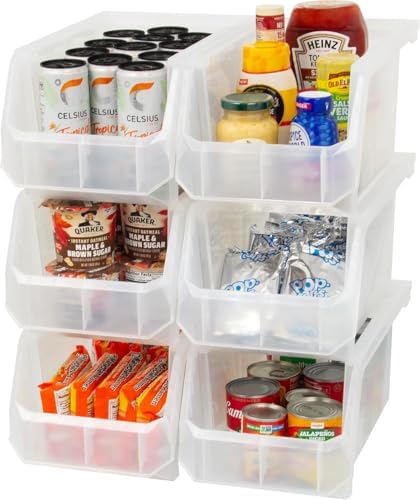
- Stackable bins or containers
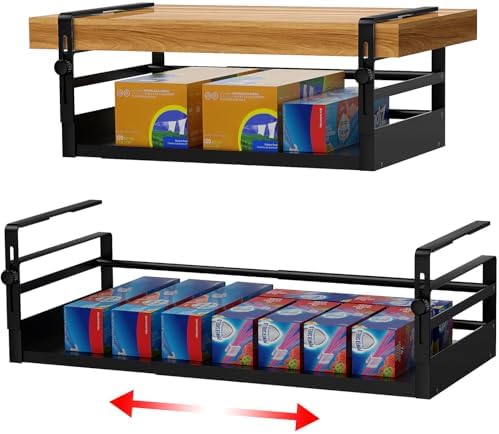
- Under-shelf hanging baskets
- Hooks under cabinets or shelves
- Vertical plate or pan organizers
Why this works so well:
You’re not adding more stuff — you’re unlocking space you already have.
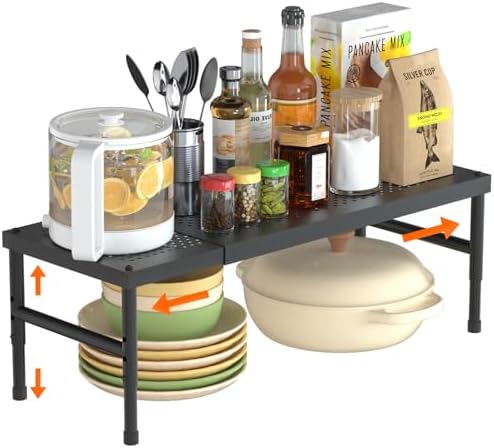
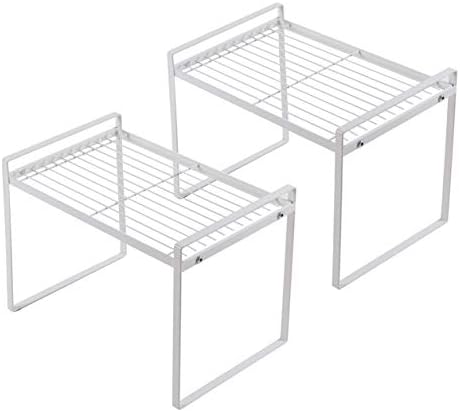
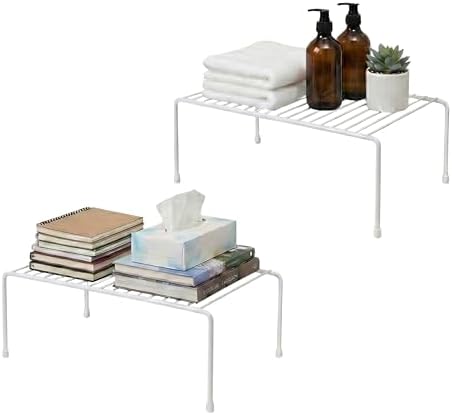
Even something as simple as a shelf riser can instantly turn one crowded shelf into two usable levels. Plates below, bowls above. Cups below, glasses above. Clean, accessible, and frustration-free.
👉 Small kitchen rule: If there’s empty space above something, it’s a storage opportunity.
Decant Bulky Packaging (This One Feels Minor but Isn’t)
Food packaging is one of the biggest space killers in small kitchens.
Boxes, bags, and oddly shaped containers refuse to stack neatly. They create gaps, tip over, and visually clutter cabinets.
Decanting — transferring items into uniform containers — fixes multiple problems at once.
What to decant first:
- Cereal
- Pasta
- Rice
- Flour
- Snacks
- Coffee / sugar
Benefits you’ll notice immediately:
✔ Containers stack perfectly
✔ You see what you actually have
✔ Less wasted space
✔ Cabinets look calmer
Clear containers are especially powerful. No more opening three boxes to check if you’re out of pasta.
And psychologically? A cabinet full of matching containers feels organized even before you touch anything.
👉 Unexpected bonus: You reduce duplicate purchases because you can actually see your supplies.
Turn Dead Space Into Storage (Your Kitchen Has More Than You Think)
Small kitchens are full of “dead zones” — areas that technically exist but serve no purpose.
Once you start looking for them, they’re everywhere.
Common dead spaces:
- Inside cabinet doors
- Narrow gaps beside appliances
- Blank wall sections
- Fridge sides
- Cabinet sides
- Corners
Easy upgrades:
- Door-mounted racks for lids, wraps, spices
- Magnetic storage on fridge sides
- Slim rolling carts for narrow gaps
- Wall-mounted rails or shelves
- Corner shelf units
Even a few inches of unused width can hold cutting boards, trays, or cleaning supplies.
👉 Mindset shift: In a small kitchen, storage isn’t just inside cabinets.
Think like a space detective. That awkward gap? That empty wall? That cabinet door? All potential storage real estate.
Create Zones (Even Tiny Kitchens Need Structure)
Organization isn’t only about where things fit — it’s about how your kitchen flows.
Without zones, you end up walking back and forth constantly:
Looking for utensils. Searching for spices. Opening five cabinets while cooking.
Zoning creates logic.
Examples of simple kitchen zones:
☕ Coffee / breakfast station
🍳 Cooking zone (oils, utensils, pans)
🔪 Prep zone (knives, boards, mixing tools)
🧼 Cleaning zone (sponges, detergents)
🍿 Snack zone
How to build zones effectively:
- Group related items together
- Store items where they’re used
- Avoid mixing categories randomly
For example:
- Spices near the stove
- Cutting boards near prep area
- Coffee supplies near coffee maker
👉 Result: Less searching, smoother cooking, less daily frustration.
Even in the smallest kitchen, zones create a feeling of control. Suddenly, everything has a “home.”
Clear Counters = Instantly Bigger Kitchen Feel
If there’s one change that creates an immediate visual impact, it’s this: decluttering your counters.
In a small kitchen, counter space is everything. It’s your prep area, cooking station, and sometimes even your dining space. When it’s overcrowded, the entire kitchen feels smaller, tighter, and more stressful.
And the tricky part?
Most counter clutter comes from things that technically belong in the kitchen.
Why crowded counters feel so overwhelming
Even a clean kitchen can feel messy if surfaces are overloaded.
Visual clutter:
- Makes the room feel cramped
- Increases mental stress
- Reduces usable workspace
- Makes cleaning harder
👉 A small kitchen with clear counters often feels bigger than a larger kitchen filled with stuff.
Use Drawer Organizers (Because Chaos Hides in Drawers)
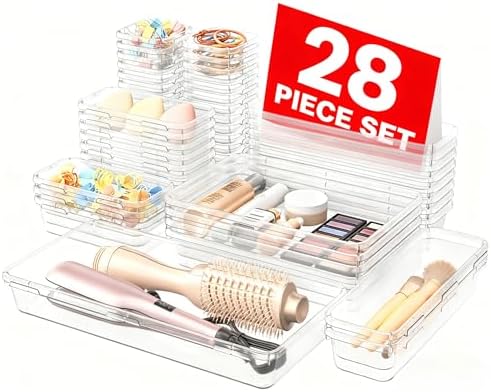
Drawers are sneaky. From the outside, everything looks tidy. Inside? Total disaster.
Without dividers, items slide around, stack unevenly, and quickly turn into a frustrating mess.
What drawer organizers actually fix:
✔ Prevent clutter buildup
✔ Keep categories separated
✔ Make items easy to grab
✔ Stop the “junk drawer effect”
Great candidates for organizing:
- Cutlery
- Cooking utensils
- Measuring tools
- Food wraps
- Gadgets
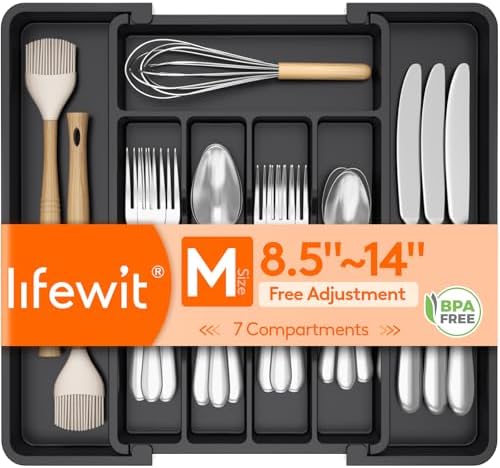
Adjustable dividers work especially well in small kitchens because they adapt to your space instead of forcing you into a rigid layout.
👉 Reality check: You don’t need more drawers — you need better structure inside them.
Store Smarter, Not Harder
Most people organize based on “where things fit.”
A better approach? Organize based on how often you use things.
Think in layers:
Prime real estate (eye level / easy reach):
- Everyday plates & bowls
- Frequently used spices
- Cooking oils
- Daily-use utensils
Secondary zones (higher / lower shelves):
- Occasional appliances
- Rarely used cookware
- Special dishes
Lower cabinets = heavy items:
- Pots & pans
- Mixing bowls
- Small appliances
👉 Golden rule: Convenience beats perfection.
Your kitchen should work for you, not look like a showroom that’s annoying to use.
Hooks Are Secret Storage Multipliers
Hooks might be the most underrated tool in small kitchen organization.
They’re cheap, easy to install, and instantly create storage where none existed.
Perfect for hanging:
- Mugs
- Cooking utensils
- Towels
- Measuring cups
- Pots & pans
- Oven mitts
Hooks can go:
- Under cabinets
- On walls
- Inside cabinet doors
- On backsplash rails
👉 Why hooks work so well:
They use vertical and visual space without crowding cabinets.
Plus, hanging items often feel easier to access than stacked ones.
Embrace Multi-Purpose Items
In a small kitchen, every item should justify the space it occupies.
Bulky single-use tools quickly eat up valuable storage.
Smarter alternatives:
✔ Nesting bowls
✔ Stackable cookware
✔ Foldable colanders
✔ Multi-use appliances
✔ Cutting boards with built-in containers
Less bulk = less clutter = easier organization.
👉 Simple mindset shift:
Choose items that collapse, stack, nest, or serve multiple functions.
This isn’t minimalism — it’s efficiency.
Do Mini Resets (Instead of Stressful Deep Cleans)
Big cleanups are exhausting. And honestly? They rarely last.
Mini resets are what keep small kitchens consistently manageable.
Daily 5-minute reset ideas:
✔ Put items back in their zones
✔ Wipe counters
✔ Clear the sink
✔ Toss trash or clutter
✔ Straighten one problem area
👉 Why this works:
Small kitchens get messy fast — but they’re also quick to fix.
Consistency beats occasional perfection every time.
Recommended Products for Small Kitchen Organization
You don’t need dozens of gadgets to organize a small kitchen — just a few well-chosen tools that actually solve space problems. Below are practical upgrades that deliver real results without overcomplicating your setup.
Shelf Risers (Instant Vertical Space)
If your cabinets feel cramped, shelf risers are one of the easiest wins.
They allow you to create multiple levels inside a single shelf, making room for plates, bowls, mugs, or pantry items.
Why they’re worth it:
- Doubles usable cabinet space
- Prevents unstable stacking
- Keeps items visible and accessible
👉 Ideal for dishes, cups, canned goods, and spices.

Clear Stackable Containers
Bulky food packaging wastes space and creates visual chaos.
Uniform, stackable containers instantly make pantry shelves cleaner and more efficient.
Benefits:
- Perfect stacking
- Easier inventory tracking
- Reduces clutter
- Airtight options keep food fresh
👉 Great for pasta, rice, cereal, snacks, flour, and sugar.


Drawer Organizers
Drawers without dividers quickly turn into messy catch-alls.
Adjustable organizers create structure and prevent utensils or tools from sliding around.
Why they help:
- Keeps categories separated
- Makes items easy to grab
- Maximizes shallow drawer space
👉 Perfect for cutlery, gadgets, wraps, and kitchen tools.


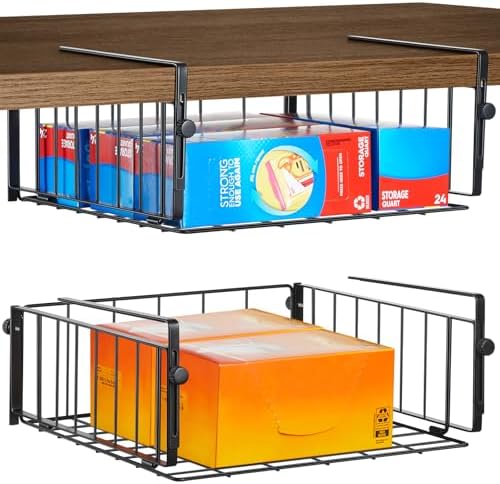
Under-Shelf Baskets
That empty air under cabinet shelves? Hidden storage potential.
Under-shelf baskets slide into place and create extra space for lightweight items.
Best for storing:
- Mugs
- Napkins
- Small plates
- Foil / wraps
👉 No drilling, no permanent installation.


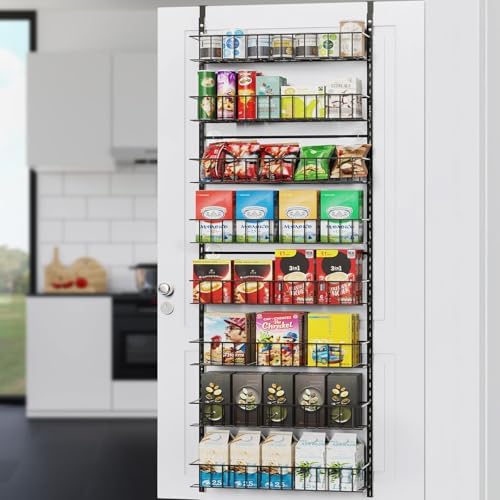
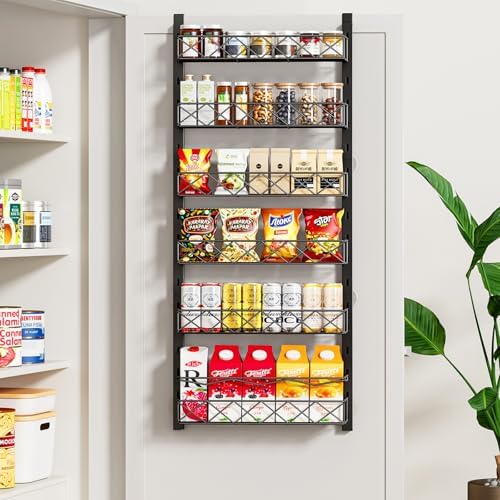
Over-the-Door Cabinet Racks
Cabinet doors are often completely wasted.
Slim racks turn them into storage for frequently used or awkward items.
Smart uses:
- Pot lids
- Cleaning supplies
- Cutting boards
- Spices
👉 Especially useful under the sink.


Hooks And Hanging Rails
Hooks are tiny but incredibly powerful.
They free up drawer and cabinet space by moving items onto walls or under cabinets.
Hang things like:
- Utensils
- Mugs
- Towels
- Measuring cups
👉 Affordable, flexible, and renter-friendly.


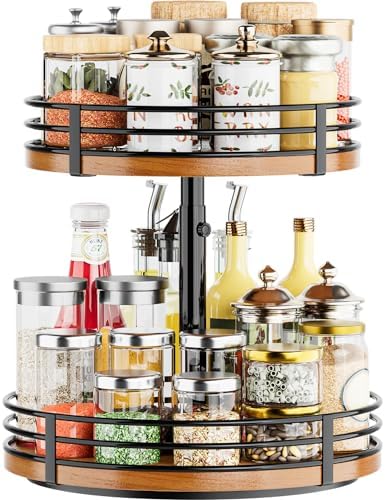
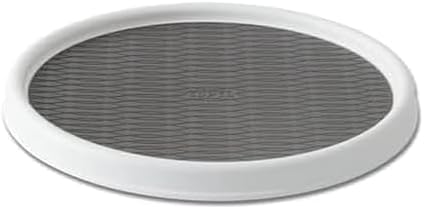
Lazy Susans / Turntables
Deep cabinets and corners become black holes fast.
Turntables keep items visible and easy to reach.
Perfect for:
- Spices
- Oils
- Sauces
- Small jars
👉 No more digging through cluttered shelves.

Final Thoughts
A small kitchen doesn’t have to feel cramped, stressful, or chaotic. Tiny improvements — shelf risers, containers, hooks, zoning — create a kitchen that feels bigger, smoother, and easier to use.
Remember:
It’s not about having more space.
It’s about using your space better.