
Small Living Room Organization: Ideas That Maximize Space
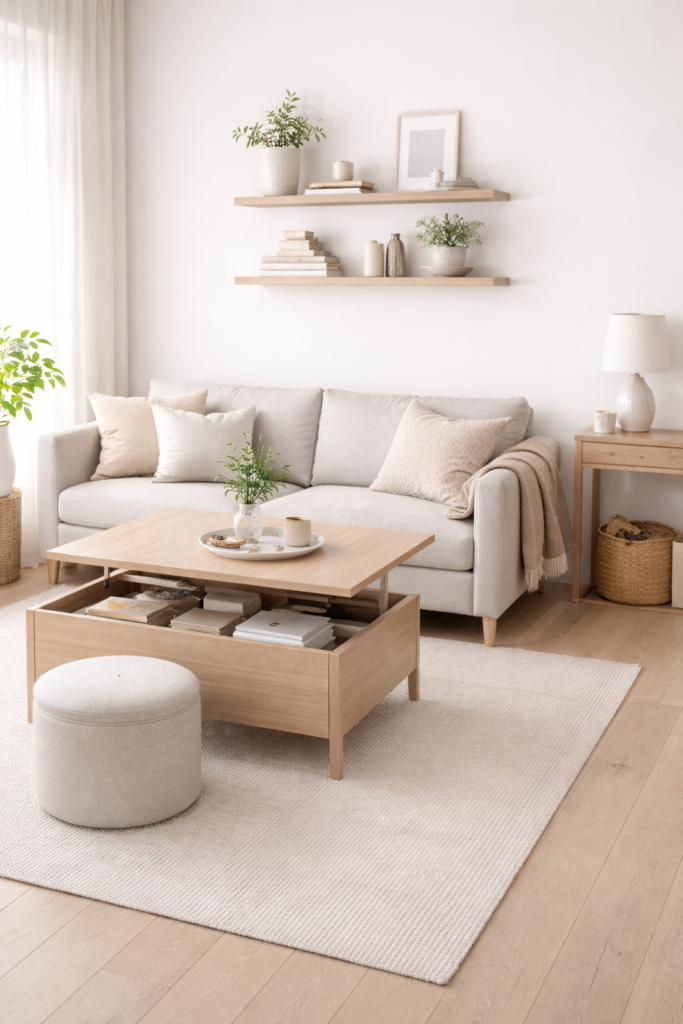
Small living rooms can be surprisingly tricky. They’re where you relax, host friends, binge-watch shows, maybe even work or eat occasionally. Yet they’re often the tightest spaces in the home.
When clutter builds up, the entire room can start feeling cramped, busy, and slightly stressful. But with a few smart adjustments, even the smallest living room can feel open, functional, and comfortable.
Start by Noticing How You Actually Use the Room
Before moving furniture or buying anything, pause and observe. How does the room behave during a normal week?
Where do things tend to pile up?
Which seat do you always use?
What items constantly migrate to the coffee table?
Real organization starts with real patterns. A layout that ignores your habits will always drift back into disorder.
Maybe you always drop a bag near the sofa. Maybe blankets end up everywhere. Maybe the remote controls multiply like they have their own agenda.
Instead of forcing rigid rules, design around what naturally happens.
Edit Before You Organize
It’s tempting to jump straight into “solutions,” but adding storage without reducing excess often just hides clutter rather than fixing it.
Walk through the room slowly and question what’s there.
Do I need three side tables?
Why do I have decor on every surface?
Do these items serve a purpose or just fill space?
Small living rooms don’t tolerate “maybe” items very well. A few unnecessary pieces can make the entire space feel crowded.
Removing even one chair, table, or bulky accessory can dramatically change how open the room feels.
Less stuff isn’t deprivation. It’s relief.
Let Furniture Earn Its Place
In compact spaces, furniture should justify the floor space it occupies.
A beautiful piece that serves no real function can quietly steal valuable room. On the other hand, a practical piece that combines storage and usability becomes a game changer.
Think in terms of contribution.
Does this table provide storage?
Can this ottoman hide items?
Does this console reduce clutter?
Smart choices often eliminate the need for extra organizers later.
Be Careful With “Small Furniture”
This sounds counterintuitive, but filling a small living room with many tiny pieces can make it feel busier, not bigger.
Too many small tables, stools, or decorative accents create visual fragmentation. The room starts feeling cluttered even if everything is technically arranged.
Sometimes fewer, slightly larger pieces create a calmer, more cohesive look.
One well-sized coffee table instead of two tiny ones
One floor lamp instead of multiple small lights
Visual simplicity makes a huge difference in tight spaces.
Design for Everyday Clutter
Living rooms are lived-in spaces. They’re not meant to look frozen in time.
Books, remotes, throws, chargers — these items are part of daily life. The trick isn’t eliminating them but managing them.
A tray on the coffee table
A basket near the sofa
A drawer in the TV console
Containment keeps everyday items from visually taking over.
Because clutter feels worse when it spreads.
And small rooms amplify that effect quickly.
Use Vertical Space Without Overwhelming the Room
When floor space is limited, walls become your best ally. But there’s a fine line between smart vertical storage and visual overload.
Floating shelves, for example, can be incredibly effective. They draw the eye upward and free up valuable surfaces. The key is restraint.
A few shelves with breathing room feel clean and intentional. Too many shelves packed with objects can make the room feel busy and slightly suffocating.
Think curated, not crowded.
The same applies to tall bookcases. They’re fantastic for storage, but what you place on them matters. Mixing books with a few decorative pieces often feels lighter than filling every inch.
Create Clear Surfaces (Even If They’re Small)
In a small living room, clear surfaces are like visual pauses. They give your eyes a place to rest.
Not every table needs decor.
Not every corner needs an accessory.
Not every shelf needs to be full.
Leaving part of a coffee table empty instantly makes the room feel less cluttered. The same goes for console tables or side tables.
Empty space isn’t “missing something.”
It’s creating balance.
Hide What Doesn’t Need to Be Seen
Cables, chargers, routers, game controllers — modern living rooms are full of functional but visually noisy items.
Simple concealment makes a huge difference.
Cable management boxes
Furniture with closed storage
Decorative baskets
Out of sight often equals visual calm. And visual calm is everything in a compact room.
Define Micro-Zones for Better Flow
Small living rooms often multitask. Maybe you work from the sofa. Maybe you read in a corner. Maybe the space doubles as a dining area.
Without subtle zoning, everything blends together and the room feels chaotic.
A rug can anchor the seating area.
A small lamp can define a reading spot.
A console can separate spaces.
These aren’t dramatic changes. They’re gentle visual cues that help the room feel structured instead of scattered.
Control Incoming Clutter
Organization isn’t just about arranging what’s already there. It’s about preventing new clutter from constantly entering.
Be mindful of what flows into the room:
Mail
Shopping bags
Random items from other rooms
A small basket, tray, or drawer near the entrance point helps contain the “drop effect.”
Because once clutter lands and spreads, small rooms feel overwhelmed fast.
Keep Flexibility in Mind
Small spaces benefit from adaptability. Furniture that can move easily, stack, or serve multiple roles keeps the room from feeling rigid.
Poufs that tuck away
Nesting tables
Foldable pieces
Flexibility allows the space to expand or simplify depending on the moment.
Recommended Products
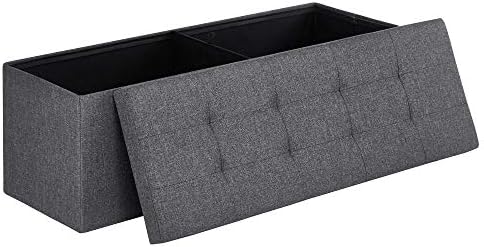
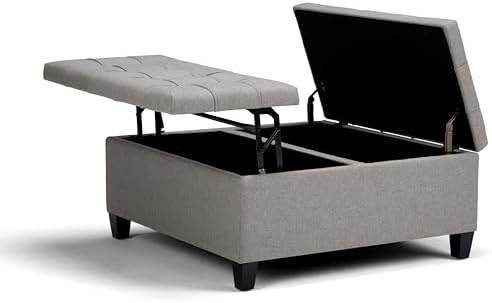
Storage Ottoman
A storage ottoman is one of the most versatile pieces for a small living room. It works as seating, a footrest, and hidden storage for blankets, remotes, or everyday clutter.


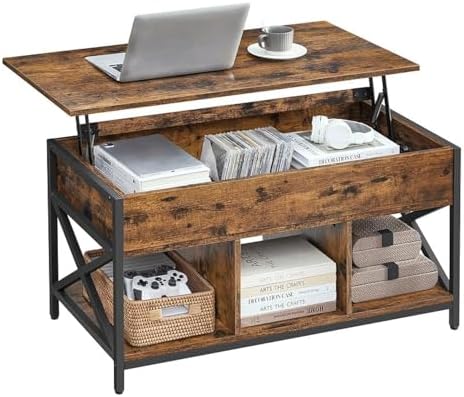
Coffee Table With Storage
Instead of a simple tabletop, choose a design with drawers or a lift-top compartment. It keeps surfaces clear while storing items you use frequently.


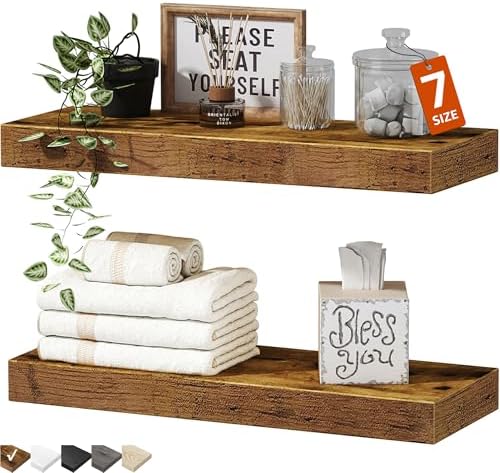
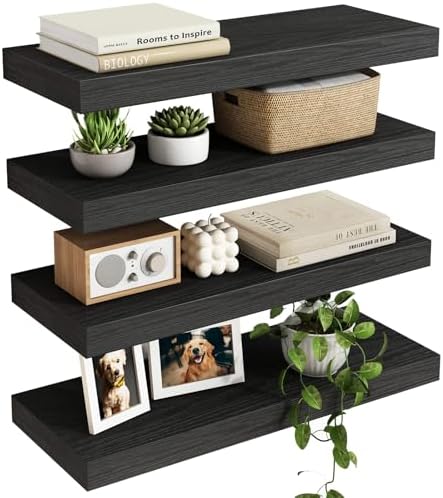
Floating Wall Shelves
Floating shelves add vertical storage without taking up floor space. Perfect for books, small decor, or essentials you want accessible but not scattered.


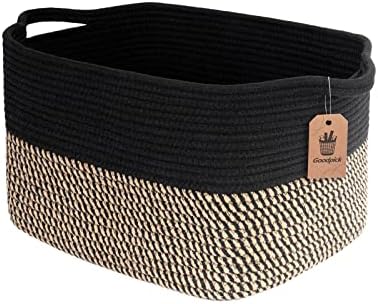
Decorative Storage Baskets
Baskets are ideal for quick, flexible organization. Use them for throws, magazines, or miscellaneous items that tend to migrate around the room.


![Fab totes Storage Bins [3-Pack], Foldable Storage Baskets for Org...](https://m.media-amazon.com/images/I/41xO-WYPauL._AC_.jpg)
Nesting Tables
Nesting tables provide extra surface space when needed and tuck away neatly when not in use, making them perfect for compact layouts.


Cable Management Box
An easy solution for hiding messy cables, chargers, and power strips. It instantly reduces visual clutter around TVs and consoles.


Slim Console Table
A narrow console behind the sofa or along a wall adds storage and display space without crowding the room.


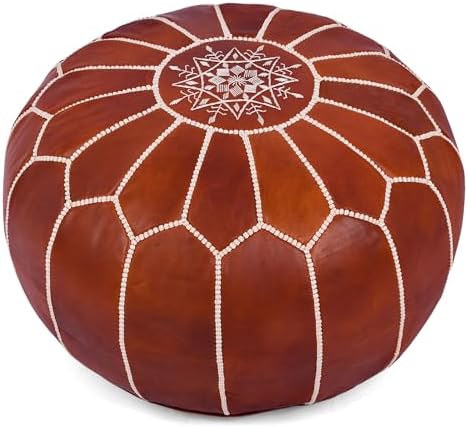
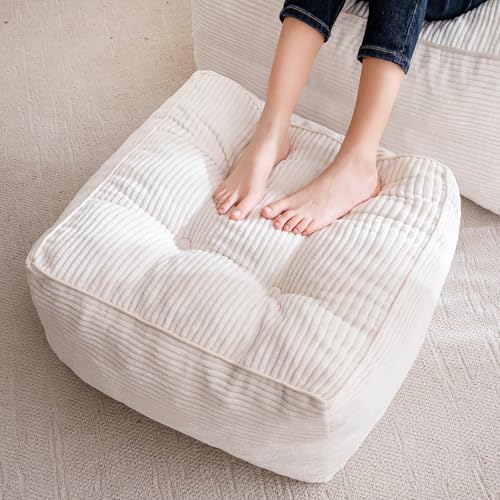
Multi-Purpose Pouf
Lightweight and flexible, poufs can serve as seating, footrests, or even small side tables when paired with a tray.



Final Thoughts
A small living room doesn’t have to feel limiting. When organized thoughtfully, it can feel cozy, airy, and incredibly functional.
The magic isn’t in adding more storage.
It’s in reducing friction, simplifying visuals, and making the space work with your daily life.
Because when a small living room is arranged well, it doesn’t feel small.