Small Kitchen Layout Mistakes That Kill Your Storage Space
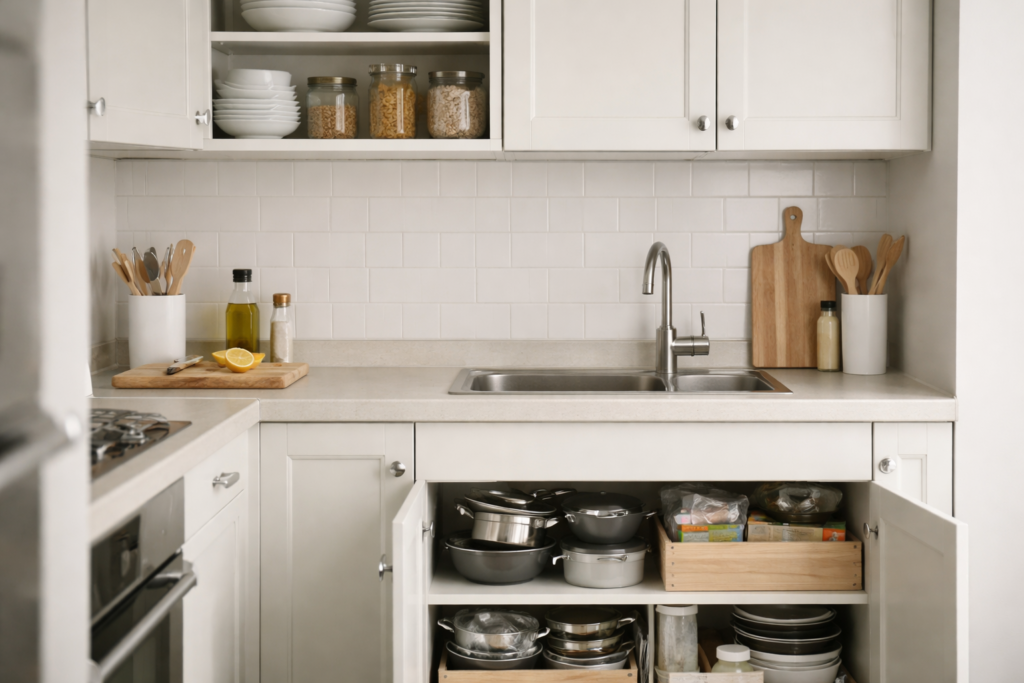
A small kitchen doesn’t have to feel cramped.
But a bad layout will make it feel that way—no matter how much storage you have.
That’s the frustrating part.
You can have cabinets, drawers, shelves… and still feel like there’s nowhere to put anything.
Not because you need more space.
But because the space you have isn’t working properly.
And most of the time, it comes down to a few small layout mistakes that quietly make everything harder to use.
Mistake 1: Wasting Vertical Space
This is one of those things you don’t notice at first.
You open a cabinet, everything looks “fine,” and you move on.
But if you pause for a second, you’ll see it.
A single layer of items sitting at the bottom… and a whole section of empty space above them doing nothing.
It doesn’t feel like wasted space because technically, everything fits.
But that’s exactly the problem.
Because when you’re only using half the height, you’re forcing everything to spread out instead of stacking in a way that makes sense.
And over time, that creates pressure in the rest of your kitchen.
You run out of room faster. You start stacking things awkwardly. You lose visibility.
And once things aren’t easy to see or reach, you stop using that space properly.
It’s a small inefficiency, but it compounds quickly.
What makes this tricky is that most cabinets are designed like open boxes.
They don’t guide you to use the full height.
So unless you actively think about it, you end up defaulting to one level.
And that’s how storage gets cut in half without you realizing it.
Mistake 2: Letting Counters Become Storage
Counters don’t become cluttered overnight.
It happens slowly.
You leave something out because you’ll use it again later.
Then another item joins it.
Then something that doesn’t really belong there—but there’s no obvious place for it.
And after a while, your counter stops being a workspace.
It becomes a holding area.
What makes this frustrating is that everything on the counter usually feels justified.
You use that appliance.
You need those spices.
You don’t want to put things away just to take them out again.
So the clutter builds up in a way that feels reasonable.
But visually, it changes everything.
Even a small amount of crowding can make your kitchen feel tight.
Because your eyes don’t see “a few useful items.”
They see a surface that’s no longer open.
And once that happens, the entire kitchen starts to feel smaller—regardless of how much storage you actually have.
The deeper issue here isn’t the items themselves.
It’s that your layout isn’t giving those items a better place to go.
So the counter becomes the easiest option.
And easy always wins.
Mistake 3: Poorly Placed Storage
This is the kind of problem that doesn’t look obvious—but you feel it every day.
You reach for something, and it’s just a little too far.
Or you have to open two or three cabinets before finding what you need.
Or you avoid putting something away because it feels slightly inconvenient.
None of these things are major issues on their own.
But together, they add friction to your routine.
And that friction changes your behavior.
You start leaving things out “just for now.”
You stop using certain cabinets altogether.
You create small shortcuts that slowly turn into clutter.
And that’s how a kitchen that technically has enough storage still feels disorganized.
Because the storage isn’t aligned with how you actually use the space.
A good layout reduces decisions.
You shouldn’t have to think about where something goes.
It should feel obvious.
And when it doesn’t, your system starts breaking down—even if everything looks fine on the surfac
Mistake 4: Overcrowding Cabinets
It’s easy to fall into this without noticing.
You open a cabinet, see some extra space, and think, “I can fit a few more things in here.”
And you can… at least at first.
But little by little, that extra space disappears.
You stack plates higher. You squeeze in one more container. You push things toward the back.
And eventually, the cabinet still holds everything—but it stops working well.
You can’t see what’s behind the front row.
You have to move things just to grab one item.
You start avoiding certain spots because they’re too packed.
That’s when storage becomes frustrating instead of helpful.
And the weird part is, the cabinet looks “full,” so it feels like you’re using it efficiently.
But in reality, it’s slowing you down.
A cabinet works best when there’s a bit of breathing room.
Not empty space for the sake of it—but enough room to grab things without rearranging everything else.
Because once accessing something becomes a small task, you start looking for easier options.
And that usually means leaving things out.
Mistake 5: Ignoring Awkward Spaces
Every small kitchen has them.
That corner cabinet that’s hard to reach.
The narrow gap between appliances.
The shelf that feels too high or too deep to use properly.
Most of the time, these spaces get ignored.
Not because they’re useless—but because they’re inconvenient.
So instead of solving the problem, we work around it.
We avoid putting important items there. We leave them half empty. Or we turn them into random storage for things we rarely use.
But those awkward spaces are often where a lot of hidden potential is.
They just need a bit more intention.
Something that brings items forward instead of letting them get lost in the back.
Something that makes the space feel usable instead of frustrating.
Because once a difficult area becomes easy to use, it stops being wasted space—and starts taking pressure off the rest of your kitchen.
Mistake 6: Not Leaving Any “Buffer Space”
This is one of the most overlooked ideas when it comes to storage.
People try to optimize every inch.
Every shelf filled. Every drawer packed. Every corner used.
It feels efficient.
But it creates a system with no flexibility.
The moment you bring something new into your kitchen, there’s nowhere for it to go.
So it ends up on the counter. Or in a random spot. Or squeezed into a space where it doesn’t really belong.
And that’s how clutter starts building again.
A little empty space isn’t wasted.
It’s what allows your kitchen to adapt.
It gives you room to move things around. To adjust. To live in the space without constantly reorganizing it.
Without that buffer, everything feels tight.
And when a space feels tight, it’s harder to maintain.
Recommended Products to Fix Small Kitchen Layout Mistakes
You don’t need a full renovation to fix most kitchen layout problems. A few well-chosen products can help you use your space better, reduce clutter, and make everything easier to access.
The key is to support your layout—not fight it.
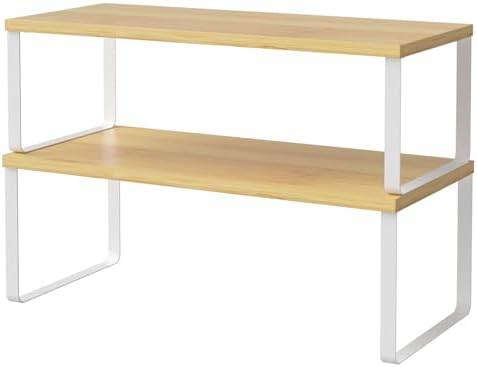
Stackable Cabinet Shelves
These are one of the easiest ways to fix wasted vertical space.
They create an extra level inside your cabinets, so you’re not just using the bottom. Perfect for plates, mugs, or pantry items that tend to get stacked.


Pull-Out Cabinet Organizers
Deep cabinets often turn into hidden clutter zones.
Pull-out organizers bring everything forward, so you don’t have to dig or move items around just to reach something in the back.


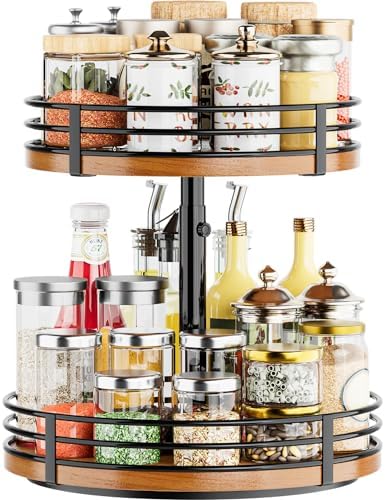
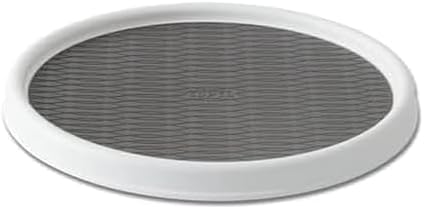
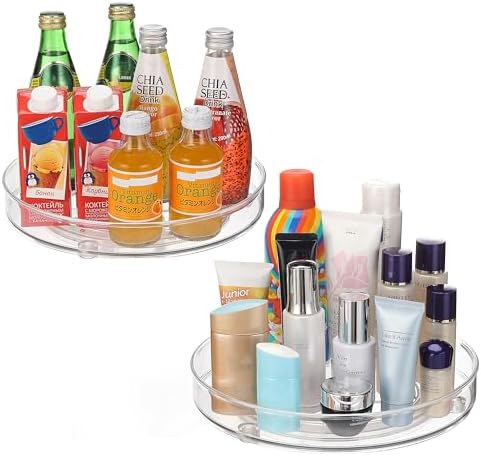
Lazy Susan Turntables
Corner cabinets and deep shelves can be hard to use.
A rotating tray makes everything accessible with a simple spin, especially for spices, oils, or smaller containers.

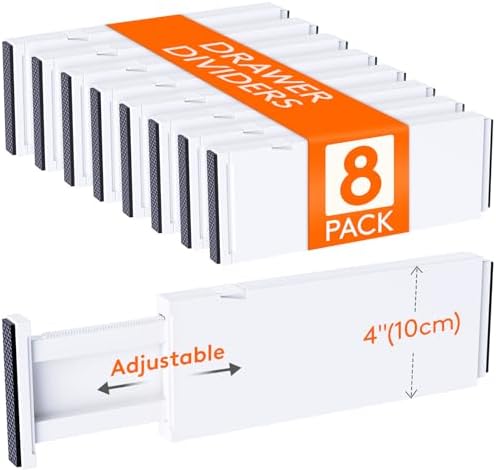
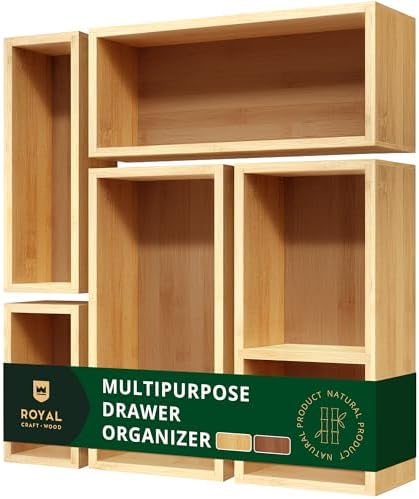
Drawer Dividers
Drawers can easily become messy when everything is mixed together.
Dividers create clear sections, so utensils and tools stay organized and easy to find.


Under-Shelf Baskets
These attach to existing shelves and instantly create more storage space.
They’re perfect for making use of vertical gaps without needing any installation.


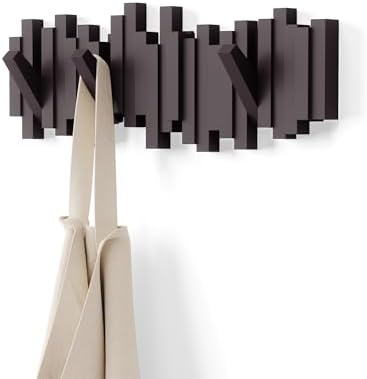
Wall-Mounted Rails with Hooks
If your counters are crowded, this is a simple way to free up space.
You can hang utensils, tools, or even small pans, keeping them accessible without taking up valuable surface area.



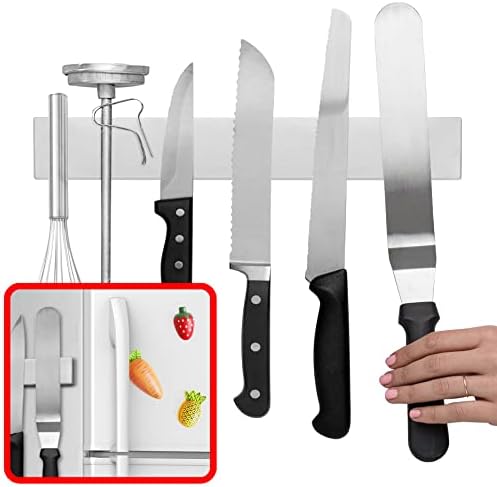
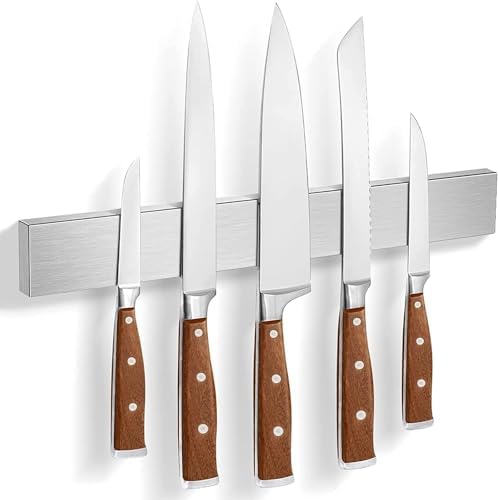
Magnetic Knife Strip
A knife block takes up more space than it seems.
A magnetic strip keeps your knives on the wall, freeing up counter space and making your kitchen feel more open.


Slim Rolling Storage Cart
Narrow gaps between appliances or cabinets often go unused.
A slim rolling cart turns those spaces into functional storage for pantry items, spices, or cleaning supplies.


Cabinet Door Organizers
The inside of cabinet doors is often wasted space.
These organizers give you extra storage for smaller items without affecting your main layout.


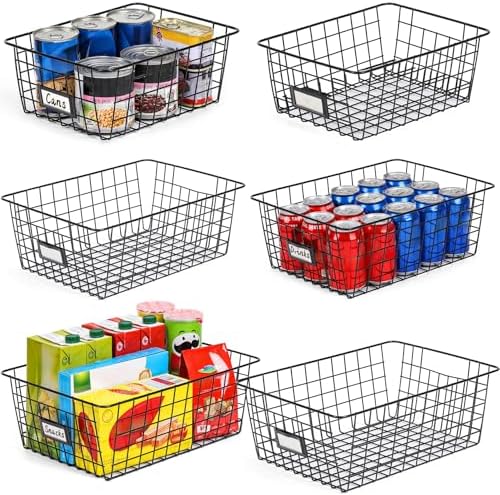
Storage Bins for Cabinets and Pantry
Bins help group similar items together, reducing clutter and making everything easier to manage.
Instead of loose items everywhere, everything has a clear place.


These products work best when they support a simple system. You don’t need all of them—just a few that solve your specific problems can make your kitchen feel more organized and much easier to use.
Final Thoughts
Most storage problems don’t come from a lack of space.
They come from small layout decisions that seem harmless at first.
A cabinet that’s a bit too full.
A counter that holds a few extra things.
A space that feels slightly inconvenient to use.
On their own, they don’t seem like much.
But together, they change how your kitchen functions.
The good news is—you don’t need to redesign everything.
You just need to notice where things aren’t working as smoothly as they could.
And once you fix those small points of friction, your kitchen starts to feel different.
Not bigger, necessarily.
Just easier to use.