
Best Space Saving Hacks for Clothes in Small Apartments
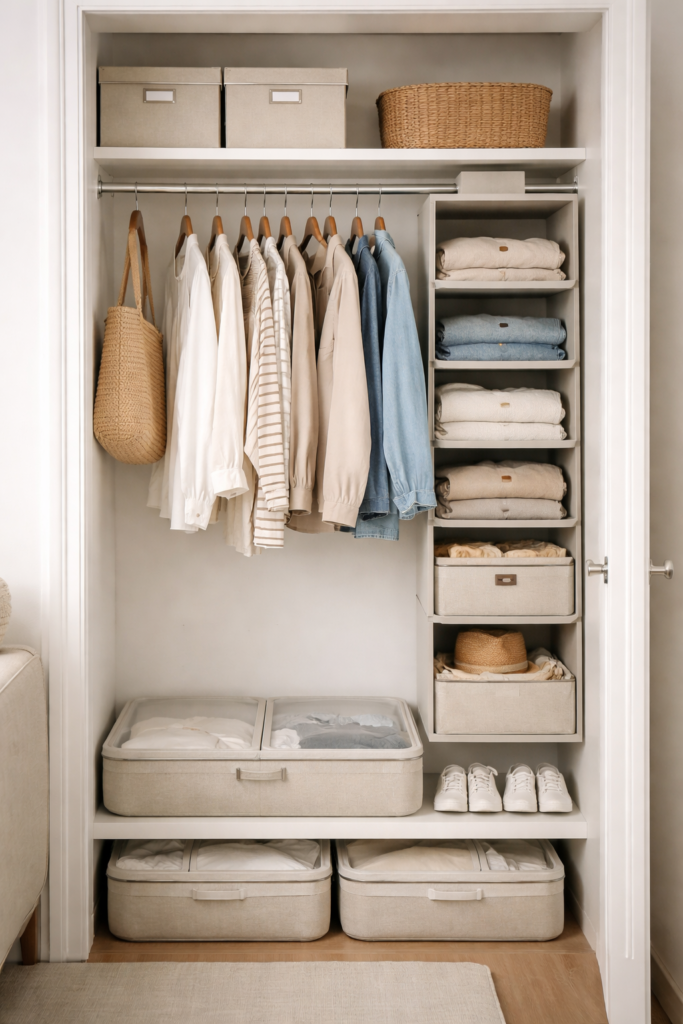
Clothes don’t look like they take up much space… until they do.
At first, everything fits. Your closet works, your drawers close, and you don’t think about it too much.
But little by little, it changes.
A few extra shirts. Another pair of jeans. Something you bought but haven’t worn yet.
And suddenly, your space feels tight.
Not because your apartment is too small—but because your clothes don’t have a clear system anymore.
That’s where small, practical changes make a bigger difference than you’d expect.
Stop Treating All Clothes the Same
Most closets feel full not because you have too many clothes—but because everything is fighting for the same space.
Your favorite T-shirts, the jeans you wear every week, that jacket you grab without thinking… all mixed with things you barely touch.
At a glance, it doesn’t seem like a big deal.
But in practice, it creates friction.
You reach for something simple and end up moving other items out of the way. You forget what you own because it’s buried. You start defaulting to the same few pieces because they’re the easiest to grab.
And everything else just sits there, taking up space.
A small shift changes this completely.
Instead of organizing clothes by where they fit, organize them by how often you actually use them.
Your daily clothes should feel effortless to access.
Not squeezed into tight spots. Not hidden behind other items.
Just easy.
Because when something is easy to grab, you naturally keep it in rotation.
And once those everyday pieces are clearly separated, something interesting happens.
The rest of your clothes stop getting in the way.
They still have a place—but they’re no longer competing with your daily routine.
Use Vertical Space Without Overcomplicating It
Most people underestimate how much space they already have.
Not because it’s hidden—but because it’s not being used fully.
You hang your clothes, maybe stack a few things, and everything seems fine.
But if you really look at your closet, there’s usually a lot of empty air.
Space above your hanging clothes.
Unused room on shelves.
Gaps that don’t seem big enough to matter—but add up.
And over time, those small gaps limit how much you can store.
Because instead of building upward, everything spreads outward.
That’s when things start to feel cramped.
The goal here isn’t to pack more into your closet.
It’s to make better use of what’s already there.
For example, shorter items don’t need full vertical space.
Shirts, folded clothes, even some accessories—they leave unused room above them.
And once you start noticing that, you can begin to divide that space naturally.
Not in a complicated way.
Just enough to avoid wasting it.
Because when your storage grows upward instead of outward, your closet starts to feel less crowded—even if you didn’t remove anything.
Fold Smarter, Not Tighter
A lot of people try to solve space issues by compressing everything.
Folding tighter. Stacking higher. Trying to fit as much as possible into one drawer.
It works… for a moment.
But then it creates a different problem.
You can’t see what’s underneath.
And when you can’t see it, you don’t use it.
So you end up wearing the same few items at the top, while everything else stays hidden.
That’s how drawers become full without being useful.
Folding smarter isn’t about making things look perfect.
It’s about making things visible.
When each item has its own space—when you can see everything at a glance—you stop digging, moving, and reshuffling every time you get dressed.
And that small change makes your entire routine feel smoother.
Because instead of dealing with your clothes…
You’re just using them.
Give Every Category a Clear Space
When everything is mixed together, your closet starts to feel unpredictable.
You reach in for one thing and end up shifting three others just to get to it. Not because there’s no space—but because nothing has a clearly defined place.
And over time, that small friction adds up.
You stop putting things back properly. You start placing items wherever there’s room. And slowly, your system fades without you even noticing.
Giving each category its own space fixes that in a very simple way.
It removes the need to think.
You’re not deciding where something goes every time—you already know.
T-shirts always go here.
Jeans stay there.
Workout clothes don’t mix with anything else.
It doesn’t have to be perfectly labeled or visually perfect.
It just needs to feel obvious.
Because once something feels obvious, you follow it without effort.
And that’s what keeps your closet organized long-term.
Use “Out of Sight” Storage for What You Don’t Use Often
Not everything needs to be within reach all the time.
But when everything is within reach, your main space gets crowded.
That’s where things start to feel tight—not because you own too much, but because everything is competing for attention.
A better approach is to separate what you use often from what you don’t.
Seasonal clothes, special outfits, items you wear occasionally—they don’t need prime space.
They just need a place.
And once you move those items slightly out of your main area, your everyday space changes instantly.
It feels lighter.
Less crowded.
Easier to move through.
The key here is not to hide things completely—but to store them in a way that doesn’t interfere with your daily routine.
Because when your main space is focused only on what you actually use, everything becomes simpler.
Make It Easy to Maintain
This is where most systems fail.
Not because they’re bad—but because they require too much effort to keep up.
If putting something away takes even a little extra time, you’ll skip it.
You’ll leave it on a chair. On a shelf. Anywhere that feels easier in the moment.
And that’s how clutter slowly comes back.
That’s why your setup needs to feel natural.
You shouldn’t have to think twice about where something goes.
You shouldn’t have to move other items just to put one thing away.
It should be quick. Almost automatic.
Because when your system is easy to maintain, you don’t rely on motivation.
You just follow it without noticing.
Recommended Products to Save Space for Clothes in Small Apartments
You don’t need to completely change your closet to create more space. A few simple products can help you organize better, use vertical space, and keep everything easy to access.
The goal is to make your system simpler—not more complicated.
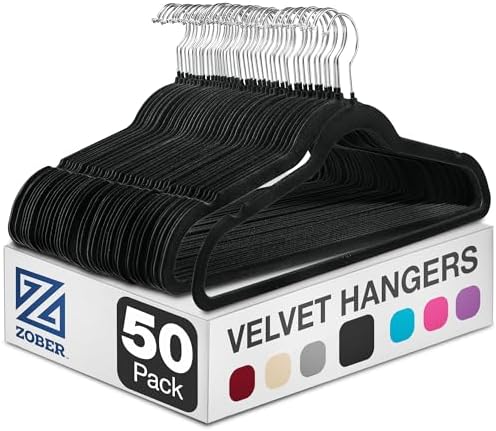
Slim Velvet Hangers
These instantly create more hanging space without you noticing.
They take up less room than bulky hangers and keep clothes from slipping, which helps maintain a clean and consistent setup.



Hanging Closet Organizer
This is one of the easiest ways to add extra storage without installing anything.
It creates vertical sections for folded clothes, shoes, or smaller categories that don’t need to be hung.


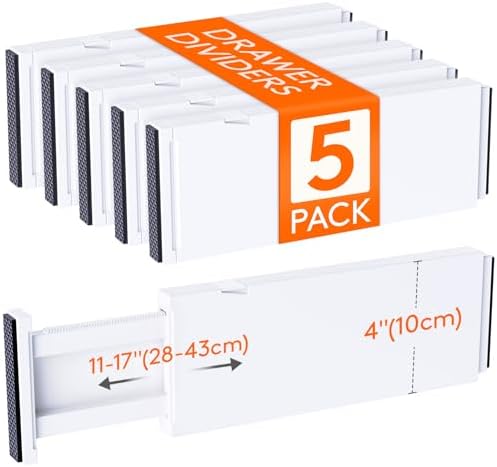
Drawer Dividers
Drawers can quickly turn into a mess when everything is mixed together.
Dividers create clear sections so each category has its own space and stays easy to find.



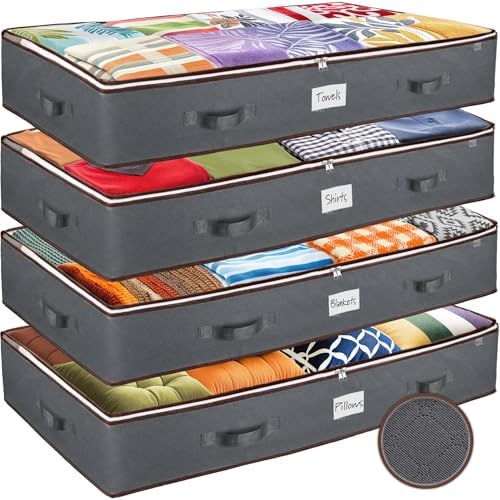
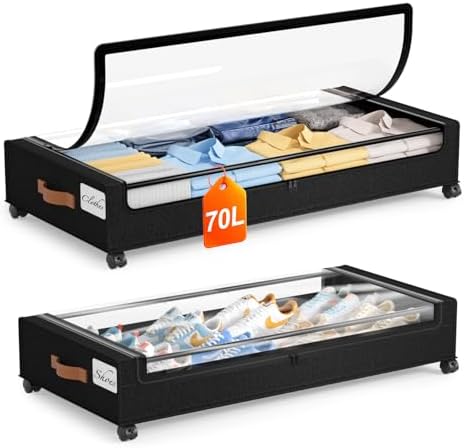
Under-Bed Storage Containers
Perfect for seasonal clothes or items you don’t use often.
They keep things out of sight while freeing up space in your main closet.


Stackable Storage Bins
These help you use vertical space on shelves without things getting messy.
Instead of piling clothes, you create layers that are easier to manage.


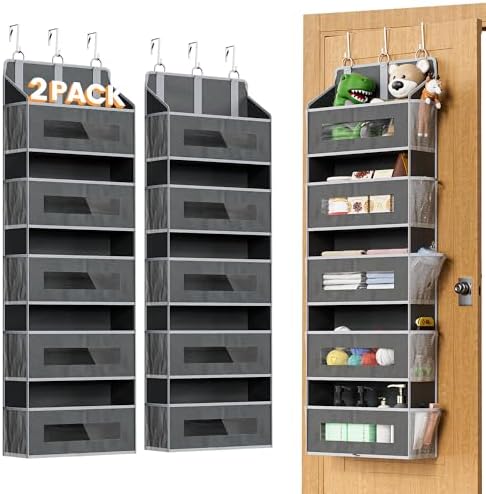
Over-the-Door Organizer
This is a great way to use space that’s usually ignored.
It works well for shoes, accessories, or smaller clothing items without taking up closet space.


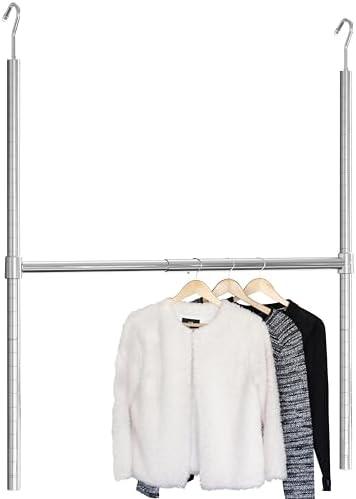
Closet Rod Extender
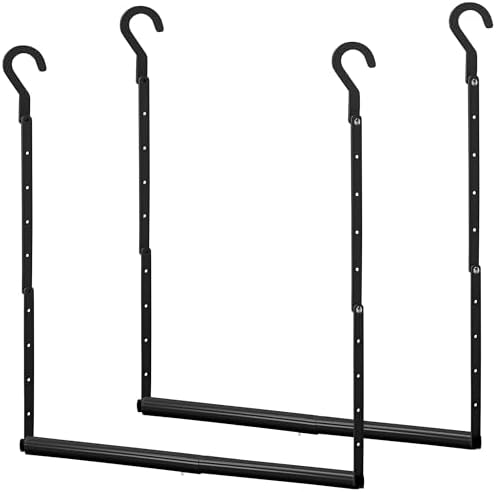
If you have only one hanging rod, this is a simple way to double your hanging space.
It’s especially useful for shorter items like shirts, pants, and skirts.


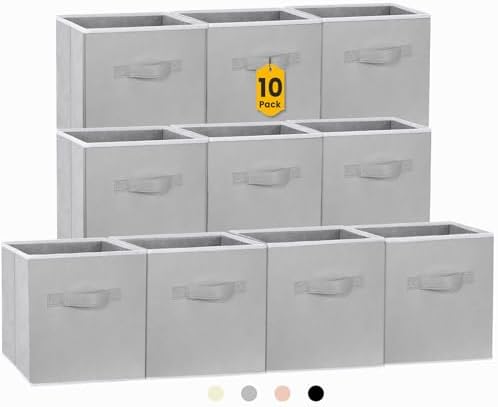
Foldable Storage Boxes
Great for keeping categories separated, especially for items you don’t use daily.
They keep everything contained and can be stored neatly on shelves or under furniture.



Vacuum Storage Bags
Ideal for bulky items like jackets, sweaters, or seasonal clothes.
They reduce volume significantly, making it easier to store more in less space.


Storage Bench
A bench with hidden storage can hold clothes, shoes, or accessories while also serving as a functional piece of furniture.
It’s a simple way to add storage without adding clutter.


These products work best when they support a simple system. You don’t need all of them—just a few that match your space and your routine can make a noticeable difference.
Final Thoughts
Saving space in a small apartment isn’t about doing something extreme.
It’s about removing the small inefficiencies that make your space feel tighter than it is.
A closet that’s slightly easier to use.
Drawers that don’t hide things.
Clothes that have a clear place instead of moving around.
None of these changes are dramatic on their own.
But together, they shift how your space feels every day.
And once your clothes stop overwhelming your space…
Your apartment starts to feel a lot bigger than it actually is.