
How to Organize a Closet by Category (Step-by-Step System)
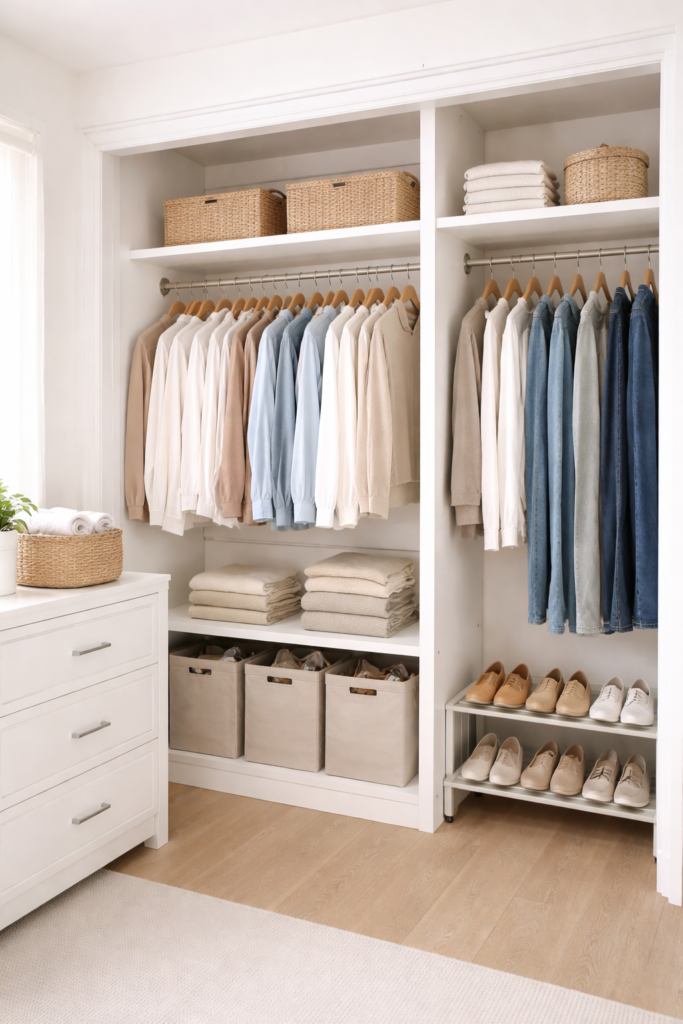
Most people don’t have a space problem in their closet.
They have a system problem.
Because when everything is mixed together—shirts with jackets, casual with formal, random items in between—it doesn’t matter how much space you have.
It still feels messy.
You open your closet and instead of seeing options, you see noise.
And that’s what makes getting dressed feel harder than it should be.
Organizing by category changes that completely.
Not because it’s complicated… but because it makes everything easier to find, easier to maintain, and easier to use every day.
Here’s a simple way to do it without overthinking the process.
Step 1: Take Everything Out (Yes, Everything)
This is the part most people try to skip.
It feels like too much work, and honestly… it is a bit inconvenient.
But it’s also the moment where everything starts to change.
When you leave things inside the closet, you’re only seeing a small portion of what you own. The rest is hidden behind stacks, layers, and items you haven’t touched in a while.
So you end up organizing blindly.
Taking everything out forces you to face the full picture.
Not in an overwhelming way—but in a clear, honest way.
You start noticing things you forgot you had. Items that somehow ended up in the wrong place. Clothes that don’t really belong to your current lifestyle anymore.
And it’s not about judging any of it.
It’s just about seeing it.
Another thing that happens here is you break the “default setup.”
Your closet, even if it’s messy, has a kind of structure you’ve gotten used to.
Taking everything out removes that structure completely.
And that’s important—because it gives you the chance to rebuild it in a way that actually works better.
Step 2: Group Items Into Clear Categories
Once everything is out, there’s a moment where it can feel a bit chaotic.
Piles everywhere, no clear system yet.
And that’s normal.
This is where you slow things down and start grouping, one item at a time.
Not organizing yet—just grouping.
What helps here is to think in terms of how you actually get dressed.
Not how you think you should.
You don’t wake up and think, “Let me browse my entire wardrobe.”
You think in categories.
A shirt. A pair of pants. Something for the weather. Something for the occasion.
So your closet should reflect that.
As you go through your clothes, you’ll notice that grouping them starts to feel natural.
T-shirts with t-shirts.
Jeans with jeans.
Workout clothes together.
And as the piles form, something interesting happens.
The chaos starts to organize itself.
You begin to see where you have more than you thought. Where things are uneven. Where certain categories are overflowing while others are barely there.
And that awareness is what makes the next steps easier.
Step 3: Remove What Doesn’t Belong
This is usually the part people expect to be difficult.
But after grouping everything, it tends to feel more straightforward.
Because now, you’re not looking at random pieces—you’re looking at categories.
And categories make decisions clearer.
If you’re standing in front of a pile of ten similar shirts, it’s easier to ask yourself which ones you actually wear.
Not in theory—but in real life.
Which ones do you reach for without thinking?
Which ones always stay at the bottom of the pile?
You’re not trying to create a perfect wardrobe.
You’re just removing what clearly doesn’t fit anymore.
Sometimes it’s about fit.
Sometimes it’s about style.
Sometimes it’s just something you’ve outgrown without realizing it.
And the goal here isn’t to get rid of as much as possible.
It’s to make space for what you actually use.
Even removing a few items from each category can make a noticeable difference.
Because once those unnecessary pieces are gone, everything else has more room to exist—and your closet starts to feel lighter without you doing anything else.
Step 4: Assign Each Category a Dedicated Space
This is where everything starts to click.
Up until now, you’ve been sorting and removing. But this is the moment you actually rebuild your closet in a way that makes sense.
Instead of putting things back wherever they fit, you’re giving each category a specific place.
And that changes how you interact with your closet every day.
Because now, when you open it, you’re not scanning everything at once.
You know exactly where to look.
T-shirts are always in the same spot.
Jeans don’t move around.
Jackets have their own section.
It removes that small daily friction of searching.
And something that helps more than people expect is thinking about access.
Not everything needs to be equally visible.
The things you wear the most should be the easiest to reach.
Eye level. Front of the closet. The spots you naturally go to.
Less-used items can live higher up or a bit further back.
You’re not hiding them—you’re just prioritizing your daily routine.
And once you set it up this way, putting clothes away becomes automatic.
You’re not deciding where things go every time.
You already know.
Step 5: Keep Categories Simple (So You Actually Maintain It)
This is where a lot of systems fall apart.
Not because they don’t work—but because they’re too complicated to keep up with.
It’s easy to start creating very specific categories.
Work shirts, casual shirts, gym shirts, going-out shirts…
And while that might feel organized at first, it quickly becomes hard to maintain.
Because every time you put something away, you have to think.
And the more thinking required, the more likely you are to just place things wherever there’s space.
That’s how clutter slowly comes back.
Keeping your categories simple makes everything easier.
Broad groups that you can recognize instantly.
No hesitation. No second-guessing.
You open your closet, and it’s obvious where something belongs.
That’s what keeps the system working long-term.
Step 6: Adjust as You Go (Not Everything Needs to Be Perfect)
Here’s something people don’t talk about enough—your closet doesn’t need to be perfect from day one.
In fact, it probably won’t be.
And that’s fine.
The goal isn’t to build a flawless system.
It’s to build one that works better than before.
As you start using your closet again, you’ll notice small things.
Maybe a category feels too crowded.
Maybe something is slightly inconvenient to reach.
Maybe you naturally start placing items somewhere different.
Those are useful signals.
Instead of forcing the system, adjust it.
Move things around. Combine categories if needed. Shift items closer to where you actually use them.
These small tweaks are what turn a good system into one that really fits your life.
Recommended Products to Organize Your Closet by Category
You don’t need a lot of products to organize your closet—but the right ones can make your system easier to maintain and much more functional. The goal is to support your categories, not complicate them.
Here are some simple options that actually help.
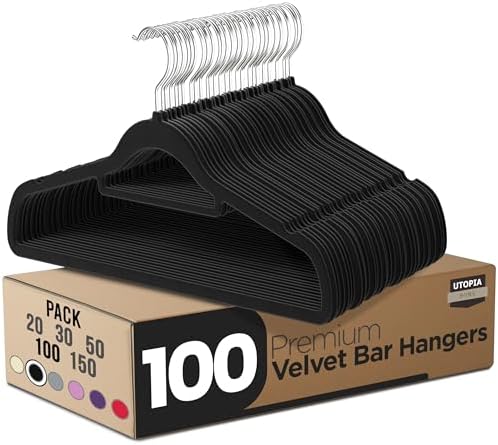
Slim Velvet Hangers
Using the same type of hanger instantly makes your closet look cleaner and more organized.
Slim velvet hangers save space and keep clothes from slipping, which helps maintain clear categories without things falling out of place.



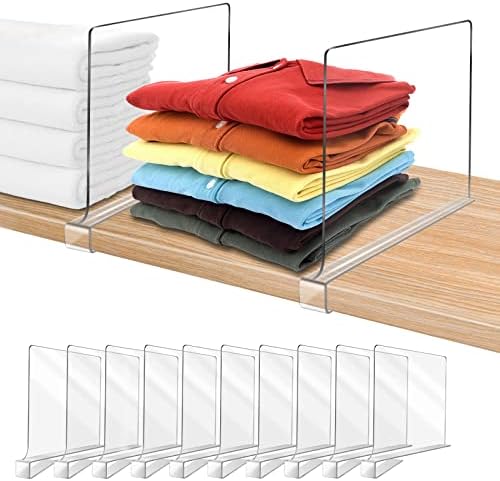
Shelf Dividers
If you’re stacking clothes on shelves, dividers keep each category separated.
They prevent piles from mixing together and make it easier to grab something without creating a mess.
![12 Inches [Extra Tall Version] Clear Shelf Dividers for Closet Or...](https://m.media-amazon.com/images/I/41wakCL5bEL._AC_.jpg)


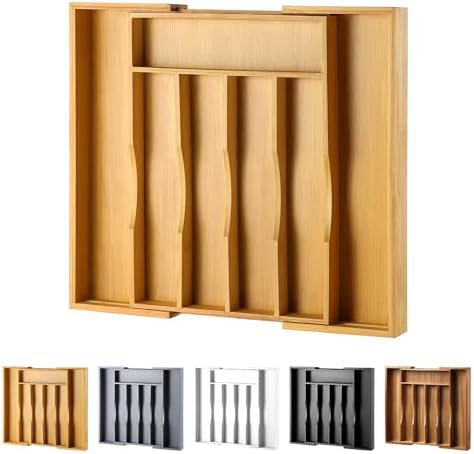
Drawer Organizers
Perfect for smaller categories like underwear, socks, or accessories.
They create clear sections inside drawers so everything has its own space and stays easy to find.


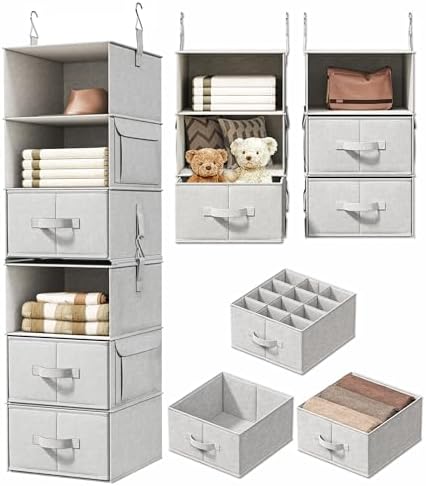
Hanging Closet Organizer
This adds extra vertical storage without needing any installation.
You can use it for folded clothes, shoes, or smaller categories that don’t fit well on shelves.



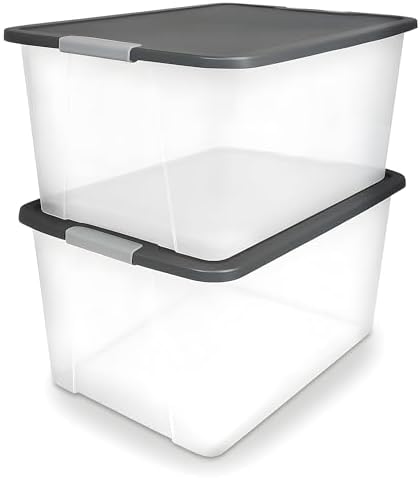
Storage Bins and Boxes
Bins help group items within categories.
For example, you can keep gym clothes, seasonal items, or accessories together in one place, making your closet feel more structured.


Shoe Rack Organizer
Shoes can easily become clutter if they don’t have a dedicated space.
A simple rack keeps them visible, organized, and separate from your clothing categories.


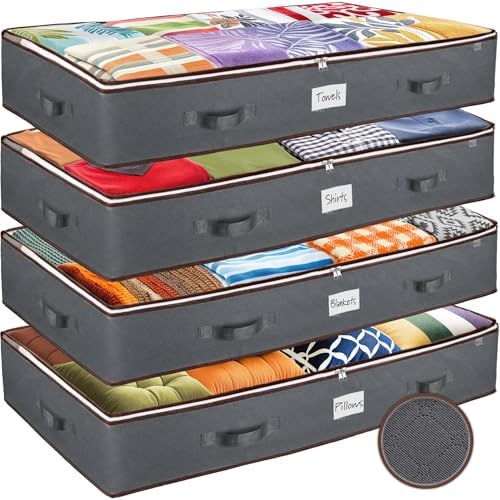
Under-Bed Storage Containers
Not everything needs to stay in your closet all year.
These containers are perfect for seasonal clothes, helping you free up space while keeping items accessible when you need them.



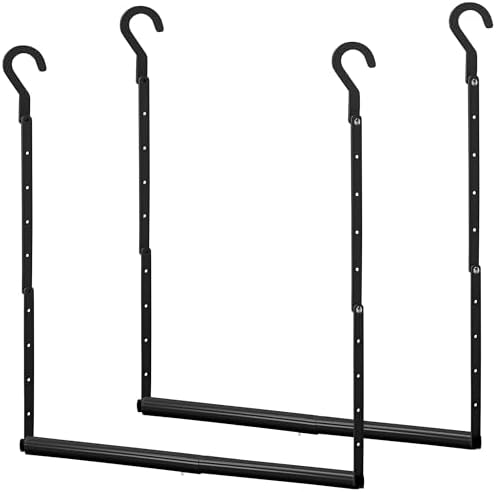
Closet Rod Extender
If you only have one hanging rod, this is an easy way to double your hanging space.
It works especially well for shorter items like shirts and pants, making better use of vertical space.



Over-the-Door Organizer
This is a great way to store accessories, shoes, or smaller items without taking up closet space.
It keeps everything accessible while staying out of the main area.


Foldable Storage Boxes
These are useful for categories you don’t use daily.
They keep things contained and can be folded away when not needed, which helps maintain a clean and flexible system.


These products work best when they support a simple structure. You don’t need all of them—just a few that fit your space and your routine can make your closet easier to use and much easier to keep organized.
Final Thoughts
Organizing your closet by category isn’t about creating something that looks perfect for a photo.
It’s about making your daily routine easier without you having to think about it.
When everything has a clear place, getting dressed becomes quicker.
Putting things away becomes automatic.
And your closet stops feeling like something you have to manage all the time.
It just works.
And once it works, you don’t really notice it anymore—which is exactly the point.