
Small Closet Layout Ideas That Maximize Every Inch
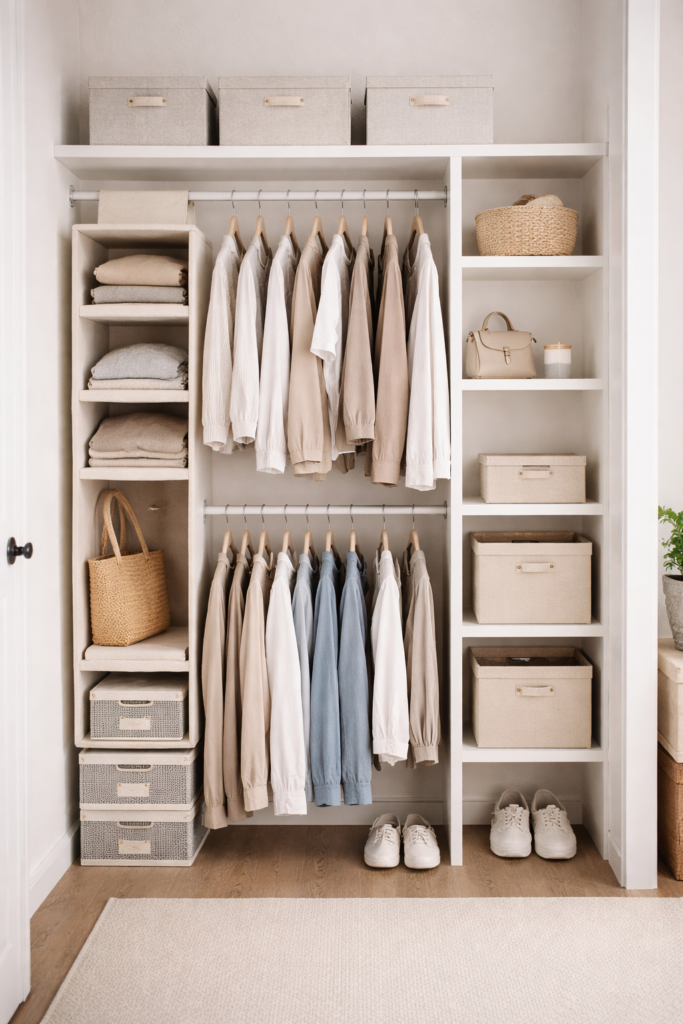
A small closet doesn’t give you much room to make mistakes.
Every inch matters.
And when the layout isn’t working, you feel it immediately.
Clothes get crowded. Shelves overflow. Things disappear in the back and somehow never come back into rotation.
It’s not always about having too much.
Sometimes, it’s just that the space isn’t set up in a way that supports how you actually use it.
And that’s where layout makes all the difference.
Work With Zones, Not Just Sections
Most closets aren’t designed with your real routine in mind.
They’re built in a standard way—one rod, maybe a shelf on top—and that’s it.
So when you start using them, you end up adapting to the space instead of the space adapting to you.
You hang things wherever they fit. Fold what doesn’t. Stack what’s left.
And for a while, it feels like it works.
Until you actually need to use it day after day.
That’s when the friction shows up.
You reach for something you wear often, but it’s squeezed between items you barely use. You look for a specific piece and have to scan everything because there’s no clear flow.
It’s not disorganized—it’s just not aligned with how you move.
That’s where zones make a difference.
Instead of asking “where does this type of clothing go?” you start asking “when do I use this?”
Your daily outfits deserve the easiest access.
The things you wear once in a while can sit slightly out of the way.
Special or seasonal pieces don’t need prime space at all.
And once you start arranging your closet this way, it feels more natural.
You’re not thinking as much.
You’re not searching.
You’re just moving through it.
Which is exactly what a small closet needs—less thinking, more flow.
Use Double Hanging to Multiply Space
There’s a moment when you realize how much vertical space your closet is wasting.
You look at your hanging clothes, and underneath them… there’s just air.
A full section that could be used, but isn’t.
And once you notice it, it’s hard to ignore.
Because in a small closet, that empty space is valuable.
Double hanging is one of those changes that feels almost too simple—but makes an immediate difference.
Instead of trying to fit everything into one crowded rod, you create two levels.
Suddenly, shorter items like shirts and pants don’t compete with longer pieces. Everything has its own layer.
And more importantly, things become easier to see.
You’re not pushing hangers aside trying to find space. You’re not forcing items into a section that’s already full.
You’re just distributing things in a way that makes sense.
It doesn’t have to be perfect.
Even adding a second rod to just one part of your closet can relieve a lot of pressure.
Because once you create that extra layer, the rest of your space starts to open up.
And that’s what makes the whole closet feel more functional—not bigger, just easier.
Rethink Shelf Placement
Shelves seem simple.
You put things on them, stack a few items, and move on.
But in a small closet, shelves can quietly become one of the biggest sources of frustration.
Not because they’re useless—but because they’re often placed without thinking about how they’ll actually be used.
A shelf that’s too high turns into storage you avoid.
A shelf that’s too deep becomes a place where things disappear.
A shelf that’s too full turns into a pile you don’t want to touch.
And over time, you start working around them instead of with them.
That’s when they stop helping.
The shift here is subtle.
Instead of asking “how many shelves can I fit?” start asking “which shelves will I actually use?”
Lower shelves naturally become part of your daily routine.
They’re easy to reach, easy to see, easy to maintain.
Higher shelves work better for things you don’t need often—seasonal items, backup pieces, things you’re not reaching for every day.
And just as important, leaving a little space between stacks makes a huge difference.
When clothes aren’t compressed, they’re easier to grab and easier to put back.
You don’t have to adjust everything just to take one item out.
That small detail is what keeps a shelf usable over time.
Make the Layout Adapt to You
A lot of closet advice focuses on creating the “perfect” layout.
But the truth is, there isn’t one.
Because your routine isn’t static.
What you wear changes. Your schedule shifts. Even your habits evolve over time.
So a layout that feels perfect today might not work the same way in a few months.
That’s why flexibility matters more than perfection.
Your closet should be able to adjust with you.
Maybe you need more hanging space now, but later you’ll need more shelves.
Maybe one section becomes your go-to area, while another becomes less relevant.
That’s normal.
Instead of locking everything into a rigid system, keep it adaptable.
Leave a little room to move things around. Avoid overfilling every section. Let the layout breathe just enough so it can change when you need it to.
Because the easier it is to adjust, the longer your system actually lasts.
Recommended Products to Maximize Every Inch of a Small Closet
You don’t need to rebuild your closet to make it work better. A few simple products can help you use vertical space, create better zones, and make everything easier to access.
Focus on tools that reduce crowding—not ones that overcomplicate your space.
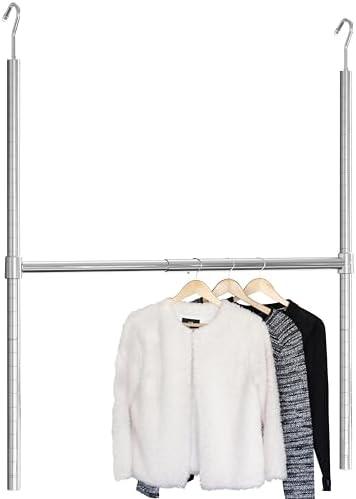
Double Hanging Rod
This is one of the fastest ways to create more room.
It lets you turn one hanging section into two, making better use of vertical space for shirts, pants, and shorter items.



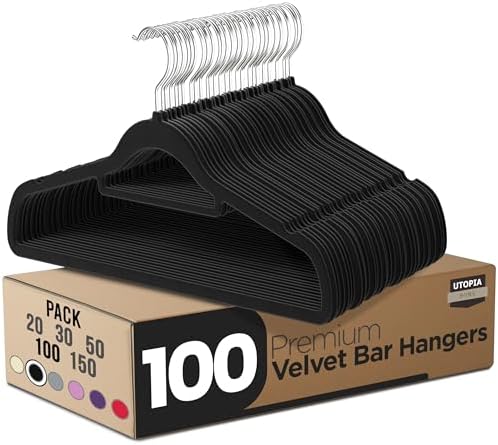
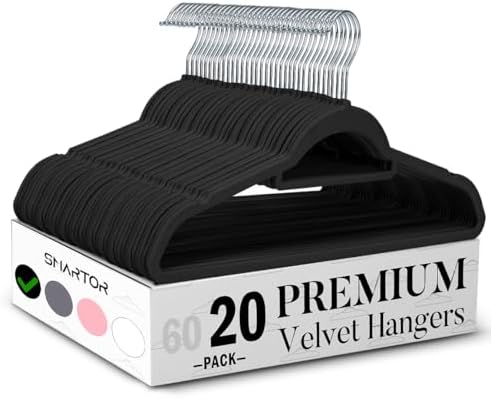
Slim Velvet Hangers
These take up less space than traditional hangers and keep clothes from slipping.
They instantly make your closet feel less crowded without changing your layout.


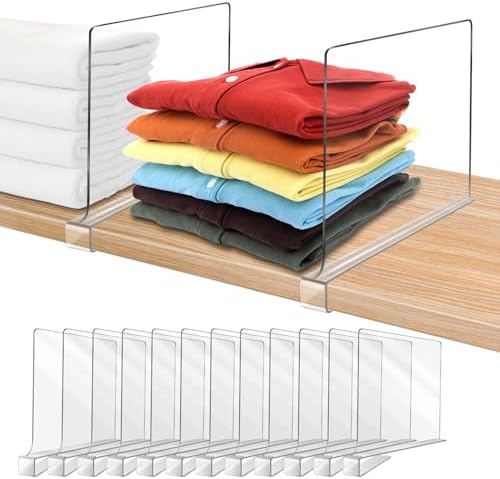
Shelf Dividers
Perfect for keeping stacks of clothes from collapsing.
They help maintain structure so shelves stay organized over time.


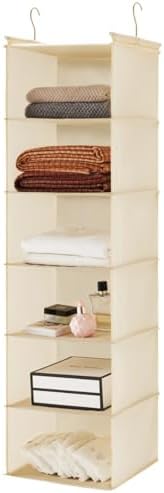
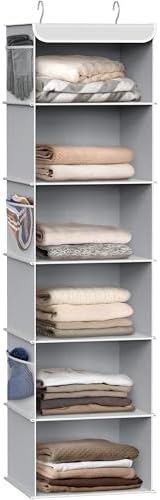
Hanging Closet Organizer
Adds vertical storage without installation.
Great for folded clothes, accessories, or items that don’t need to be hung.


Stackable Storage Bins
These help you build upward without creating messy piles.
You can organize by category or frequency while keeping everything easy to reach.


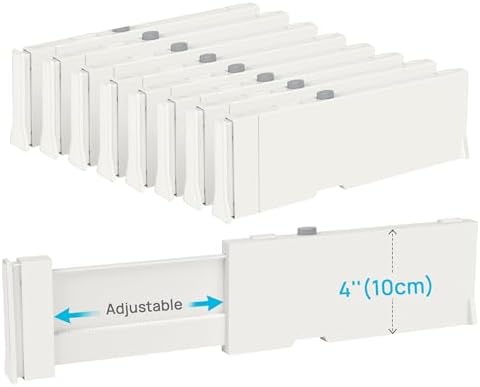
Drawer Dividers
Useful for keeping smaller items separated and easy to find.
They prevent drawers from turning into mixed clutter.



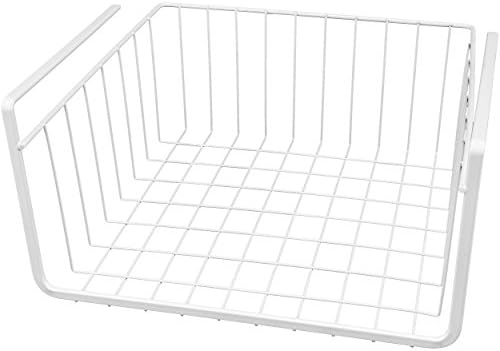
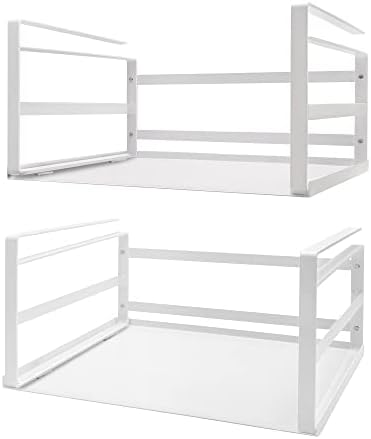
Under-Shelf Baskets
A simple way to create an extra layer of storage.
They use space that would normally go unused between shelves.


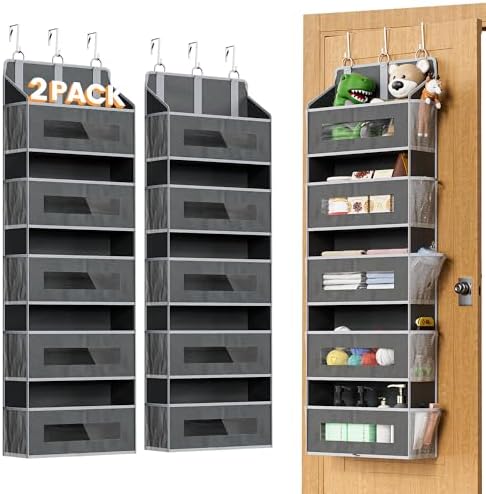
Over-the-Door Organizer
Great for using hidden space behind the closet door.
Perfect for shoes, accessories, or smaller items.



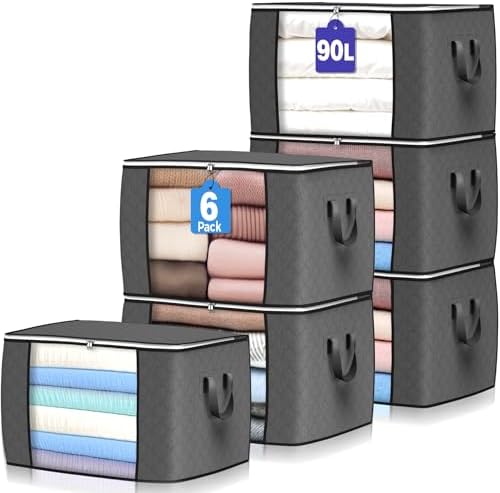
Storage Boxes for Seasonal Clothes
These keep off-season items out of your main space.
They reduce pressure on your everyday closet layout.

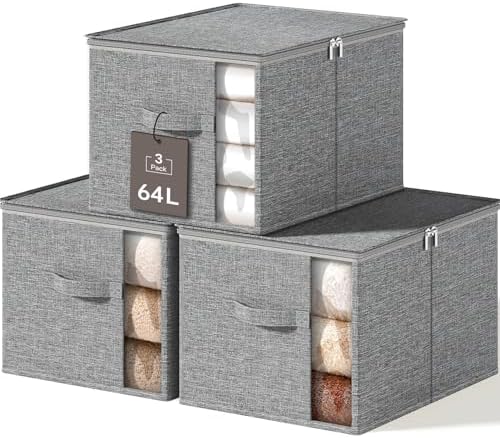
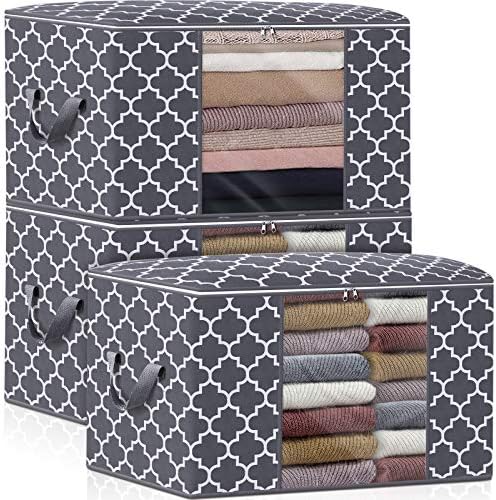
Foldable Fabric Bins
Flexible and easy to move.
They help group items together without making your closet feel too rigid.
![Fab totes Storage Bins [3-Pack], Foldable Storage Baskets for Org...](https://m.media-amazon.com/images/I/41xO-WYPauL._AC_.jpg)
![Univivi Fabric Foldable Storage Boxes [4-Pack] Large Collapsible ...](https://m.media-amazon.com/images/I/41gSGENG2ZL._AC_.jpg)


These products work best when they support a simple layout. You don’t need all of them—just a few that solve your biggest space problems can make your closet feel more open and much easier to use.
Final Thoughts
A small closet doesn’t fail because of size.
It struggles when the layout doesn’t match how you use it.
When everything competes for the same space. When shelves don’t make sense. When there’s no clear flow.
But once you start making small adjustments—creating zones, using vertical space, placing things where they’re easiest to reach—
Something shifts.
Your closet stops feeling tight.
It stops fighting you every time you open it.
And instead, it starts to feel… simple.
Not perfect.
Just easy enough to work with every day.
And that’s what makes it last.