10 Small Space Hacks Nobody Tells You (That Actually Work)
Small spaces have a way of exposing everything.
Every object matters. Every habit shows up. Every small inefficiency becomes noticeable.
In a bigger home, you can hide things. You can spread out. You can delay putting something away and it doesn’t feel like a big deal.
In a small space, you feel it immediately.
A chair with clothes on it changes the whole room. A cluttered table makes everything feel tighter. Even a few extra items can make the space feel heavier than it really is.
That’s why most advice falls short.
It tells you to add storage, add systems, add solutions.
But in reality, small spaces don’t need more layers.
They need less friction.
Less searching, less moving, less adjusting things just to use your own space.
And the difference usually comes from small shifts, not big changes.
1. Stop Trying to Use Every Inch
There’s a kind of pressure that comes with small spaces.
You feel like you should be maximizing everything.
Every corner, every wall, every empty spot—there’s always something you could add.
A shelf, a hook, a small piece of furniture.
And at first, it feels smart.
Like you’re making the most of what you have.
But over time, that mindset starts to backfire.
Because when everything is used, nothing feels open.
Your eyes don’t get a place to rest. Your movements feel more restricted. Even simple tasks start to feel slightly more effortful.
Leaving some space unused isn’t wasted potential.
It’s what makes the rest of your space usable.
A clear surface, an open corner, a bit of breathing room—those things make a small space feel functional, not crowded.
2. Create “Drop Zones” Where You Naturally Leave Things
Clutter isn’t random.
It follows patterns.
You probably already have a few spots where things tend to land without thinking.
Your keys end up in the same place. Your bag always goes to that one chair. Your shoes stop at a certain point near the door.
Those patterns aren’t mistakes.
They’re habits.
And instead of trying to fight them, it’s much easier to work with them.
A small tray where your keys naturally land. A hook exactly where you tend to drop your bag. A basket near the spot where your shoes already go.
The location matters more than the object itself.
Because when something has a place in the exact spot where you already leave it, it doesn’t feel like organizing.
It just feels natural.
And that’s what makes it stick.
3. Reduce Movement, Not Just Clutter
Most people think organization is about making things look cleaner.
But in a small space, what matters more is how you move.
If you have to take extra steps to complete simple tasks, your space is working against you.
Walking across the room to grab something you use often. Reaching around objects just to access a surface. Constantly adjusting things to make space.
These are small interruptions.
But they happen all the time.
And they make your space feel less comfortable, even if you can’t immediately explain why.
A more useful way to think about organization is this:
What can you do to reduce movement?
Keep related items closer together. Store things where you actually use them. Remove anything that forces you to adjust your routine.
When your movements become smoother, your space starts to feel easier—without needing to change much visually.
4. Use “Invisible Storage” First
When you need more space, the instinct is to add something visible.
A shelf, a rack, a container.
But every visible addition changes how your space feels.
Even if it’s organized, it still adds visual weight.
And in a small space, that weight adds up quickly.
That’s why “invisible storage” works so well.
Places like under your bed, inside furniture, behind doors—areas that hold things without being constantly in sight.
You’re still storing the same items.
But the space feels lighter because you’re not seeing everything at once.
It’s not about hiding your life.
It’s about reducing what your eyes have to process every day.
5. Stop Organizing Things You Don’t Even Use
This is one of the easiest traps to fall into.
You spend time creating systems for things that aren’t even part of your daily life.
Old items, backups, “just in case” things.
You fold them, group them, find storage solutions for them.
And technically, everything becomes more organized.
But your space doesn’t feel better.
Because those items are still there.
They still take up room. They still add weight. They still compete for space with the things you actually use.
At some point, it’s worth asking a simple question:
If this disappeared, would it affect my daily life?
If the answer is no, organizing it better won’t change much.
Removing it will.
And in a small space, that difference is noticeable almost immediately.
6. Keep Surfaces Slightly Empty (On Purpose)
In a small space, surfaces do a lot of work.
Your table isn’t just a table—it’s where you eat, work, drop things, maybe even organize for a moment. Same with counters, desks, nightstands.
And when those surfaces are always full, even if everything is “organized,” they stop being useful.
You have to clear them before you can use them. Move things around. Adjust your space just to do something simple.
That’s where the friction comes in.
Keeping part of your surfaces intentionally empty changes that.
Not completely empty—just enough space to use without thinking.
It gives you flexibility. A place to put things down, to work, to move freely.
And in a small space, that flexibility makes everything feel easier.
7. Group by Use, Not by Type
A lot of organization systems are built around categories.
Office supplies together. Kitchen tools in one area. Cleaning products somewhere else.
It makes sense on paper.
But in real life, you rarely use things by category.
You use them in combinations.
You sit down to work and need a few specific items. You cook and reach for a set of things that always go together. You get ready and follow a routine.
When those items are spread across different areas, you’re constantly moving and searching.
Grouping by use changes that.
Everything you need for one activity lives together.
Not perfectly arranged—just close enough that you don’t have to think about it.
It reduces those small interruptions that make your space feel less efficient.
8. Limit What Stays Out (Even If It Looks Nice)
It’s easy to justify keeping things visible.
They look good. They add personality. They make the space feel “yours.”
And that’s important.
But in a small space, every visible item has a cost.
Even when things are organized and aesthetically pleasing, they still take up visual space.
Your eyes have to process them. Your brain registers them.
And over time, that adds a subtle sense of clutter.
Limiting what stays out isn’t about removing everything.
It’s about being selective.
Keeping only what you truly enjoy seeing or use often.
That way, what remains actually stands out—and your space feels calmer without losing character.
9. Use the “One-Touch Rule”
Most clutter doesn’t come from big moments.
It builds slowly.
You put something down for now. Then another thing. Then something else joins it.
And before you realize it, those small decisions have turned into a mess.
The one-touch rule is simple:
When you handle something, you complete the action.
If it belongs somewhere, it goes there immediately.
No temporary stops.
It might feel like a small effort in the moment.
But it prevents those small piles from ever forming.
And in a small space, avoiding buildup is much easier than fixing it later.
10. Reset Your Space at the Same Time Every Day
A small space doesn’t give you much room to ignore things.
If something is out of place, you notice it.
And if you leave it long enough, it starts to affect how the whole space feels.
Waiting until things feel messy is what makes it overwhelming.
Because by then, there’s already too much to deal with.
A daily reset changes that.
Not a full clean—just a quick return to order.
Putting things back, clearing surfaces, restoring your space to a usable state.
The key is consistency.
Tie it to a moment that already exists in your day.
Before bed, after work, at the same time every evening.
When it becomes automatic, your space stays under control without effort.
Recommended Products to Make Your Kitchen More Efficient
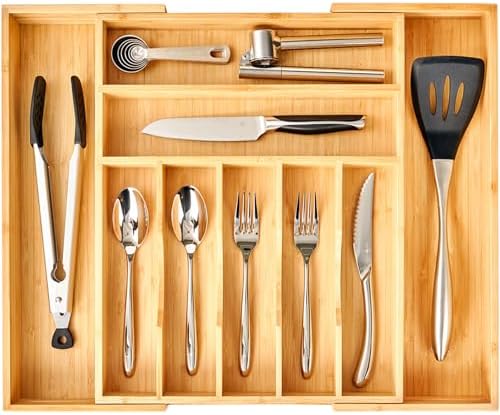
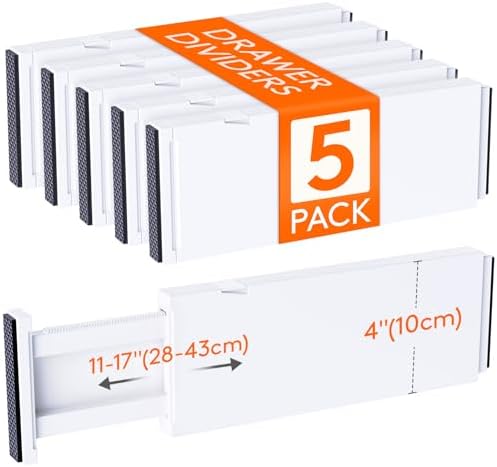
Adjustable Drawer Organizers (For Utensils and Tools)
A cluttered drawer slows you down more than you think. You open it, search for a few seconds, move things around… and that happens multiple times while cooking.
Adjustable drawer organizers solve that by giving everything a clear, visible space. You’re not guessing where things are—you see them instantly.
The key is flexibility. Your utensils aren’t all the same size, so fixed compartments often don’t work as well. Being able to adjust the layout makes it much easier to maintain over time.


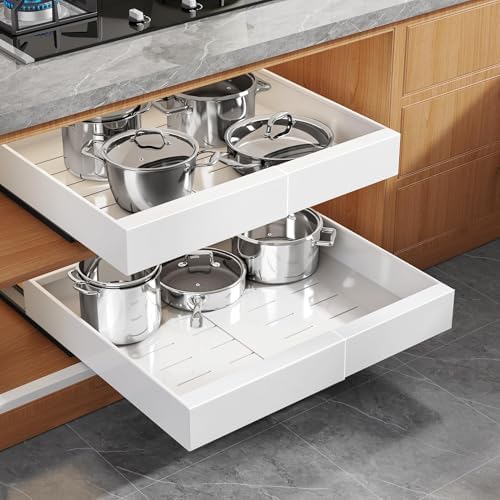
Pull-Out Cabinet Shelves (For Easy Access)
Lower cabinets are one of the biggest friction points in most kitchens.
You have to bend down, reach in, and move things just to grab what you need. It’s not difficult, but it slows you down every single time.
Pull-out shelves completely change that experience.
Instead of digging through your cabinet, everything slides out toward you. You see everything at once, and nothing gets lost in the back.
This is especially useful for pots, pans, and heavier items you use often.


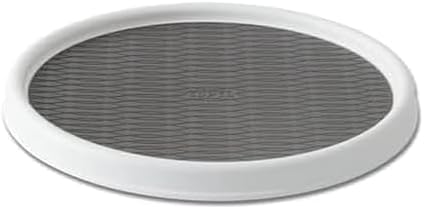
Lazy Susans (For Deep or Corner Spaces)
Deep cabinets tend to become “dead zones” where things disappear.
You know something is there, but actually reaching it is another story.
A Lazy Susan fixes that with a simple idea—rotation.
Instead of moving everything around, you just spin and grab what you need. It keeps items accessible without rearranging the whole space.
It works especially well for oils, sauces, and frequently used ingredients.


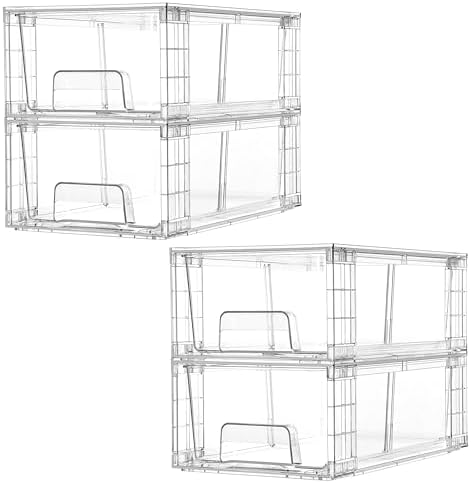
Clear Storage Containers (For Dry Foods)
One of the small things that slows you down is not knowing what you have.
You open a cabinet, check multiple packages, try to figure out what’s running low.
Clear containers remove that step.
You can see everything instantly—what’s available, how much is left, and what you need to restock.
Stackable options also help you use vertical space without making things harder to access.



Countertop Utensil Holders (For Daily Tools)
If you’re constantly opening drawers to grab the same few tools, it adds unnecessary steps to your routine.
A simple utensil holder on the counter can eliminate that.
It keeps your most-used tools within arm’s reach while cooking, so you’re not interrupting your flow.
The key is to keep it minimal—only include what you actually use daily. Otherwise, it becomes clutter instead of a solution.


Under-Sink Organizers (To Reduce Hidden Clutter)
The space under the sink often turns into a catch-all area.
Cleaning supplies, random items, things you don’t use often—it all ends up there.
An under-sink organizer helps separate those items so they’re easier to access.
Instead of stacking everything, you create simple layers that make sense.
That way, even the less-used areas of your kitchen don’t slow you down when you need something.


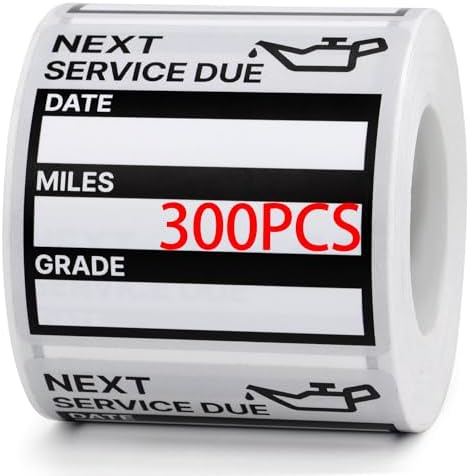
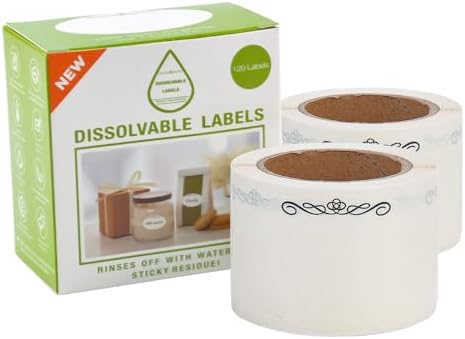
Minimal Labeling Tools (Optional)
Labels can help, especially if you’re sharing your kitchen or setting up a new system.
They make it easier to know where things go, which helps maintain order over time.
But they’re not essential.
If your setup already feels intuitive, you don’t need them.
Labels should support your system—not replace it.


Final Thought
Small spaces don’t need to be perfect.
They just need to support your life.
The biggest difference doesn’t come from adding more storage or more systems.
It comes from removing small points of friction.
Less movement. Fewer decisions. Less visual noise.
And when those things are reduced, your space starts to feel lighter.
Not because it’s bigger.
But because it finally works.