
Best Ways to Organize Deep Kitchen Drawers

Deep kitchen drawers can be a blessing or a disaster. On one hand, they hold a lot. On the other, things get stacked, buried, and forgotten in the back. You reach in for a lid and come out with a baking tray, three spatulas, and mild frustration.
The good news? With a few simple strategies, deep drawers can become some of the most functional storage spots in your kitchen.
Here’s how to make them work for you instead of against you.
1. Empty the Drawer and Start Fresh
Before you organize anything, you need to see what you’re actually working with. Deep drawers are masters at hiding clutter, so chances are there are items inside you forgot you owned.
Pull everything out and place it on your counter or table. This might look messy at first, but it gives you a clear picture of how much you’re trying to fit into that space. Once everything is visible, start grouping similar items together — cooking tools in one pile, baking tools in another, containers and lids together, and so on.
This step almost always reveals duplicates and “why do I still have this?” items. Maybe you’ll find three vegetable peelers, warped plastic lids with no matching container, or a gadget you haven’t touched in years. Be honest with yourself. If you don’t use it and it doesn’t make cooking easier, it’s probably just taking up valuable drawer space.
Deep drawers feel chaotic mainly because they’re overcrowded. By removing what you don’t truly need, you instantly make the organizing part easier. You’re not just rearranging clutter — you’re creating a system with items that actually deserve a place in your kitchen.
2. Use Drawer Dividers to Create Sections
A deep drawer without dividers is basically a big storage box. The moment you open and close it a few times, everything shifts, mixes, and stacks into a jumble.
Drawer dividers create boundaries that keep categories of items in their own zones. This structure is what turns a messy drawer into a functional one. Instead of digging through layers, you’ll know exactly where to reach.
Think about how you use your kitchen and divide accordingly. You might create:
- A section for everyday cooking utensils like spatulas and spoons
- A section for measuring cups and spoons
- A section for smaller tools like peelers, zesters, and thermometers
If you don’t have built-in dividers, small bins or containers work just as well. The goal is simply to break up the open space so everything isn’t sliding into one giant pile.
Dividers also help you maintain the system over time. When each section has a limit, you’re less likely to keep adding more tools “just because they fit.” The structure naturally encourages you to stay organized.
3. Store Items Vertically Instead of Stacking
Stacking is the number one reason deep drawers become frustrating. When items are piled on top of each other, the things at the bottom basically disappear. Every time you need something, you have to lift, shuffle, and dig.
A better approach is to store items vertically whenever possible — like files in a filing cabinet.
Cutting boards, baking sheets, cooling racks, and even pot lids can be stored on their sides using dividers or tension rods. This way, you can see each item at a glance and pull out exactly what you need without disturbing the rest.
The same idea works for food storage containers and lids. Instead of stacking lids in a slippery tower, stand them upright in a bin so they’re easy to flip through. Shallow containers can also be stored on their sides if the drawer is deep enough.
Vertical storage makes better use of the drawer’s height and improves visibility. When you can see everything, you’re less likely to buy duplicates or waste time searching.
4. Use Bins to Control Smaller Items
Small kitchen tools are the biggest troublemakers in deep drawers. Things like corn holders, measuring spoons, bag clips, and thermometers seem harmless — until they’re all loose in the same space.
That’s where bins come in. Think of them as mini organizers inside your drawer.
Group similar items together in small containers so they don’t spread out. For example, you might have:
- One bin for baking tools like cookie cutters and pastry brushes
- One for prep tools like peelers and garlic presses
- One for small specialty gadgets you only use occasionally
This not only keeps things from tangling together but also makes it easier to find what you need. Instead of searching the entire drawer, you just pull out the right bin.
Bins also make cleaning and resetting much simpler. If crumbs or dust collect in the drawer, you can lift out the containers, wipe the surface, and put everything back in seconds. It’s a small step that makes a big difference in keeping deep drawers organized long term.
5. Assign Each Drawer a Clear Purpose
One of the easiest ways for deep drawers to fall back into chaos is when they don’t have a defined role. When a drawer becomes a “miscellaneous” space, it slowly fills with random items that don’t belong anywhere else.
Instead, give each deep drawer a specific purpose based on how you use your kitchen. For example, one drawer might be dedicated entirely to pots and lids, another to food storage containers, and another to cooking utensils and prep tools. When a drawer has a clear identity, it’s much easier to decide what belongs there — and what doesn’t.
This also makes cooking more efficient. If you know all your baking tools live in one drawer, you won’t waste time opening three different places to find what you need. The same goes for meal prep tools or everyday cookware.
Clear-purpose drawers are especially helpful if you share your kitchen with family members or roommates. When the system is simple and logical, everyone can follow it. Labels inside the drawer or on bins can add extra clarity if needed.
The more specific you are about what each drawer is for, the less likely it is to become a clutter catch-all again.
6. Make the Back of the Drawer Work for You
Deep drawers have a lot of space from front to back, but most people only really use the front half. The back often turns into a forgotten zone where items get buried and rarely used.
To avoid this, be intentional about what goes in the back. Store items you don’t need every day toward the rear, and keep your most-used tools closer to the front for easy access. For example, everyday spatulas and spoons can stay at the front, while specialty baking tools or seasonal items go behind them.
Using long bins that run from the front to the back of the drawer can help create “lanes.” This prevents items from sliding around and makes it easier to pull out an entire section if you need something from the back. Instead of digging blindly, you can lift or slide a bin to reach what’s behind it.
You can also arrange items by frequency of use within each section. The tools you grab daily should be the easiest to reach, while the ones you use once in a while can live farther back. This simple adjustment makes your drawer feel more ergonomic and less frustrating during everyday cooking.
When the back of the drawer is just as organized as the front, you’re truly using the full depth — not just half of it.
7. Don’t Overfill — Leave Breathing Room
It’s tempting to treat deep drawers like unlimited storage, but packing them to the brim almost always backfires. When there’s no extra space, items get wedged together, stacks get unstable, and it becomes annoying to put things away.
Leaving a little breathing room is one of the most underrated organizing tips. When there’s space to move items in and out easily, you’re much more likely to maintain the system. You won’t have to rearrange half the drawer just to return one pan or utensil.
Breathing room also helps you see what you have. When drawers are overfilled, things get hidden underneath or behind other items, which can lead to buying duplicates because you forgot what you already owned.
If you notice a drawer is always crammed, take it as a signal to reassess. You may need to declutter again, relocate a category to another cabinet, or simply accept that not everything fits comfortably in one place.
Organization works best when it’s practical, not packed to perfection. A little empty space inside your drawers makes your kitchen feel calmer and your daily routines much smoother.
Recommended Products for Organizing Deep Kitchen Drawers
Here are a few smart tools that make deep drawers easier to manage and keep tidy long term.
Expandable Deep Drawer Dividers
Adjustable drawer dividers are one of the simplest ways to stop items from sliding into a messy pile. They let you create custom sections for stacks of lids, food containers, baking tools, or utensils. Look for spring-loaded or tension dividers that are tall enough to work in deep drawers.
Best for: Separating categories and keeping stacks upright.


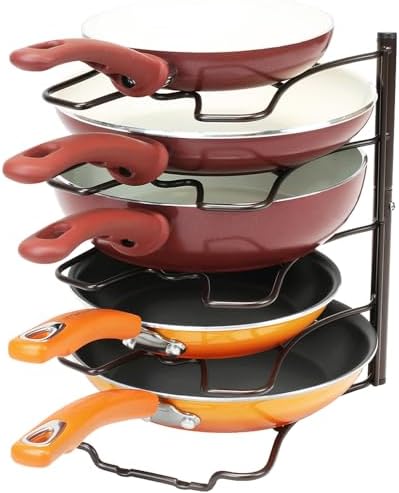
Stackable Pan and Lid Organizers
Instead of stacking pans on top of each other (and creating a loud metal avalanche every time), a pan organizer lets you store them vertically. Many models also have slots for lids, which keeps everything visible and easy to grab.
Best for: Pots, pans, and cutting down drawer noise and frustration.


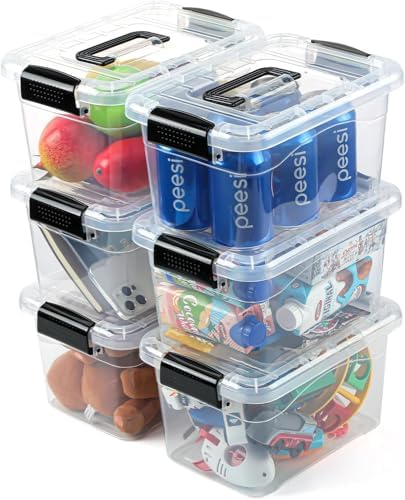
Clear Storage Bins with Handles
Long, narrow bins help you divide deep drawers into “zones.” Clear bins make it easy to see what’s inside, and handles let you slide the whole bin out when you need something from the back.
Use them for snack packs, baking tools, wraps and foils, or small kitchen gadgets.
Best for: Creating pull-out sections inside deep drawers.



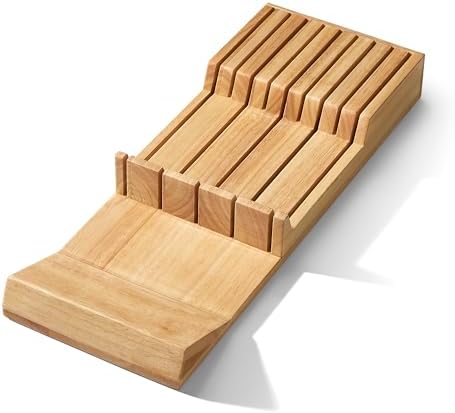
In-Drawer Knife Organizer
If you’re storing knives in a deep drawer, an in-drawer knife tray is much safer and more organized than letting them move around loosely. These organizers protect the blades, protect your hands, and free up counter space.
Best for: Safe, clutter-free knife storage.


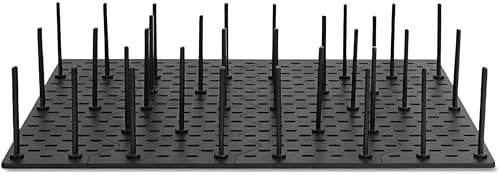
Adjustable Peg Drawer Organizer
Peg systems are especially useful for deep drawers that hold dishes, bowls, or food containers. You can move the pegs around to fit your exact items, which keeps stacks from tipping over when you open and close the drawer.
Best for: Plates, bowls, and container sets that tend to shift.


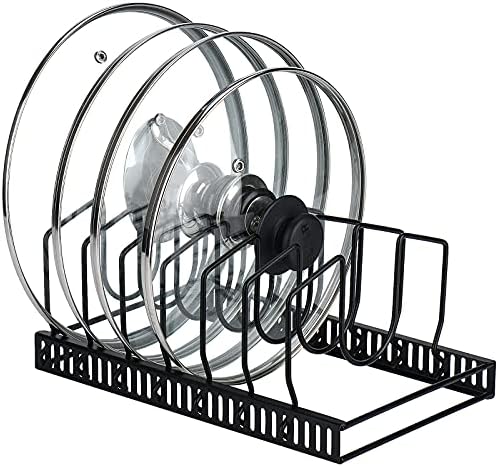
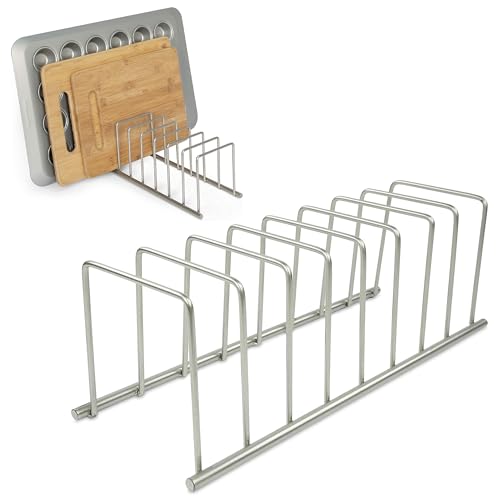
Lid Organizer Rack
Food container lids are usually the first thing to turn into a mess. A lid organizer keeps them standing vertically so you can flip through them like files instead of digging through a pile.
Best for: Matching lids quickly and avoiding cluttered stacks.



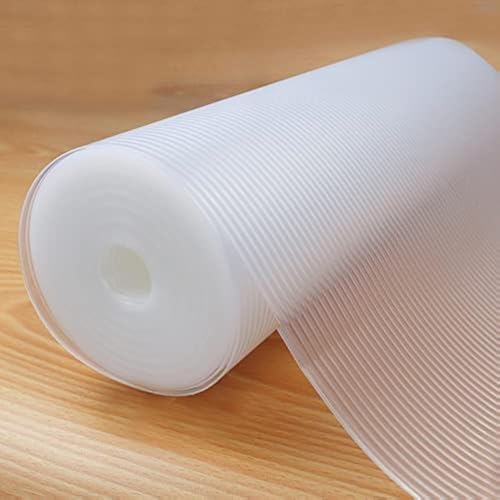
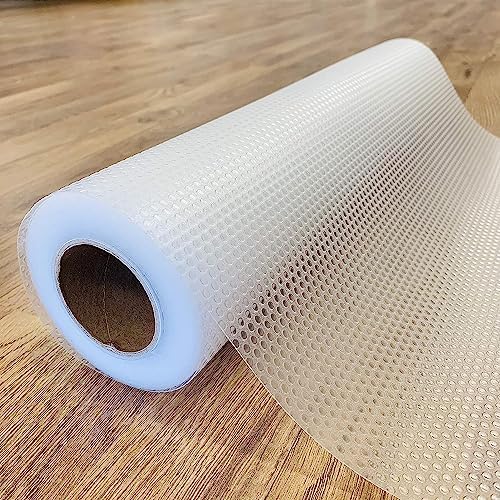
Non-Slip Drawer Liner
This might seem basic, but a good non-slip liner makes a big difference in deep drawers. It prevents organizers and stacks from sliding every time you open the drawer, which helps your system stay intact longer.
Best for: Keeping everything in place and reducing shifting.


Final Thoughts
Deep kitchen drawers can either make your kitchen feel calm and efficient — or cluttered and stressful. The difference comes down to structure, visibility, and not trying to cram in too much.
With dividers, bins, vertical storage, and clear categories, your deep drawers can become some of the most useful spots in your kitchen instead of a daily annoyance.
As an Amazon Associate, I earn from qualifying purchases.