Small Kitchen? These Space-Saving Ideas Actually Work (Under $50)
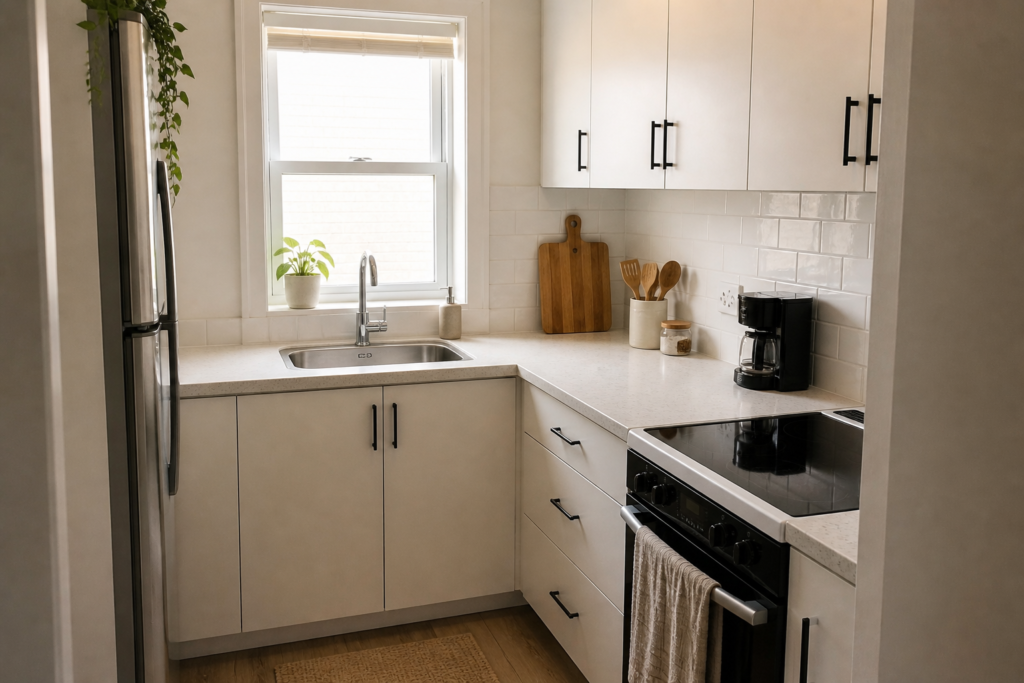
At first, the kitchen felt… fine.
Not big, not especially comfortable, but usable.
You could cook, clean, store things. Nothing felt completely out of control.
So you didn’t really question it.
You just adapted.
Until those small, everyday annoyances started to feel a little more constant.
Before: The Kind of Kitchen That Slows You Down
It wasn’t one big problem.
It was a bunch of small ones.
You’d start cooking and realize there wasn’t quite enough space on the counter. Move something out of the way. Then move something else. Then try to remember where you put it.
You’d open a cabinet and have to shift things around just to grab one item.
You’d finish cooking and notice the counter was completely taken over.
None of this felt dramatic.
But it happened every single time.
And that’s what made the kitchen feel smaller than it actually was.
Not the size itself…
The effort it took to use it.
It Looked Organized… But Didn’t Feel That Way
From the outside, everything had a place.
Utensils in drawers. Food in containers. Appliances lined up on the counter.
If someone walked in, they probably wouldn’t think anything was wrong.
But using it felt different.
Because “organized” doesn’t always mean practical.
Things were stored in a way that made sense visually—but not for daily use.
Items you needed often were tucked away. Things you barely used were taking up prime space.
You had to open things, reach around things, move things.
And that constant effort added friction to everything you did.
The Counter Was Always Half Usable
This was one of the biggest issues.
The counter wasn’t cluttered in an obvious way.
But it was never really free either.
There was always something on it.
A toaster, maybe. A coffee setup. A few containers that felt too useful to put away.
Individually, they made sense.
Together, they quietly took over your working space.
So every time you wanted to cook, you had to create space first.
Shift something. Rotate things. Make room.
It became part of the routine.
And that’s what made cooking feel slower than it should.
Cabinets Were Full—But Not Efficient
There was storage.
Plenty of it, technically.
But it didn’t feel that way.
Because most of it was already full.
Not just with essentials, but with things you might use.
Extra containers. Rarely used tools. Backup items.
Nothing unnecessary on its own.
But together, they filled the space in a way that made everything harder to access.
You’d open a cabinet and hesitate for a second.
Not because you didn’t know what was there…
But because getting to it required effort.
Visual Clutter Made It Feel Smaller
Even when things were “in place,” there was always something in view.
Appliances on the counter. Items on shelves. Small details that didn’t seem like a big deal.
But in a small kitchen, everything is close together.
So your eyes are constantly processing multiple things at once.
And that creates a subtle sense of pressure.
The space feels tighter.
More crowded.
Not because it is…
But because it looks and feels busy.
The Real Problem Was Friction, Not Space
At some point, it becomes clear.
The kitchen isn’t too small.
It’s just harder to use than it should be.
All those small actions—moving things, searching, adjusting—add up.
They slow you down.
They make simple tasks feel more complicated.
And over time, they change how the space feels.
That’s the real issue.
Not the size.
The friction.
The Shift: Paying Attention to What Gets in the Way
Instead of trying to make the kitchen look better, the focus changed to something simpler:
“What gets in the way when I’m cooking?”
Not what looks messy.
Not what could be more aesthetic.
Just what interrupts your flow.
Once you start noticing that, patterns appear quickly.
You see what’s always in the way. What you move every time. What you avoid using because it’s inconvenient.
And that’s where the real improvements come from.
Not adding more storage.
Not buying more things.
Just removing the small obstacles that make the kitchen harder to use.
After: Small Changes That Actually Make Cooking Easier
What happened next wasn’t a big overhaul.
There was no full reorganization day, no expensive setup, no perfect “Pinterest kitchen” moment.
Just a few small adjustments based on one idea:
Make things easier to use.
Some items were taken off the counter—not thrown away, just moved out of the way.
A few tools were brought closer to where they were actually used.
Storage wasn’t expanded… it was simplified.
At first, it didn’t even look that different.
But using the kitchen felt completely different.
The Counter Finally Became a Working Space
One of the biggest shifts came from something simple: freeing up part of the counter.
Not clearing everything.
Just enough to create real, usable space.
Before, the counter was technically available—but never fully usable.
After, you could start cooking immediately.
No moving things first. No adjusting.
You just had space.
And that changes everything.
Because when your main surface works, your whole kitchen works better.
Less Movement, More Flow
Before, cooking meant moving around the kitchen more than necessary.
Going back and forth. Opening cabinets repeatedly. Reaching for things in different places.
After, things started to feel more connected.
The items you use together were closer together.
You didn’t have to think as much about where things were.
You could move through your routine without interruptions.
And that’s what makes a kitchen feel efficient.
Not how it looks…
How it flows.
Storage Started to Feel Lighter
Nothing major changed about the cabinets.
But once unnecessary items were removed or relocated, everything else had more room.
You could see what you had.
You didn’t have to dig through things.
You didn’t feel like everything was packed tightly together.
And that alone made the kitchen feel less cramped.
Visual Noise Went Down (And You Feel It Immediately)
Another change that made a bigger impact than expected was reducing what stayed in sight.
Not hiding everything.
Just being more intentional.
Only daily-use items stayed on the counter.
Everything else moved out of view.
And suddenly, the kitchen felt calmer.
Cleaner—not in a perfect way, but in a lighter way.
Your eyes had less to process.
And naturally, the space felt bigger.
Cooking Became Faster Without Trying
This is the part people don’t expect.
You don’t feel like you’re “saving time.”
You just stop wasting it.
No more small pauses to move things.
No more searching for items.
No more adjusting your space before you can use it.
Everything flows a bit better.
And over time, that adds up.
What Didn’t Change (And Why That Matters)
The size didn’t change.
The layout didn’t change.
There was no renovation.
And most importantly—there was no big spending.
Everything stayed simple.
Which is exactly the point.
Because most small kitchens don’t need more space.
They need fewer obstacles.
Less friction, less visual clutter, less unnecessary movement.
The Result: A Kitchen That Feels Easy to Use
After everything settled, the difference wasn’t dramatic visually.
But it was obvious in daily use.
Cooking felt smoother.
Cleaning felt faster.
The space felt more open, even though nothing physically changed.
And that’s what people mean when they say a kitchen “feels bigger.”
Not the dimensions.
The experience of using it.
Recommended Products That Actually Save Space in a Small Kitchen (Under $50)
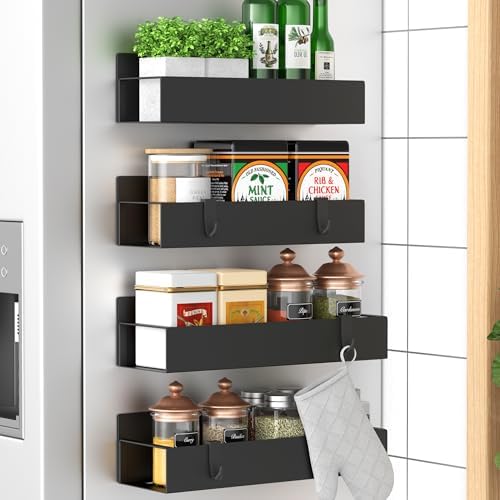
Over-the-Door Cabinet Organizers (To Use Hidden Space)
Most cabinet doors are wasted space.
A simple over-the-door organizer gives you extra storage without taking up room inside your cabinets.
Perfect for lids, wraps, or small tools you use often but don’t want cluttering your main space.


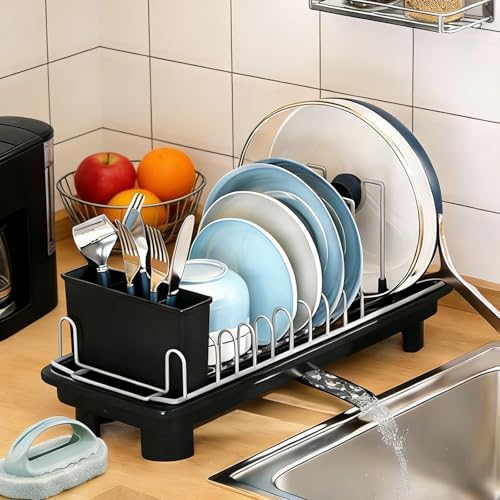
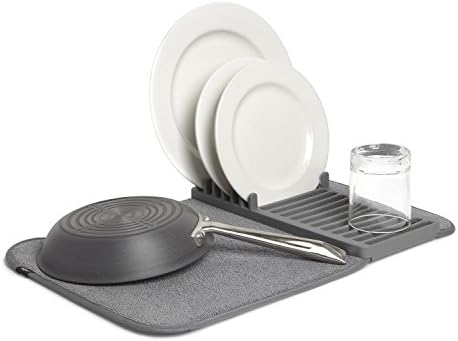
Compact Dish Drying Rack (That Doesn’t Take Over Your Counter)
A bulky drying rack can make a small kitchen feel even smaller.
A compact or foldable version gives you the function when you need it—and disappears when you don’t.
That alone can free up a surprising amount of usable counter space.


Stackable Food Storage Containers (To Maximize Vertical Space)
Regular containers waste a lot of space because they don’t stack well.
Stackable ones instantly make your cabinets feel more organized and easier to use.
You can see everything at a glance without digging through piles.


![Freshware Food Storage Containers [50 Set] 16 oz Plastic Deli Con...](https://m.media-amazon.com/images/I/51svwPcc6pL._AC_.jpg)

Adhesive Wall Hooks (For Tools You Use Daily)
Instead of filling drawers, move some of your most-used tools onto the wall.
Hooks are cheap, easy to install, and make things faster to grab while cooking.
They also free up space where it matters most.


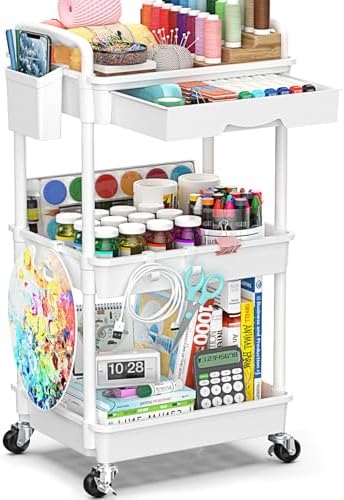
Rolling Storage Cart (For Flexible Extra Space)
A slim rolling cart acts like extra counter space when you need it.
You can use it while cooking, then move it out of the way afterward.
It’s one of the simplest ways to add functionality without making your kitchen feel crowded.


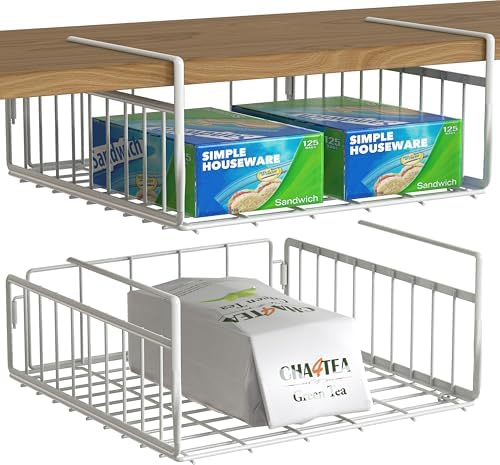
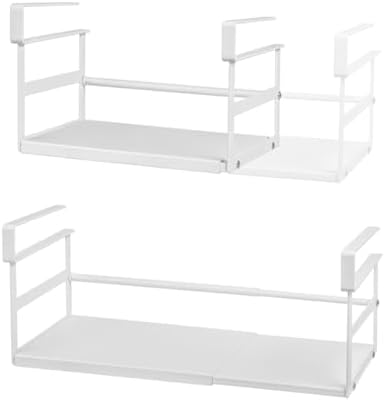
Under-Shelf Baskets (To Double Your Cabinet Space)
Cabinets often have unused vertical space.
Under-shelf baskets slide in and instantly create an extra layer of storage.
Perfect for plates, snacks, or small kitchen items.


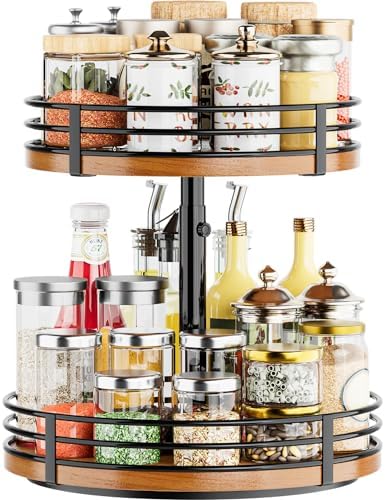
Lazy Susan Turntable (To Stop Wasting Deep Cabinet Space)
Deep cabinets and corners are where things get lost.
A simple turntable lets you access everything with a quick spin instead of moving items around.
It removes one of the most common frustrations in small kitchens.



Final Thought
A small kitchen doesn’t have to feel limiting.
It just needs to stop getting in your way.
Most improvements don’t come from adding more storage or more tools.
They come from simplifying what’s already there.
Making things easier to reach, easier to see, easier to use.
And when that happens…
Even a small kitchen can feel like enough.