
Before & After: This Tiny Bathroom Feels Twice as Big Now
At first, the bathroom didn’t seem like a real problem.
It was small, yes—but manageable.
You could move around, everything had a place, and nothing looked out of control.
If anything, it felt like one of those spaces you just accept as “it is what it is.”
And that’s exactly why nothing changed for a long time.
Because the issue wasn’t obvious.
It didn’t show up as mess.
It showed up as friction.
Before: The Kind of Space That Slows You Down in Small Ways
Using the bathroom wasn’t difficult.
It just never felt smooth.
There was always a tiny pause somewhere in your routine.
You’d reach for something and realize it was just out of reach. Try to place something down and notice there wasn’t quite enough space. Open a drawer for something you used every day.
None of it felt like a big deal.
But it happened constantly.
And over time, those small interruptions made the space feel more cramped than it actually was.
Not physically.
But functionally.
It Looked “Fine”… But Didn’t Feel That Way
If you walked in quickly, nothing stood out.
The counter wasn’t overflowing. The shelves weren’t collapsing. The essentials were there.
But living with it was different.
Because “fine” doesn’t always mean easy.
The counter, for example, looked clean enough.
A few items—things you use every day.
But those few items were always in the way, just enough to reduce your usable space.
So every time you needed the counter, you had to adjust.
Move something slightly. Shift things around. Create space before actually using it.
It became automatic.
And that’s the problem.
Storage Was Full… Even If It Didn’t Look It
There were cabinets. A drawer or two. Some storage in the shower.
Technically, there was enough room.
But a lot of that space was already taken.
Not by things you used daily—but by things that just lived there.
Extra products. Backups. items you might need eventually.
Individually, they didn’t seem like a problem.
But together, they filled the space in a way that made everything feel tighter.
Because when storage is always full, your space starts to feel full too.
Even if nothing is out of place.
Visual Noise Adds Up Faster in Small Spaces
One of the biggest issues wasn’t physical clutter.
It was visual clutter.
There was always something in view.
A few items on the counter. Bottles in the shower. Small things that felt normal on their own.
But in a small bathroom, everything is close together.
So your eyes are constantly processing multiple things at once.
There’s no break.
And when your brain doesn’t get that visual pause, the room starts to feel smaller.
Not because it is…
But because it feels heavier.
The Real Problem Wasn’t Size
At some point, it became clear that the bathroom itself wasn’t the issue.
The size hadn’t changed.
What had changed was how it felt to use.
And that came down to one thing: friction.
Small actions that shouldn’t take effort—but did.
Opening storage for things you use daily. Moving items just to create space. Reaching around objects instead of directly for them.
These aren’t big problems.
But they’re constant.
And that’s what shapes your experience of the space.
The Shift: Paying Attention to What Feels Slightly Off
Instead of trying to make the bathroom look better, the focus shifted to something simpler:
“What feels slightly annoying here?”
Not frustrating enough to complain about.
Not bad enough to fix immediately.
Just those small moments where something feels off.
Once you start noticing them, patterns appear.
You see what’s always in the way. What you always move. What interrupts your routine, even in small ways.
And that’s where the real opportunity is.
Not in adding more…
But in removing what doesn’t need to be there in the first place.
After: Small Adjustments That Changed How the Space Feels
What happened next wasn’t a big transformation.
There was no renovation, no new layout, no dramatic “before and after” moment.
Just a few quiet changes that made the bathroom easier to use.
Some items were simply moved closer to where they were actually used.
Others were taken off the counter—not thrown away, just stored somewhere less visible.
The shower was simplified to only what was used daily.
That’s it.
No complicated system.
But those small changes removed a surprising amount of friction.
The Bathroom Started Working With You
Before, you had to adjust to the space.
Reach around things. Move items first. Think about where something was.
After, those steps started to disappear.
You reach—and it’s there.
You move—and there’s space.
You go through your routine without small interruptions.
It’s not something you consciously notice at first.
But after a few days, you realize everything feels smoother.
And that’s what makes the difference.
The Counter Finally Became Usable
One of the most noticeable changes came from clearing part of the counter.
Not making it empty.
Just giving it enough space to actually function.
Before, even simple actions required a small reset—moving a bottle, shifting a container, creating room.
After, that step was gone.
You could just use the space.
And that small shift changed how the whole bathroom felt.
Because when your main surface works without effort, everything else feels easier too.
Less Visual Noise, More Breathing Room
Another change that made a bigger impact than expected was reducing what stayed in sight.
Not hiding everything.
Just being more selective.
Only the things used daily stayed visible.
Everything else moved out of the immediate view.
And that gave the room something it didn’t have before—breathing room.
Your eyes weren’t constantly jumping from one item to another.
The space felt calmer, lighter.
And naturally, it started to feel bigger.
Movement Became More Natural
Before, every action had a small obstacle.
Something in the way. Something slightly out of place.
After, movement became more direct.
You didn’t have to adjust your routine to fit the space.
The space supported your routine.
And when that happens, even a small bathroom can feel comfortable.
Not because it’s bigger…
But because it stops getting in your way.
Storage Felt Lighter Without Changing Much
Interestingly, the amount of storage didn’t really change.
But how it felt did.
Because once unnecessary items were removed or relocated, everything else had more room.
You didn’t have to dig through things.
You didn’t feel like space was always “full.”
And that alone made the bathroom feel less compressed.
What Stayed the Same (And Why That Matters)
The size didn’t change.
The layout didn’t change.
There was no expensive upgrade or complex solution.
Which is important.
Because it shows that most small bathrooms don’t need more space.
They need fewer obstacles.
Less visual clutter. Less unnecessary movement. Less effort to use what’s already there.
The Result: A Space That Feels Easier Every Day
After everything settled, the difference wasn’t dramatic visually.
But in daily use, it was obvious.
The bathroom felt easier.
Quicker to move through. Less frustrating. More comfortable to be in.
And that’s what makes a space feel bigger.
Not the measurements.
The experience.
Recommended Products That Make a Small Bathroom Feel Bigger (Without Renovating)
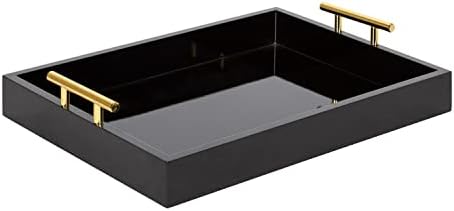
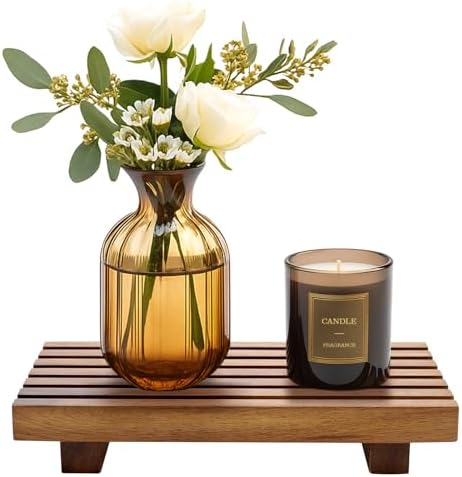
Countertop Trays (To Create Controlled Space)
Instead of multiple small items scattered across the counter, a simple tray groups your daily essentials in one place.
It reduces visual noise and leaves part of the counter free, which makes the space feel more open without removing what you use.


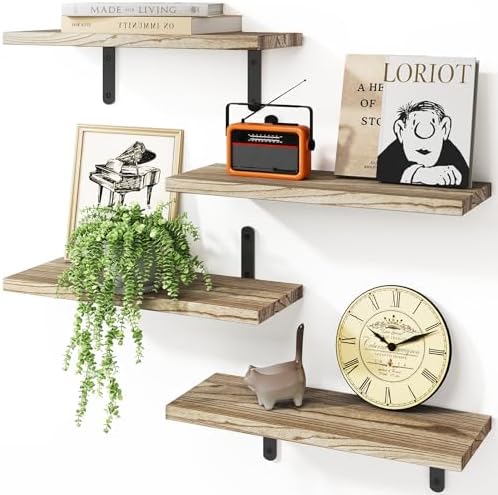
Wall-Mounted Shelves (To Free Up the Counter)
Moving a few items off the counter and onto a wall shelf instantly creates usable space.
It keeps essentials accessible while giving your main surface room to breathe.
The key is to keep it minimal—just what you actually use.
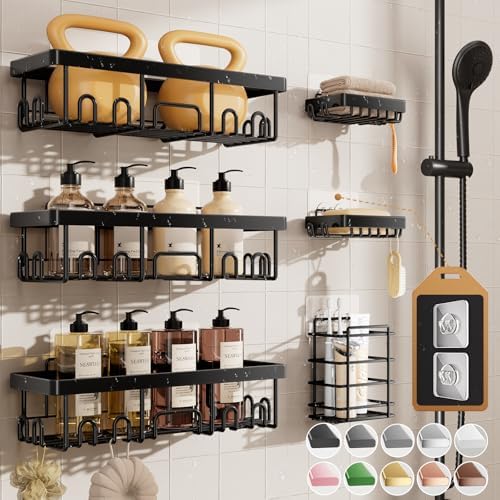

Shower Caddies (To Simplify the Shower Area)
A crowded shower makes the whole bathroom feel tighter.
A simple caddy keeps your daily products in one place instead of spread out.
It’s not about storing more—it’s about limiting what stays inside and keeping it organized.


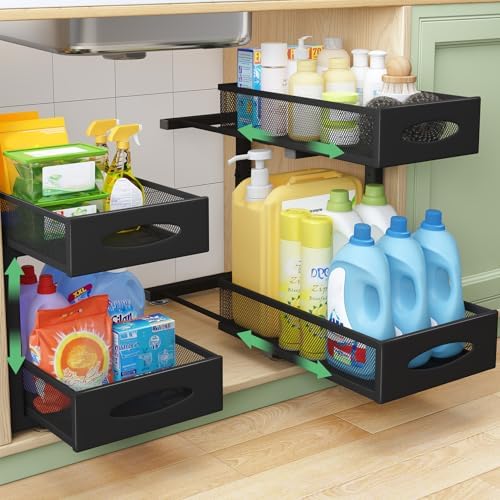
Under-Sink Organizers (To Reduce Hidden Clutter)
The space under the sink can easily become overcrowded.
An organizer creates clear sections so everything is visible and easy to access.
You don’t need to dig around or move things just to find what you need.


Over-the-Door Hooks (For Everyday Items)
Towels, clothes, or items you’ll use again don’t always have a clear place.
Hooks give them a defined spot without taking up extra space.
They prevent things from spreading across the bathroom.


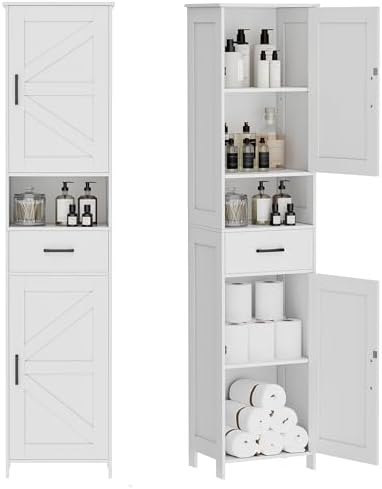
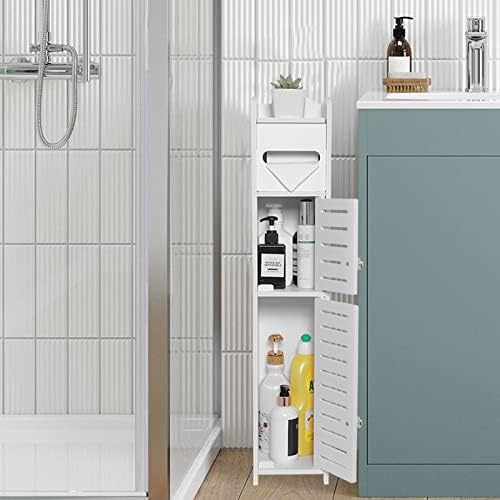
Slim Storage Cabinets (For Tight Spaces)
When you need extra storage, a slim cabinet can fit into narrow areas without making the room feel crowded.
It adds function without adding bulk.


Drawer Organizers (To Keep Small Items Under Control)
Small items tend to create the most clutter over time.
Drawer organizers break that into simple sections so everything has a place.
You open the drawer and immediately find what you need.


Final Thought
A small bathroom doesn’t have to feel limiting.
It just needs to work with you, not against you.
Most of the time, the solution isn’t adding more.
It’s removing what creates friction.
And once that friction is gone, the space doesn’t just look better.
It feels better every single day.