10 Kitchen Organization Hacks Nobody Talks About (That Actually Save Time)
Most kitchens don’t have a space problem.
They have a friction problem.
Everything is technically there. You have the tools, the ingredients, the storage… but cooking still feels slower than it should. You move more than necessary, you look for things longer than you expect, and small tasks take just a bit more effort every time.
It’s not one big issue.
It’s a collection of tiny inefficiencies that repeat every single day.
And the reason most organization advice doesn’t fix that is simple—it focuses on how things look, not how they’re used.
The hacks that actually save time feel almost too simple.
But once you apply them, you start noticing how much smoother everything becomes.
1. Stop Storing Things Where They “Belong”
There’s a traditional logic to kitchens that sounds right.
Plates go with plates. Spices in one area. Tools in a drawer. Everything categorized neatly.
And visually, it works.
But when you’re cooking, you don’t think in categories.
You think in actions.
You reach for oil while something is already on the pan. You grab a knife while holding ingredients in your other hand. You season, stir, adjust—all in a flow.
When items are stored based on categories instead of use, you’re forced to move more than necessary.
A few extra steps here, a turn there, opening different cabinets… it adds up quickly.
A more practical approach is to store things where your hands naturally go.
Not where they “should” be, but where you actually use them.
Oil near the stove. Spices within arm’s reach. Utensils right next to your cooking area.
It might not look like a magazine layout.
But it feels faster in real life.
2. Create a “Hot Zone” for Everyday Cooking
If you pay attention while cooking, you’ll notice something.
You don’t use your entire kitchen.
You use a small part of it… over and over.
The same pan, the same knife, the same few ingredients.
Everything else is occasional.
But most kitchens treat everything equally, spreading items across different areas.
That’s where time gets lost.
A “hot zone” is simply a small area where your most-used items live together.
Not perfectly organized—just close enough that you don’t have to think about where things are.
When everything you need is within reach, you stop walking back and forth.
And more importantly, you stay in the flow of cooking.
That flow is what makes everything feel easier.
3. Use One Shelf as a “Grab and Go” Area
There’s a point where too much organization actually slows you down.
You open a cabinet, see multiple sections, multiple containers, multiple options… and you have to process all of it.
That’s where decision time creeps in.
A “grab and go” shelf removes that friction.
It’s not about perfect placement—it’s about speed.
One space where your most frequently used items are easy to see and easy to reach.
Breakfast items, quick snacks, things you use without thinking.
You open, grab, and move on.
No searching, no rearranging.
And over time, that simplicity saves more time than a perfectly organized system.
4. Store Lids Vertically (Not Stacked)
This is one of those small annoyances you don’t notice until you fix it.
Stacked lids seem fine… until you actually need one.
You lift a lid, the others shift. You try to grab the one you want, but it’s slightly stuck. You adjust the stack, maybe make a bit of noise, then finally get it.
It takes a few seconds.
But it happens often.
And those seconds add up.
Storing lids vertically removes that completely.
You see every option at once. You grab what you need instantly.
No movement, no adjustment, no interruption.
It’s a small change, but one you feel immediately in your daily routine.
5. Keep a “Prep Bowl” Ready at All Times
Cooking isn’t just about preparing food.
It’s also about managing everything around it.
Peels, wrappers, scraps… small things that don’t seem important but constantly interrupt your flow.
You pause to throw something away. You wipe the counter. You adjust your space.
Again, none of it is a big deal.
But it breaks your rhythm.
A simple prep bowl on the counter changes that.
Instead of dealing with each small mess immediately, you contain it in one place.
You stay focused on cooking.
And clean everything at once when you’re done.
It’s not about being cleaner.
It’s about removing interruptions while you’re in the middle of something.
6. Stop Overloading Your Counter (Even If It Looks Organized)
A lot of people think the problem is clutter.
So they organize the clutter.
Trays, containers, little sections for everything—it looks neat, controlled, intentional.
But the counter is still full.
And that fullness matters more than the organization itself.
Because when you’re cooking, the counter isn’t just something you look at—it’s something you use constantly.
Every extra item, even if it’s neatly placed, reduces your working space. You shift things around, adjust your movements, avoid certain spots.
It’s subtle, but it slows you down.
There’s also a mental side to it.
When your eyes are always processing objects, even organized ones, it creates a kind of background noise.
Clearing just part of your counter—just enough to give yourself real working space—changes how the whole kitchen feels.
Not empty. Just easier to use.
7. Group by “Meal Type,” Not Just Category
Most organization systems assume you’re starting from zero every time you cook.
Pick ingredients, combine them, build something from scratch.
But in reality, most people repeat the same patterns.
Similar breakfasts. Familiar lunches. A rotation of dinners.
So instead of organizing only by type—grains here, spices there, snacks somewhere else—you can organize based on how you actually eat.
Keep your breakfast items together.
Your coffee setup in one place.
Baking ingredients grouped in a way that makes sense when you use them.
This reduces the number of decisions you make.
You’re not assembling everything from different parts of the kitchen—you’re working from a setup that already matches your routine.
And that makes everything faster without needing to think about it.
8. Keep Your Most Used Tools Out (But Limit Them)
There’s a common idea that a clean kitchen means everything is hidden.
And sometimes that works.
But if you’re constantly opening drawers to grab the same few tools, that’s adding unnecessary steps.
Keeping your most-used tools visible can actually make things easier.
A small container with your go-to utensils. A knife that you use daily placed where it’s easy to reach.
The key is limiting it.
This only works if it’s a small, intentional group.
Three to five items—not fifteen.
Once it goes beyond that, it stops being helpful and starts becoming clutter again.
It’s not about showing everything.
It’s about removing just a few extra steps from your routine.
9. Use the “One-Touch Rule” When Putting Things Away
A lot of kitchen mess doesn’t come from big moments.
It comes from small delays.
You finish using something, but instead of putting it back completely, you leave it nearby. On the counter, next to the sink, somewhere “temporary.”
And those temporary spots start to stack up.
The one-touch rule is simple:
When you pick something up, you put it back where it actually belongs—right away.
No halfway steps.
No “I’ll deal with it later.”
It feels like a small habit, but it prevents clutter before it even starts.
Because once something lands in the wrong place, it tends to stay there longer than expected.
And in a kitchen, those small accumulations are what make everything feel harder to manage.
10. Reset the Kitchen at the Right Time (Not When You Feel Like It)
Most people clean their kitchen when it feels necessary.
When things start to look messy, or when they finally have the energy to deal with it.
But by that point, there’s already a buildup.
And cleaning feels like a bigger task than it should be.
A better approach is to tie your reset to a specific moment.
Right after cooking. Right before going to bed. At the same point every day.
It becomes part of your routine, not a separate task.
And because you’re resetting before things pile up, it takes less effort.
This keeps your kitchen in a usable state all the time—not just after a full cleanup.
Recommended Products That Actually Save Time in the Kitchen
Expandable Drawer Organizers (For Faster Access)
Most kitchen drawers become slow over time.
Not because they’re messy, but because everything blends together. You open the drawer and spend a few seconds scanning, moving things slightly, figuring out where something is.
Expandable drawer organizers fix that by creating clear sections that match your tools.
You don’t search—you recognize instantly.
That small shift saves time every single time you cook.
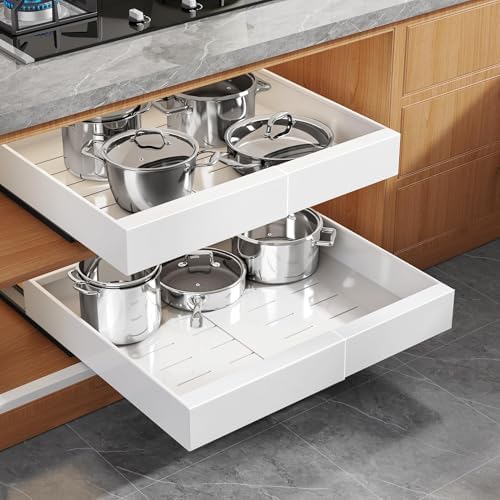
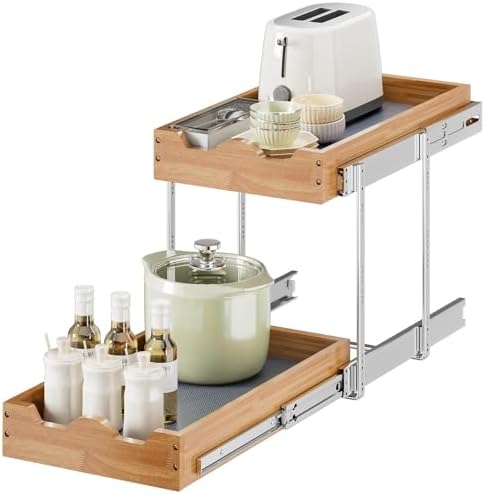
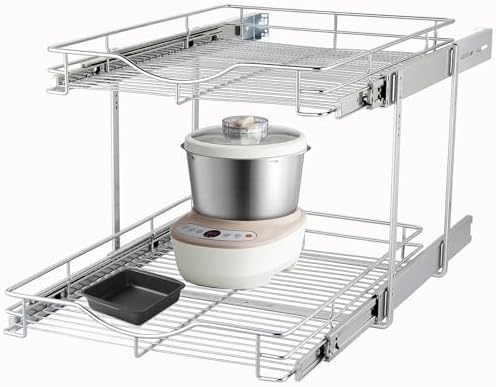
Pull-Out Cabinet Shelves (To Eliminate Searching)
Lower cabinets are one of the biggest hidden time-wasters.
You bend down, reach in, move things around just to get to what you need.
Pull-out shelves bring everything to you.
Instead of digging through layers, you slide and see everything at once.
It removes the “search” step completely, which makes cooking feel smoother without extra effort.

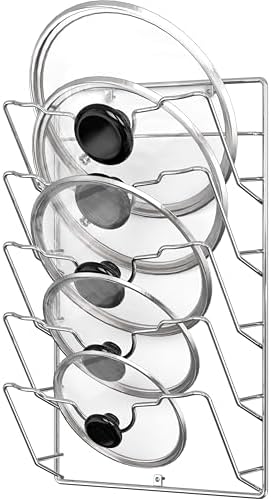
Vertical Lid Organizers (For Instant Access)
Lids are a daily frustration in most kitchens.
Stacked lids mean constant adjusting, lifting, and re-stacking.
A vertical organizer solves that instantly.
Each lid has its own space, visible and easy to grab.
It’s one of the simplest upgrades with one of the most noticeable impacts.


Clear Storage Containers (To Reduce Decision Time)
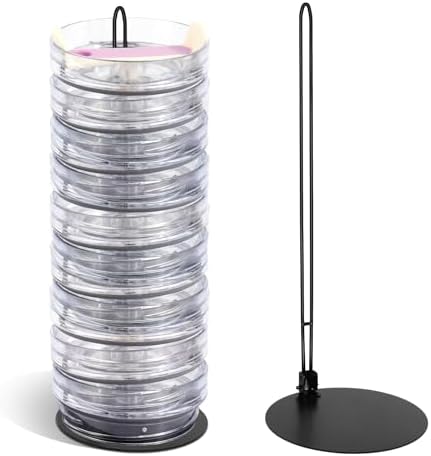
Not knowing what you have slows you down more than you think.
You check multiple packages, open containers, try to figure out quantities.
Clear containers remove that step.
You see everything immediately—what’s available, what’s running low, what you need.
They also stack better, which helps keep your kitchen functional without adding clutter.


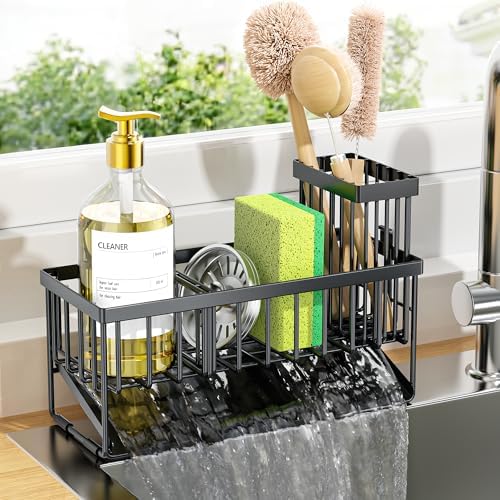
Countertop Utensil Holder (For Your Daily Tools)
If you keep opening drawers for the same tools, you’re adding unnecessary steps.
A simple utensil holder keeps your most-used items within reach.
The key is to keep it minimal—only what you actually use daily.
That way it speeds you up instead of becoming visual clutter.


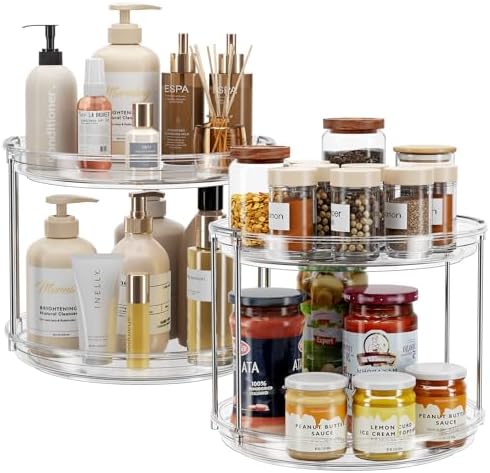
Lazy Susan (For Hard-to-Reach Spaces)
Deep cabinets and corners tend to slow you down.
You know something is there, but getting to it takes extra effort.
A Lazy Susan solves that with a simple rotation.
Instead of moving everything, you spin and grab what you need.
It’s especially useful for oils, sauces, and frequently used ingredients.


Under-Sink Organizers (To Reduce Hidden Friction)
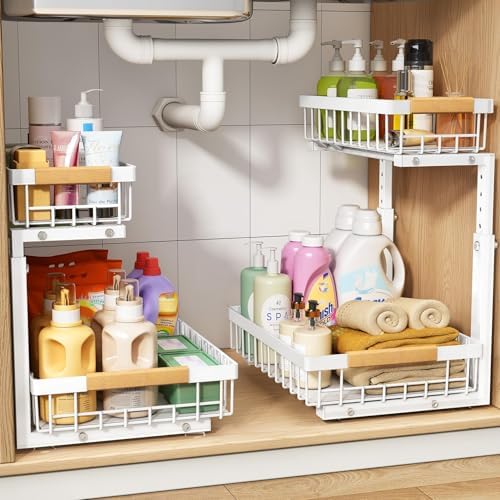
The space under the sink often becomes chaotic without you noticing.
Cleaning products, random items, things stacked on top of each other.
An organizer creates simple layers so everything is visible and accessible.
Even though it’s not a daily-use area, reducing friction there still saves time when you need it.



Final Thought
Most kitchen “problems” aren’t really problems.
They’re small inefficiencies that repeat often enough to become frustrating.
Extra steps. Tiny delays. Small interruptions that break your flow.
The hacks that actually work don’t try to make your kitchen perfect.
They make it easier to use.
And when your kitchen feels easier, everything else—cooking, cleaning, even deciding what to make—starts to feel lighter too.