Decluttering Mistakes That Keep Your Home Messy
Most people don’t struggle with decluttering because they’re lazy.
They struggle because the way they’re doing it quietly works against them.
You clean, you organize, maybe even get rid of a few things… and for a moment, everything feels lighter. You look around and think, “Okay, this is it. I finally fixed it.”
But then life resumes.
A few days go by. You get busy. You leave things out “just for now.” And before you realize it, the mess is back—not exactly the same, but close enough to feel frustrating.
That cycle isn’t random.
It usually comes from a few patterns that seem harmless in the moment, but slowly undo all your effort.
Trying to Do Everything at Once
There’s something very tempting about the idea of a full reset.
You pick a day, block a few hours, and decide you’re going to tackle everything. Closets, drawers, storage boxes—nothing gets ignored.
At the beginning, it feels productive. You’re making fast decisions, throwing things away, creating space.
But after a while, it starts to feel heavier.
You get tired. Your focus drops. Decisions that felt easy at the start suddenly feel more complicated. You start hesitating—“maybe I should keep this,” “I might need it later.”
And that’s usually where things slow down.
Either you push through and end up keeping more than you intended, or you stop halfway and tell yourself you’ll finish later.
Most of the time, “later” doesn’t come.
The problem isn’t that you didn’t try hard enough. It’s that doing everything at once doesn’t give you time to think clearly about what actually matters.
And even if you do finish, there’s another issue.
You created a result… but not a rhythm.
There’s no system in place to handle what happens next—when new items come in, when things get used, when life gets messy again.
That’s why smaller, more consistent decisions tend to work better. They give you space to think, and more importantly, they’re easier to repeat.
Keeping Things “Just in Case”
This one feels reasonable.
In fact, it often feels like the smart thing to do.
You keep something because there’s a chance you might need it. Not today, maybe not even this month—but someday.
And it’s hard to argue against that logic in the moment.
So things stay.
A box of cables you don’t recognize anymore. Clothes you haven’t worn in years but “could still fit.” Items that technically work, even if you never reach for them.
None of these feel like obvious clutter.
But over time, they build up.
And what you end up with isn’t just a full space—it’s a crowded one. A space where useful things are mixed with things that just exist there.
That’s where the real problem starts.
Because when everything is kept “just in case,” nothing stands out as truly important.
You open a drawer, and instead of seeing what you need, you see options. Too many options.
It slows you down in small, almost invisible ways.
You spend more time searching. More time deciding. More time managing things that don’t really need your attention.
Letting go of “just in case” items isn’t about being extreme.
It’s about being honest.
If something hasn’t played a role in your life for a long time, there’s a good chance it’s not going to suddenly become essential.
And if it does? You’ll deal with it then.
What you gain in daily clarity is usually worth far more than what you lose in hypothetical situations.
Organizing Before Letting Go
This is where a lot of effort gets wasted without people realizing it.
You decide to get organized, so you start looking for solutions.
Containers, baskets, drawer dividers—things that promise to make everything look neat and structured.
And to be fair, they do… at first.
You put everything into its place, step back, and it looks better. More controlled. Less chaotic.
But underneath that, nothing really changed.
You still have the same amount of stuff. The same crowded drawers. The same shelves that feel just a bit too full.
You’ve just rearranged the problem.
And over time, it shows.
Things stop fitting as neatly. Items start drifting out of their assigned spots. You run out of room again.
Because organization can only work with what you decide to keep.
If there’s too much, no system will feel easy for long.
That’s why letting go has to come first.
Not perfectly, not all at once—but enough to create space that actually feels manageable.
Only then does organizing start to make a real difference.
Creating Systems That Are Too Complicated
It’s easy to fall in love with a system that looks perfect.
Everything has a label. Every category is clearly defined. There’s a specific place for every single item, and it all looks incredibly satisfying… at least in the beginning.
But the real test of any system isn’t how it looks when everything is freshly organized.
It’s how it holds up on a random Tuesday when you’re tired, in a hurry, and not thinking about being “organized.”
That’s where complicated systems start to break down.
If putting something away requires you to stop and think—Which category does this belong to? Does it go here or there?—that small moment of friction is enough to make you delay it.
You tell yourself you’ll deal with it later.
And “later” slowly turns into a pile.
The issue isn’t that you lack discipline. It’s that the system is asking too much from you in everyday moments.
Good systems remove decisions.
They make things obvious.
You don’t need five categories for something that could fit into one. You don’t need labels if the purpose of a space is already clear just by looking at it.
The simpler it is, the more likely you are to stick with it—especially on days when you’re not trying to be perfect.
Ignoring the Way You Actually Live
A lot of organization advice is built around ideal behavior.
Hang your keys here. Fold your clothes like this. Put everything back immediately after using it.
And in theory, it all makes sense.
But in practice, most people don’t live that way consistently.
You come home tired and drop your keys near the door. You leave a jacket on a chair. You put something down “for now” and move on.
Those habits aren’t random. They’re patterns.
And instead of fighting them, it’s usually more effective to work with them.
If you always drop your keys in the same spot, maybe that’s exactly where a small tray or hook should go.
If clothes tend to pile up in a certain area, maybe that space needs a simple solution instead of constant correction.
When your environment supports what you naturally do, things start to feel easier.
When it fights you, it becomes something you have to manage all the time.
And that’s when it stops working.
Expecting Things to Stay Perfect
There’s a quiet expectation behind a lot of decluttering efforts: once you fix it, it should stay that way.
That expectation is what makes the process feel frustrating.
Because even after you’ve done a great job, things will shift again.
New items come in. Old habits show up. Life gets busy.
It doesn’t mean you failed. It just means the space is being used.
The goal isn’t to freeze your home in a perfect state.
It’s to make it easy to bring things back to a good baseline.
A space that can be reset in a few minutes will always feel more manageable than one that requires a full cleanup every time things slip.
That’s the difference between something that looks good temporarily and something that actually supports your daily life.
Thinking Decluttering Is a One-Time Fix
One of the biggest misconceptions is treating decluttering like a project with an end point.
You do it once, and then you’re done.
In reality, it’s more like maintenance.
Not in an exhausting way, but in small, ongoing decisions.
Things come in, things go out. You adjust as your life changes. You notice when something stops working and tweak it.
When you see it this way, there’s less pressure to get everything perfect the first time.
You’re not trying to solve your space forever. You’re just improving it gradually.
And that mindset makes it much easier to keep things under control without feeling overwhelmed.
Recommended Products to Make Decluttering Easier
Simple Storage Bins (For Grouping Without Overthinking)
Not everything needs a complex system. Sometimes, the easiest way to reduce clutter is just to group similar items together.
Simple storage bins help you do that without overcomplicating things. You don’t need perfect categories—just broad ones that make sense in your daily life.
They’re especially useful for things like cables, miscellaneous items, or anything that tends to float around without a clear place.
The goal is to contain the clutter, not create more rules.



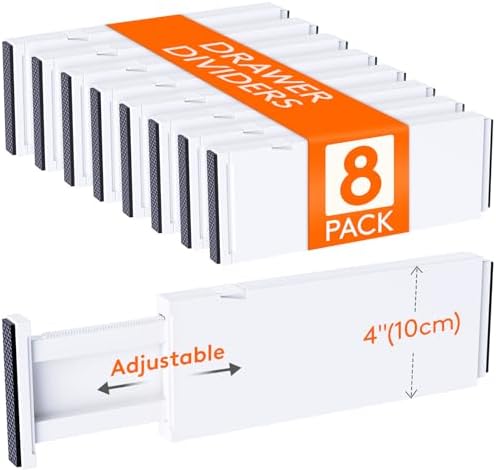
Drawer Dividers (To Eliminate Hidden Chaos)
Drawers are where clutter hides.
From the outside, everything looks fine. But inside, it’s usually a mix of unrelated items that make it harder to find what you need.
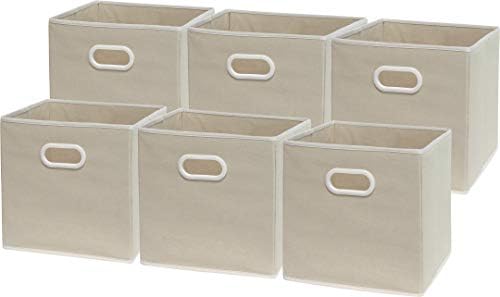
Drawer dividers fix that quickly.
They create small sections so each item has a general place, which makes everything easier to see and access.
You don’t need a perfect layout—just enough structure to avoid everything piling together again.


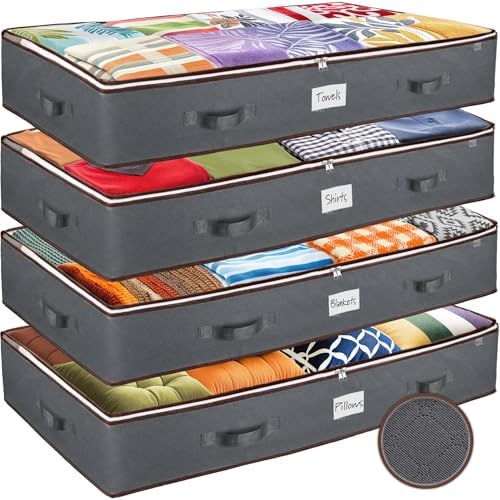
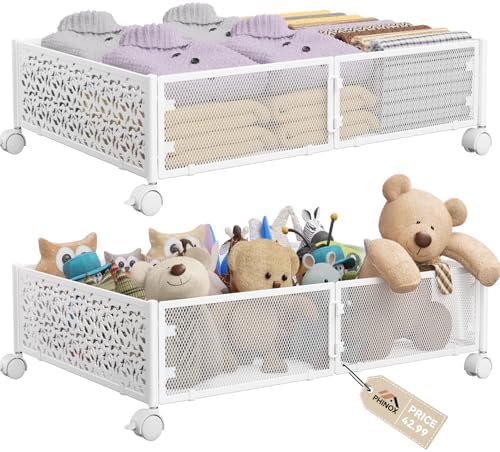
Under-Bed Storage Containers (For Low-Use Items)
Some items don’t need to be within reach every day, but you still want to keep them.
That’s where under-bed storage comes in.
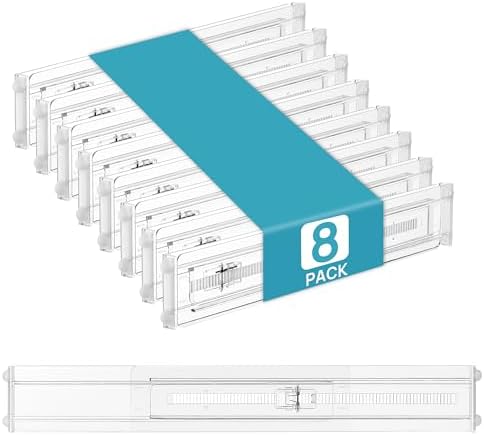
It gives you extra space without adding visual clutter to your home. Things stay accessible, but out of your main living areas.
This works well for seasonal clothes, extra bedding, or items you use occasionally but don’t want to get rid of.


Closet Hanging Organizers (For Quick, Visible Access)
Closets can easily become overcrowded, especially when everything is stacked or hidden.
A hanging organizer creates vertical sections, making it easier to separate items without needing more furniture.
It’s useful for clothes, accessories, or even random items that don’t have a clear place.
The biggest advantage is visibility. When you can see everything, you’re more likely to use it—and less likely to forget what you already have.


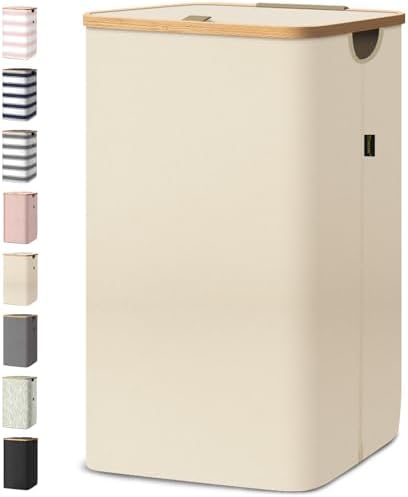
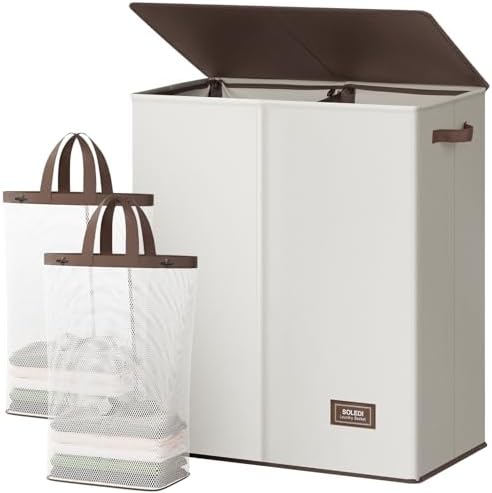
Minimalist Laundry Hampers (To Control Clothing Clutter)
Clothes are one of the fastest ways a space can feel messy.
A simple, well-placed laundry hamper helps keep that under control.
Instead of clothes ending up on chairs, beds, or the floor, there’s a clear place for them to go immediately.
The key is placement. Put it where clothes naturally tend to pile up, not where you think it “should” go.


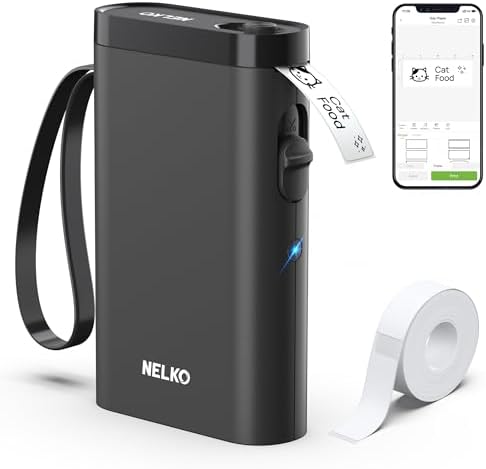
Label Makers (Only If They Simplify Things)
Labels can help—but only if they make things clearer, not more complicated.
If you’re sharing a space or storing items in containers that aren’t visible, a label maker can make it easier to maintain order.
But if you find yourself labeling everything just to keep track, it might be a sign your system needs to be simpler.
Labels should support your setup, not become something you rely on to understand it.


Final Thought
A messy home usually isn’t the result of one big mistake.
It’s the result of small patterns repeating quietly in the background.
The good part is, those patterns can change.
Not all at once, and not perfectly—but enough to make your space feel lighter, easier, and more under control.
And once it starts to feel that way, keeping it that way becomes a lot more natural.