
How to Keep a Small Bathroom Organized Daily
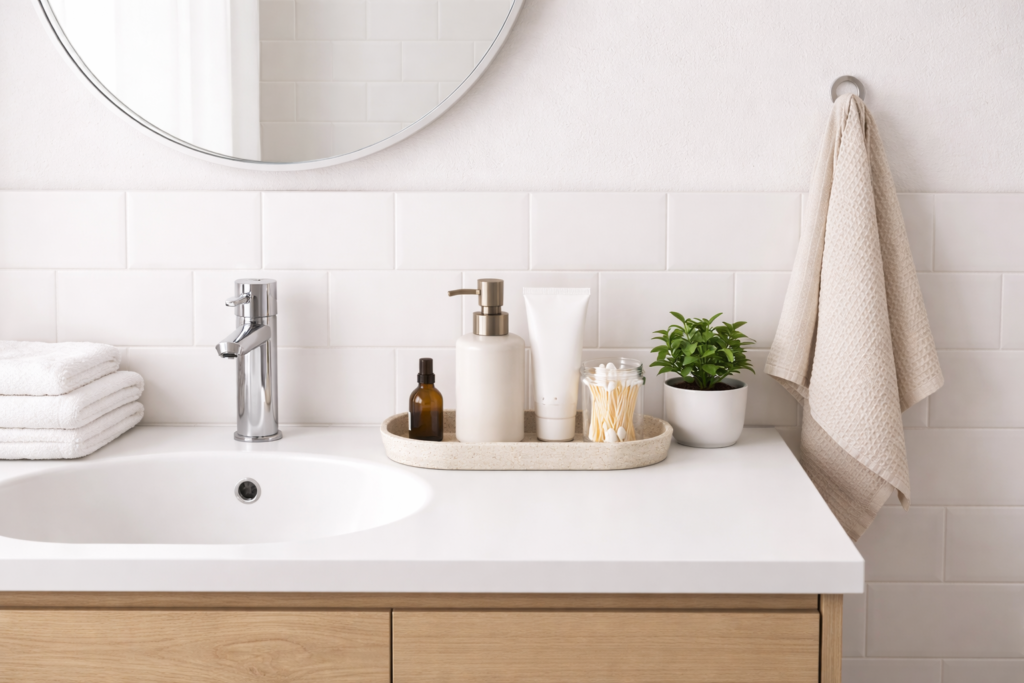
A small bathroom doesn’t get messy because you’re disorganized.
It gets messy because there’s almost no margin for error.
In a bigger bathroom, you can leave a few things out and barely notice. A bottle on the counter, a towel not perfectly hung—it doesn’t change much. But in a small space, those same things instantly make everything feel crowded.
It’s not that you’re doing anything wrong. It’s just that the space reacts faster.
That’s why keeping it organized isn’t really about doing big cleanups or buying more storage. It’s about making small decisions that make daily use easier.
Once those are in place, things stop piling up so quickly.
Stop Relying on “Cleaning Days”
Most people treat organization like a reset button.
They let things build up during the week, then try to fix everything at once when they have time. And for a day or two, it works. The bathroom looks clean, everything feels under control again.
But it doesn’t last.
Because the system hasn’t changed—only the result.
In a small bathroom, this approach feels especially frustrating. Things go from “fine” to “messy” very quickly, so you end up repeating the same cycle over and over again.
Clean. Use. Mess. Repeat.
Instead of relying on those big resets, it helps to think in smaller terms.
Not “when will I clean this again?” but “how do I stop this from getting messy in the first place?”
That shift might seem small, but it changes how you interact with the space every single day.
Keep Only What You Actually Use Daily
One of the biggest reasons small bathrooms feel cluttered is simple: they’re holding too much.
It’s easy to justify keeping things. Extra products, backups, things you used once and might use again. None of it feels excessive on its own.
But together, it fills the space.
And in a small bathroom, every item competes for attention.
The more you have out, the harder it becomes to find what you actually need. Your routine slows down, not because it’s complicated, but because there’s too much in the way.
A good starting point is to separate what you use from what you just store.
Your daily items—things like your toothbrush, face wash, deodorant—should be easy to reach without thinking.
Everything else doesn’t need to live in the same space.
That doesn’t mean throwing things away. It just means being more intentional about where they go.
When your bathroom only holds what you actually use day to day, it starts to feel lighter almost immediately.
Give Everything a “Default Spot”
Organization becomes much easier when you remove the need to decide things over and over again.
That’s where having a “default spot” comes in.
Instead of asking yourself where something should go each time you use it, you already know.
Not because you memorized it, but because it makes sense.
Your toothbrush sits in the same place every time. Your skincare products are grouped together in a way that matches how you use them. Your towel has a specific hook—not just any available space.
It sounds basic, but this is what turns organization into something automatic.
Without a clear spot, things start to drift. You leave items wherever there’s space in the moment, and slowly, the whole bathroom starts to feel disorganized.
With a clear spot, there’s no friction. You use something, and it goes right back.
And over time, that becomes a habit you don’t even notice.
Make Your Counter Work for You (Not Against You)
The counter is where everything tends to collect.
Not because it’s the best place for things, but because it’s the easiest.
You’re in a hurry, you set something down, and you tell yourself you’ll deal with it later.
But in a small bathroom, the counter is also one of the most visible areas. So even a few items can make the whole space feel messy.
Trying to keep it completely empty doesn’t usually work either. It’s not realistic if you’re using the space every day.
A better approach is to make it intentional.
Instead of random items spread out, keep only what you actually use daily, and give those items a small, defined area.
That could be a simple tray, a corner, or even just a consistent arrangement.
The goal isn’t to make it look styled. It’s to make it easy to reset.
When everything has a loose structure, it’s much easier to keep things from spreading out again.
And that’s what keeps the space feeling under control, even on busy days.
Use Vertical Space Without Turning It Into Clutter
When space is limited, the first instinct is usually to add more storage.
A shelf here, a basket there, maybe a few hooks behind the door. And at first, it feels like progress—like you’re finally “using the space better.”
But there’s a point where it starts doing the opposite.
Too many storage solutions can make a small bathroom feel visually busy. Instead of things feeling organized, they start to feel packed in.
The key is to be selective.
You don’t need to use every empty wall. You just need to use the right spots.
For example, a couple of hooks placed where you naturally reach for your towel can make your routine smoother without adding any visual noise. A single shelf at eye level can hold your daily items without overcrowding the counter.
It’s less about maximizing space and more about supporting your movement.
If something makes your routine easier, it belongs. If it just adds more places to manage, it’s probably not helping.
Make Resetting Part of What You Already Do
Most people think of “resetting” the bathroom as something separate from using it.
Something you do later, when you have time.
But in a small space, that delay is what creates clutter.
Things don’t pile up because they take long to clean—they pile up because they don’t get reset in the moment.
The good news is, it doesn’t take much.
You’re already there. You’re already using the space.
So instead of adding a new habit, just attach a small action to what you’re already doing.
When you finish brushing your teeth, you don’t leave things out—you put them back right then.
After you wash your face, you quickly clear the area you just used.
After a shower, the towel goes back where it belongs instead of staying draped over whatever was closest.
Each of these takes a few seconds. On their own, they feel almost insignificant.
But together, they prevent the mess from ever building up in the first place.
That’s what keeps the space consistently organized—not effort, but timing.
Don’t Let “Perfect” Get in the Way
It’s easy to fall into the idea that an organized bathroom should always look a certain way.
Clean surfaces, perfectly aligned products, everything minimal and calm.
But real life doesn’t work like that.
There will be rushed mornings. Late nights. Days where you just don’t feel like fixing everything right away.
If your system only works when everything is perfect, it’s not really a system—it’s a temporary state.
A better approach is to aim for something you can maintain even on your busiest days.
Maybe the counter isn’t spotless all the time, but it’s never overwhelming.
Maybe things aren’t perfectly aligned, but they’re always in the right general place.
That’s enough.
Because consistency matters more than perfection.
An “almost organized” bathroom that stays that way is far more useful than a perfect one that falls apart every two days.
Build Around What Feels Natural
The easiest systems to maintain are the ones that don’t feel like systems at all.
They just feel like the way you naturally use the space.
If you always drop something in the same spot, that’s not a bad habit—it’s a clue. That spot might be where it actually belongs.
If you avoid putting something away because it feels inconvenient, that’s another clue. The system might need adjusting, not your behavior.
Instead of forcing yourself to follow a rigid setup, let your habits guide small changes.
Move things closer to where you use them. Simplify steps that feel annoying. Remove anything that gets in the way.
Over time, your bathroom starts to adapt to you.
And when that happens, staying organized stops feeling like something you have to remember.
It just happens.
Recommended Products to Keep a Small Bathroom Organized
Compact Countertop Trays
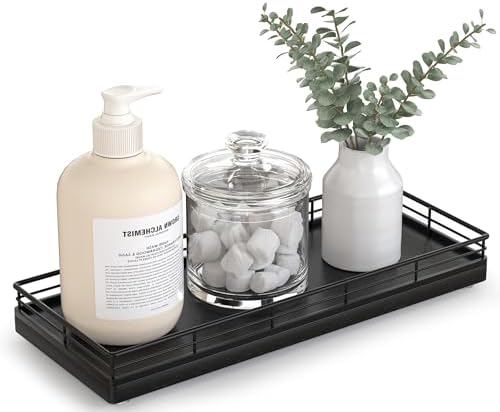
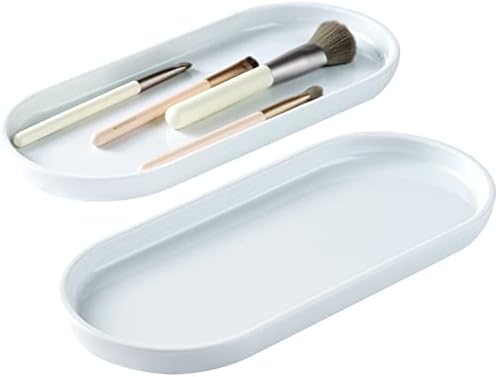
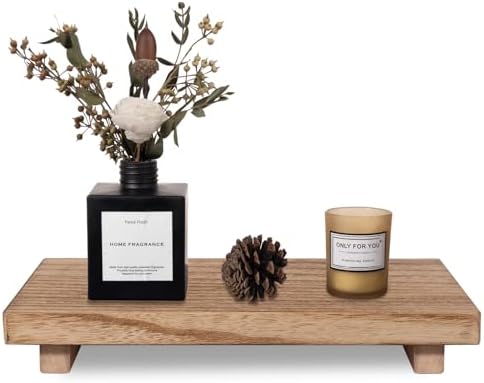
A small tray can make a huge difference on a limited counter space. Instead of having items scattered around, everything is grouped in one defined area, which instantly makes the bathroom feel more controlled.
Use it for your daily essentials—things like your toothbrush, skincare, or deodorant. It keeps them accessible without letting them spread across the entire surface.
The goal isn’t decoration. It’s creating a boundary that makes resetting quick and almost automatic.

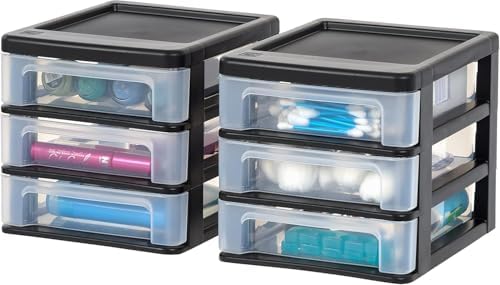
Drawer Organizers for Small Items
Bathroom drawers can get messy fast, especially with smaller items like razors, makeup, or grooming tools.
A simple drawer organizer turns that chaos into something easy to manage. Instead of digging through everything, you can see exactly where each item is.
Look for adjustable dividers so you can customize the space based on what you actually use. The simpler the setup, the easier it is to maintain.


Under-Sink Storage Solutions
The space under the sink is often underused—or worse, completely cluttered.
Adding a basic under-sink organizer helps you separate items without stacking everything on top of each other. This makes it much easier to grab what you need without moving five other things first.
It’s a good place for backups, cleaning supplies, or items you don’t use every day but still need within reach.


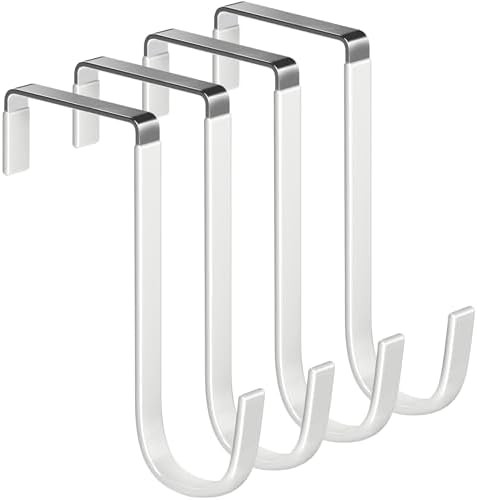
Wall Hooks or Over-the-Door Hooks
Hooks are one of the simplest ways to keep things off the floor and counters.
They work well for towels, robes, or even small baskets. And because they don’t take up much space, they’re ideal for small bathrooms.
The key is placement. Put them where you naturally reach for things, not just where there’s empty wall space.



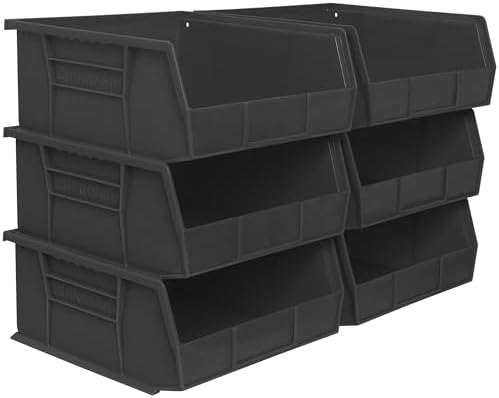
Stackable Storage Bins
When cabinet space is limited, stacking can help you use vertical space without creating a mess.
Stackable bins are especially useful for grouping similar items—like extra toiletries or cleaning products—while keeping them easy to access.
Instead of everything being piled together, each category has its own space, which makes the whole cabinet feel more organized.


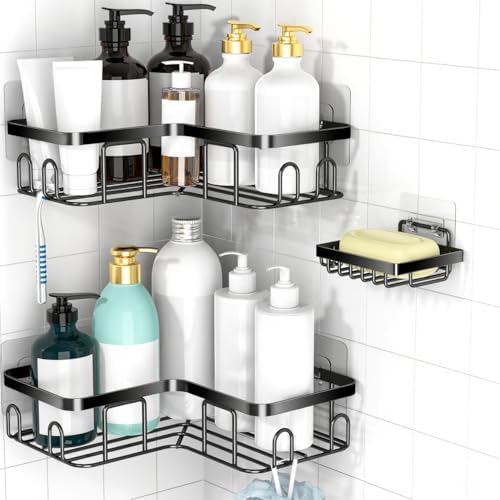
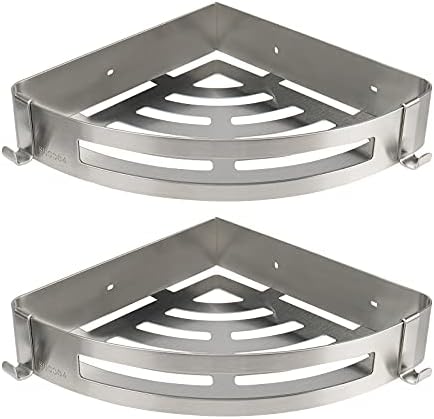
Shower Caddies or Corner Shelves
Showers can quickly become cluttered with bottles and products.
A simple shower caddy or corner shelf keeps everything in one place and off the floor. It also makes cleaning easier, since you’re not constantly moving bottles around.
Choose something simple and easy to clean. The more complicated it is, the less likely you are to maintain it.


Minimal Labeling Tools (Optional)
Labels can be helpful, especially if you share the bathroom or have multiple storage areas.
They make it clear where things belong, which makes it easier to keep everything in order over time.
But they’re not essential.
If your setup already feels intuitive, you probably don’t need them. Labels should support your system—not become something you rely on to understand it.


Final Thought
A small bathroom doesn’t need more effort.
It needs less friction.
When everything has a place that makes sense, when your routine flows without extra steps, when resetting takes seconds instead of minutes… the space starts to feel different.
Not bigger, but easier.
And in a small space, that’s what really makes the difference.