Kitchen Organization Mistakes That Make Cooking Slower (And What to Fix First)
Most people don’t notice their kitchen is slowing them down.
Not until they’re in the middle of cooking, trying to do three things at once, and something as simple as finding a spatula turns into a small interruption.
That’s usually how it shows up.
Not as a big problem, but as a series of tiny delays. You reach for something and it’s not there. You open a drawer and have to move things around. You take two extra steps you didn’t need to take.
None of it feels dramatic.
But it adds up.
And over time, cooking starts to feel more tiring than it should.
The thing is, most kitchens aren’t disorganized in an obvious way. They look fine. Clean enough. Put together.
But they’re not built around how you actually move and cook.
That’s where the friction comes from.
Keeping Things Where They Look Good (Not Where You Use Them)
A lot of kitchen setups are based on what looks right, not what feels right when you’re using it.
You group things because they belong together—spices in one place, utensils in another, appliances somewhere else. It makes sense visually.
But when you’re cooking, you don’t move through your kitchen in categories.
You move through it in actions.
You turn on the stove, grab a pan, reach for oil, stir something, adjust the heat… all in one flow.
If those items are scattered across different areas, you’re constantly breaking that flow without realizing it.
That’s why even a “well-organized” kitchen can feel inefficient.
It’s organized for storage, not for use.
A simple shift is to start thinking in terms of proximity instead of categories.
If you always reach for oil while cooking, it should be close to the stove. If you constantly use a certain utensil, it shouldn’t be buried in a drawer across the room.
This doesn’t mean everything has to be perfectly placed.
It just means reducing the distance between actions.
And once you do that, cooking starts to feel more fluid almost immediately.
Overcrowded Drawers and Cabinets
There’s a point where everything technically fits—but using it doesn’t feel easy anymore.
Drawers close, but barely. Cabinets hold everything, but you have to move things around to grab what you need.
It’s subtle, but you feel it every time you cook.
You hesitate before opening a drawer because you know it’s going to be a bit annoying. You avoid using certain items because they’re buried behind others.
That’s not a storage problem.
That’s a space problem.
When there’s too much packed into one area, you lose the ability to move freely inside it.
And in a kitchen, that matters more than it seems.
Because cooking isn’t just about having the right tools—it’s about being able to access them without interruption.
Most of the time, the issue isn’t that you need better organizers.
It’s that there’s too much competing for the same space.
Once you remove a portion of what you don’t really use, everything else naturally becomes easier to handle.
Drawers open without resistance. Items are visible. Putting things back doesn’t feel like a small puzzle.
It’s a small change, but it affects everything.
Organizing Before Getting Rid of Things
This is one of those mistakes that feels productive while you’re doing it.
You decide to improve your kitchen, so you start rearranging. Maybe you buy a few containers, adjust shelves, create sections.
And at first, it looks better.
Everything has a place. It feels more structured.
But after a while, things start creeping back.
Drawers get crowded again. Items don’t fit as neatly. You start stacking or squeezing things just to make it work.
Because nothing was actually removed.
You didn’t create space—you just redistributed what was already there.
That’s why it never really lasts.
Real organization starts by reducing.
Not perfectly, not aggressively—but enough to give your space room to function.
Once there’s space, organizing becomes simple.
Without it, even the best system eventually breaks down.
Storing Everyday Items Just Slightly Out of Reach
This one is easy to overlook because nothing feels “wrong.”
Everything is accessible. You can reach it. You can use it.
But it takes just a bit more effort than it should.
Your most-used pan is in a lower cabinet. Your go-to knife is behind other tools. Your plates are stacked in a way that requires an extra step every time.
Individually, these things don’t seem like a problem.
But they repeat every single day.
And that repetition is what makes them important.
Efficiency isn’t about big improvements. It’s about reducing effort in small, repeated actions.
If something is part of your daily routine, it should feel almost effortless to grab.
No adjusting. No moving other items. No extra thought.
When your most-used items are exactly where you expect them to be, cooking becomes smoother without you even noticing why.
And that’s usually the sign your kitchen is starting to work with you, not against you.
Having No Clear “Zones”
A lot of kitchens feel fine when you’re just looking at them.
But the moment you start cooking, something feels off.
You find yourself moving back and forth more than you expected. You grab one thing, then realize the next item you need is on the other side of the kitchen. Then you go back again.
It’s not chaos. It’s just… inefficient.
And most of the time, it comes down to one thing: there’s no real structure behind how things are placed.
Everything might be grouped neatly, but it’s grouped for storage, not for use.
Cooking is a sequence. You prep, you cook, you plate, you clean. And each of those actions tends to happen in roughly the same areas every time.
When your kitchen isn’t aligned with that flow, you end up creating your own path every time you cook.
That’s what makes it feel slower.
Creating zones doesn’t have to be complicated.
It just means giving certain areas a clear role.
A spot where you naturally prep food. A space around the stove that supports cooking. A place where cleaning supplies are easy to grab without interrupting everything else.
Once those areas exist—even loosely—you stop moving as much.
And that’s when things start to feel smoother.
Using Too Many “Organization” Products
It’s easy to assume that more organization tools will solve the problem.
More containers, more dividers, more ways to separate things.
And at first, it can feel like progress.
Everything looks cleaner. More structured. More intentional.
But sometimes, all those extra layers start getting in the way.
You need something, and now it’s inside a container, inside a drawer, maybe even stacked under something else.
So instead of one simple action, you’re doing three.
Open. Move. Grab.
That might not seem like much, but when it happens over and over again, it slows everything down.
Good organization should reduce steps, not add them.
If a container makes something easier to access, it’s doing its job.
If it makes you pause, adjust, or think twice, it’s probably unnecessary.
Not everything needs to be “contained.”
Some things just need to be easy to reach.
Not Fixing the Small Annoyances
Every kitchen has them.
That one drawer that never stays organized. The cabinet that feels slightly inconvenient. The items that always end up in the wrong place.
Most people notice these things… and then move on.
You adapt to them without thinking much about it.
But those small annoyances are usually the clearest signs of what’s not working.
Because they repeat.
Every time you cook, they show up again. Maybe not enough to stop you, but enough to slow you down just a little.
And that “little” adds up.
The mistake isn’t having those friction points.
It’s ignoring them.
Fixing them usually doesn’t require a big change.
Sometimes it’s as simple as moving something closer, removing what’s in the way, or giving an item a more obvious place.
The important part is paying attention.
If something feels slightly frustrating every time you use your kitchen, it’s worth adjusting.
Because those are the changes that make the biggest difference over time.
What to Fix First
When you start noticing all these small issues, it’s tempting to want to fix everything at once.
Reorganize every drawer. Move everything around. Start from scratch.
But that usually leads to the same problem—too much at once, without a clear focus.
A better approach is to start with what you use the most.
Think about your daily routine.
Where do you stand when you cook? What do you reach for constantly? Which areas feel slightly annoying every single time?
Start there.
If your cooking area feels easier to use, you’ll notice the difference immediately.
You won’t have to wait for a “perfect” kitchen to feel the impact.
And once that part works better, everything else becomes easier to improve step by step.
Recommended Products to Make Your Kitchen More Efficient
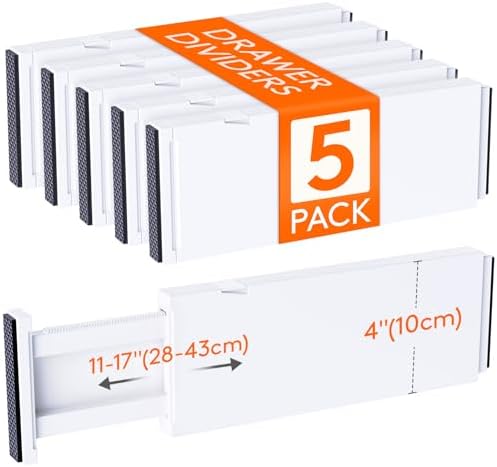
Adjustable Drawer Organizers (For Utensils and Tools)
A cluttered drawer slows you down more than you think. You open it, search for a few seconds, move things around… and that happens multiple times while cooking.
Adjustable drawer organizers solve that by giving everything a clear, visible space. You’re not guessing where things are—you see them instantly.
The key is flexibility. Your utensils aren’t all the same size, so fixed compartments often don’t work as well. Being able to adjust the layout makes it much easier to maintain over time.



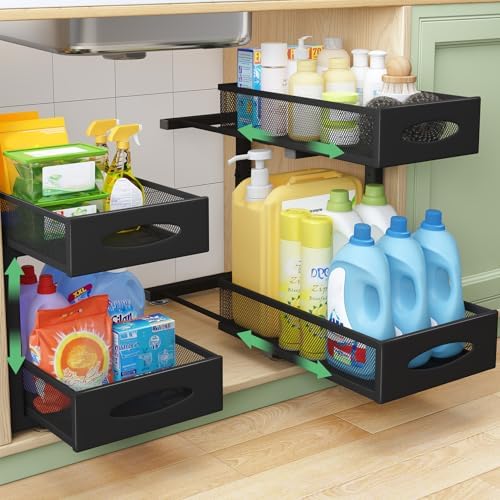
Pull-Out Cabinet Shelves (For Easy Access)
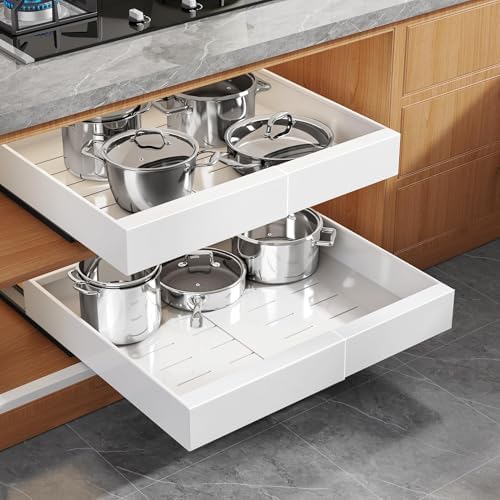
Lower cabinets are one of the biggest friction points in most kitchens.
You have to bend down, reach in, and move things just to grab what you need. It’s not difficult, but it slows you down every single time.
Pull-out shelves completely change that experience.
Instead of digging through your cabinet, everything slides out toward you. You see everything at once, and nothing gets lost in the back.
This is especially useful for pots, pans, and heavier items you use often.


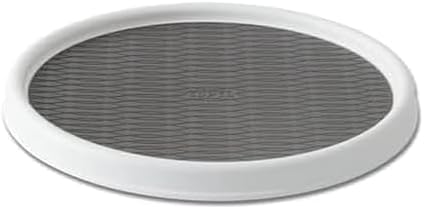
Lazy Susans (For Deep or Corner Spaces)
Deep cabinets tend to become “dead zones” where things disappear.
You know something is there, but actually reaching it is another story.
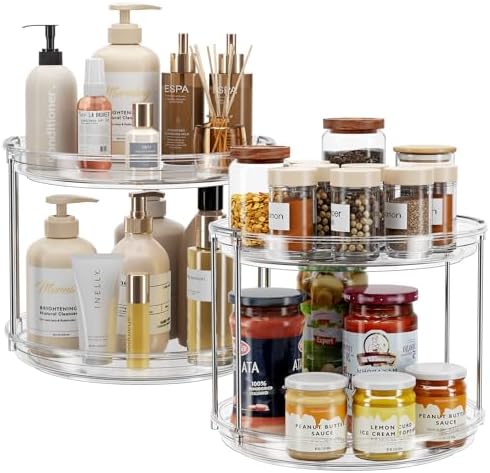
A Lazy Susan fixes that with a simple idea—rotation.
Instead of moving everything around, you just spin and grab what you need. It keeps items accessible without rearranging the whole space.
It works especially well for oils, sauces, and frequently used ingredients.

Clear Storage Containers (For Dry Foods)
One of the small things that slows you down is not knowing what you have.
You open a cabinet, check multiple packages, try to figure out what’s running low.
Clear containers remove that step.
You can see everything instantly—what’s available, how much is left, and what you need to restock.
Stackable options also help you use vertical space without making things harder to access.


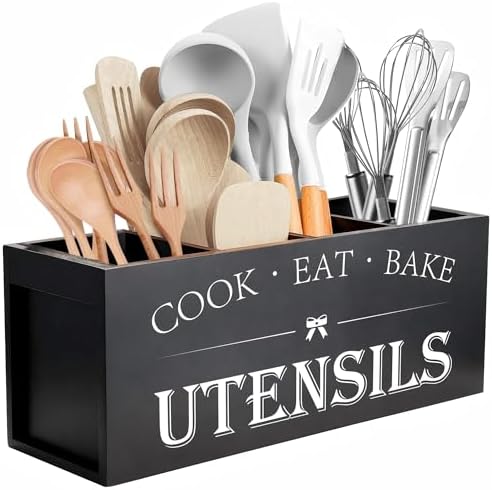
Countertop Utensil Holders (For Daily Tools)
If you’re constantly opening drawers to grab the same few tools, it adds unnecessary steps to your routine.
A simple utensil holder on the counter can eliminate that.
It keeps your most-used tools within arm’s reach while cooking, so you’re not interrupting your flow.
The key is to keep it minimal—only include what you actually use daily. Otherwise, it becomes clutter instead of a solution.


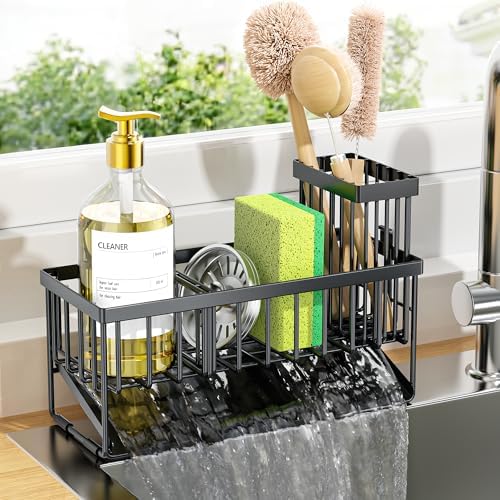
Under-Sink Organizers (To Reduce Hidden Clutter)
The space under the sink often turns into a catch-all area.
Cleaning supplies, random items, things you don’t use often—it all ends up there.
An under-sink organizer helps separate those items so they’re easier to access.
Instead of stacking everything, you create simple layers that make sense.
That way, even the less-used areas of your kitchen don’t slow you down when you need something.


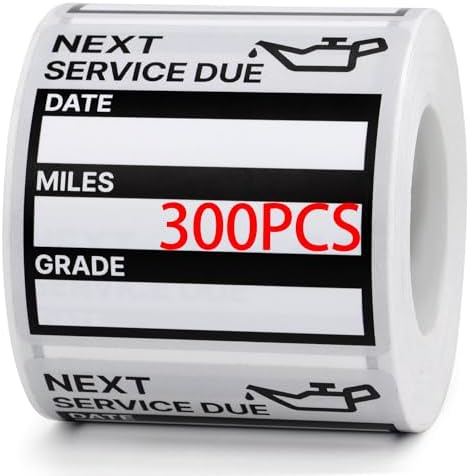
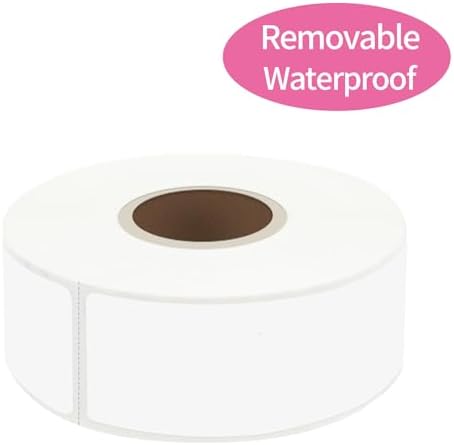
Minimal Labeling Tools (Optional)
Labels can help, especially if you’re sharing your kitchen or setting up a new system.
They make it easier to know where things go, which helps maintain order over time.
But they’re not essential.
If your setup already feels intuitive, you don’t need them.
Labels should support your system—not replace it.


Final Thought
A slow kitchen isn’t obvious.
It doesn’t look broken.
But you feel it in the small things—the extra steps, the repeated interruptions, the moments where something simple takes longer than it should.
That’s what makes cooking feel heavier than it needs to be.
When you remove that friction, things don’t suddenly become perfect.
They just become easier.
And that’s what actually makes a difference every single day.