
Closet Organization Mistakes That Make Getting Dressed Harder
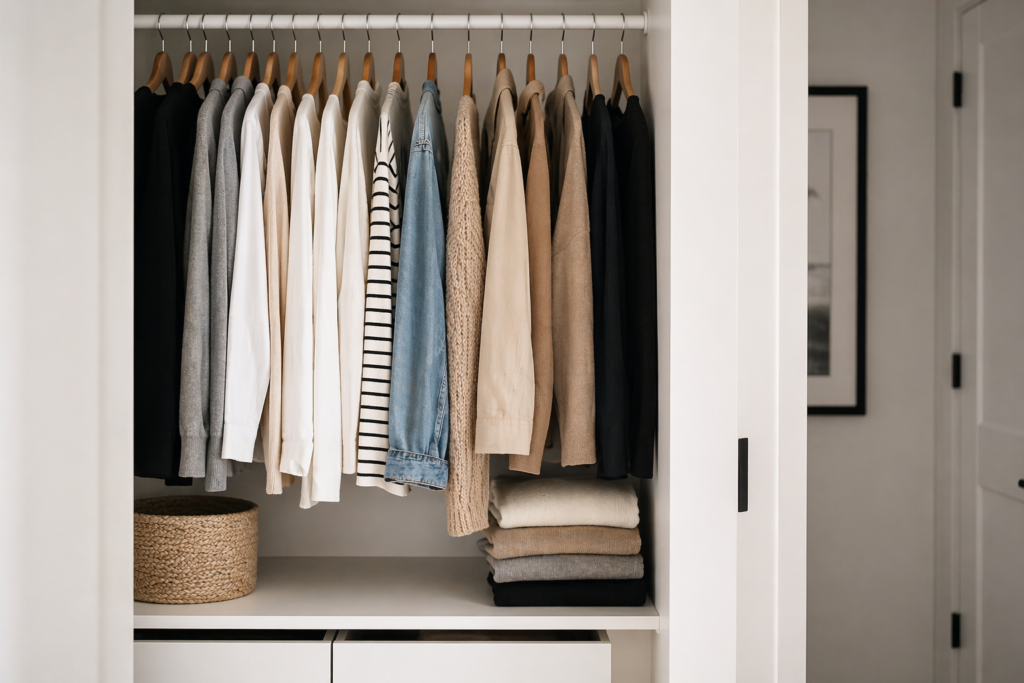
Getting dressed is supposed to be simple.
Not exciting, not complicated—just something you do without thinking too much about it.
But for a lot of people, it turns into a small daily obstacle.
You open your closet, look at everything inside, and somehow it still feels like there’s nothing clear to wear. You try one thing, then another, then maybe go back to the first option.
It’s not that you don’t have clothes.
It’s that your closet isn’t helping you choose.
And most of the time, that comes down to a few small organization mistakes that quietly make the whole process slower.
Keeping Clothes You Don’t Actually Wear
At first glance, a full closet feels like a good thing.
More options, more variety, more flexibility.
But if you look a bit closer, a lot of those options aren’t really active in your daily life.
There are pieces that don’t fit quite right, things you used to wear but haven’t touched in months, and items you keep because they might be useful at some point.
They’re not bad items. They’re just not part of your current routine.
And that’s where the problem starts.
Because your brain doesn’t separate “things you wear” from “things you keep.” It processes everything at once.
So every time you look at your closet, you’re not just choosing from your best options—you’re filtering through everything.
That filtering takes energy.
It slows you down in a way that’s hard to notice at first, but very obvious over time.
You hesitate more. You second-guess your choices. You default to the same few outfits because they’re easier to find.
A closet becomes easier to use when it reflects what you actually wear now, not what you used to wear or what you think you might wear someday.
That doesn’t mean getting rid of everything else immediately.
It just means creating some separation.
When your daily options are clear, getting dressed becomes faster almost without effort.
Organizing by Category Instead of Use
Most closets are organized in a way that makes sense on paper.
All your shirts together. Pants in another section. Jackets somewhere else.
It’s clean. It looks structured. It feels like the “right” way to do it.
But when you’re getting dressed, that structure doesn’t always help.
Because you’re not thinking in categories.
You’re thinking in combinations.
You grab a shirt, then you look for pants that go with it. Then maybe a jacket. Then maybe something else if it doesn’t feel right.
And each of those steps sends you to a different part of your closet.
It’s a lot of small movements, but they add up.
You end up going back and forth, scanning different sections, trying to mentally piece things together.
That’s where the process starts to feel slower than it should.
A small shift can make a big difference here.
Instead of only organizing by type, think about how you actually build outfits.
Which items do you tend to wear together? Which pieces are part of your regular rotation?
Keeping those closer—physically or visually—reduces that back-and-forth.
It doesn’t have to be a perfect system.
It just needs to match how you naturally get dressed.
Overcrowding Your Closet
There’s a point where your closet stops being easy to use, even if everything technically fits.
Hangers are packed tightly. Clothes overlap. You have to push things aside just to see what’s there.
Nothing is falling out, nothing looks chaotic… but it doesn’t feel smooth either.
You can feel the resistance.
Every time you reach in, there’s a bit of friction.
You can’t see everything clearly, so you skip over pieces without even realizing it. You go for what’s easiest to grab instead of what you actually want to wear.
And over time, your options start to feel limited—not because you have fewer clothes, but because fewer clothes feel accessible.
Space inside your closet isn’t just about aesthetics.
It directly affects how easy it is to make decisions.
When there’s enough room between items, you can scan your options quickly. You notice things you forgot you had. You make decisions faster.
When everything is compressed, your brain has to work harder just to process what’s in front of you.
And that’s what makes a full closet feel strangely unhelpful.
Keeping “Backup” Versions of Everything
This one usually starts with a good idea.
You find something that works—a pair of jeans, a type of shirt, a style that feels comfortable—so you keep multiple versions of it.
It feels efficient.
You’re making sure you always have a reliable option.
But over time, it creates a different kind of problem.
Instead of having clear choices, you end up with variations of the same choice.
Five similar shirts. Three nearly identical pairs of pants.
And when you’re getting dressed, you’re not just choosing what to wear—you’re comparing small differences.
Which one fits slightly better? Which one feels newer? Which one should you save for later?
They’re small decisions, but they add up.
And instead of simplifying your routine, they quietly complicate it.
Having a few go-to pieces is helpful.
But too many similar options can create unnecessary friction in a process that should feel automatic.
Sometimes, less variety within the same category actually makes things easier.
Hiding Your Best Options
Sometimes the problem isn’t what you have—it’s what you can actually see.
Your favorite pieces are in there. The ones that fit well, feel comfortable, and make you feel put together without much effort.
But they’re not always front and center.
They get mixed in with everything else, pushed slightly to the side, or folded in a way that makes them easy to forget. So when you open your closet, you don’t immediately see your best options—you see everything at once.
And when everything has the same level of visibility, nothing stands out.
That’s when you default to whatever is easiest to grab, not necessarily what you actually want to wear.
Over time, that creates a quiet disconnect.
You start thinking your closet isn’t working for you, when in reality, your best pieces just aren’t easy to spot.
A small shift here makes a big difference.
Bring your most-worn, most-reliable items into clearer view. Not in a forced or “perfect” way—just enough that they’re the first things you notice.
Because when the good options are obvious, decisions become quicker and more natural.
Not Adapting Your Closet to Your Routine
It’s easy to organize a closet based on how you think it should work.
Neat sections. Clean categories. Everything evenly distributed.
But your actual routine might look very different.
Maybe you wear the same type of outfits during the week and something completely different on weekends. Maybe you reach for a small group of items most of the time and ignore the rest.
If your closet doesn’t reflect that, you end up adjusting every morning.
You move things around, dig a little deeper, spend extra seconds figuring out where something is.
It’s not a big inconvenience—but it repeats every day.
A closet works best when it mirrors your habits.
If you tend to grab the same kinds of clothes regularly, those should be the easiest to reach. If certain items are only used occasionally, they don’t need prime space.
This isn’t about creating a perfect system.
It’s about reducing those small, repeated adjustments that slow you down.
When your setup matches your routine, getting dressed feels smoother without you having to think about it.
Expecting Your Closet to Stay “Perfect”
After reorganizing, there’s usually a moment where everything feels right.
Space between hangers. Clear sections. Easy access.
And there’s this quiet expectation that it should stay that way.
But it rarely does.
You wear things, put them back quickly, add new items, move things around without noticing.
It’s normal.
The problem isn’t that things shift—it’s expecting them not to.
When you aim for a perfectly maintained closet, every small change feels like you’re falling behind.
But when you aim for something that’s easy to reset, it feels different.
You don’t need everything to look perfect every day.
You just need it to be functional.
A closet that’s slightly out of place but easy to fix is far more useful than one that only works when everything is perfectly arranged.
Thinking Organization Will Fix Everything
There’s a common belief that once your closet is organized, getting dressed will automatically become easier.
And while organization helps, it’s not the full solution.
If your closet still holds things you don’t wear, if your most-used items aren’t easy to access, if your setup doesn’t match your routine—no amount of organizing will fully fix that.
It might look better, but it won’t necessarily feel easier to use.
That’s why focusing only on structure can be misleading.
What actually makes a difference is alignment.
Your space, your habits, and your clothes all working together in a simple, practical way.
When that happens, organization stops feeling like something you manage.
It just supports what you already do.
What to Fix First
If your closet feels frustrating, the instinct is usually to fix everything.
Rearrange all sections, rethink the layout, maybe even start over.
But that can quickly become overwhelming.
A better place to start is smaller—and more specific.
Focus on the part of your closet you use the most.
The items you reach for every week. The outfits you rely on when you don’t want to think too much.
Make those easier.
Bring them into clear view. Give them space. Place them where they’re effortless to grab.
That alone can change how getting dressed feels.
You don’t need a perfect closet to feel the difference.
You just need your most important pieces to work better for you.
Recommended Products to Make Your Closet Easier to Use
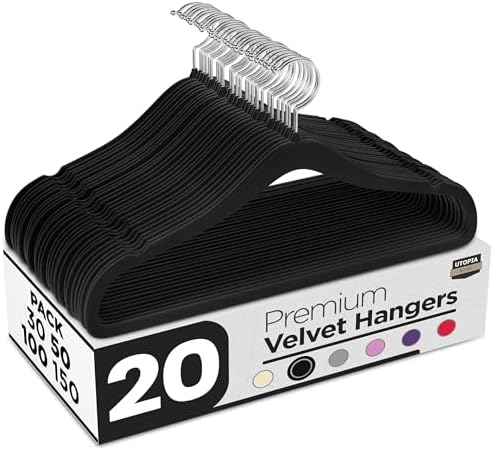
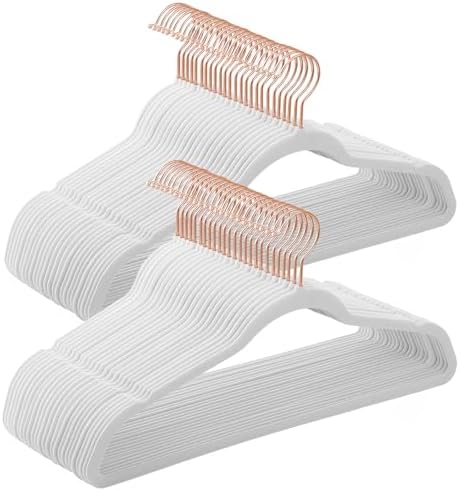
Slim Velvet Hangers (To Create Instant Space)
Closets often feel overcrowded not just because of how many clothes you have, but because of how much space each item takes.
Slim velvet hangers are a simple upgrade that instantly creates more room. They keep clothes from slipping and make everything look more uniform, which also makes it easier to scan your options quickly.
It’s one of those small changes that has an immediate impact without requiring a full reorganization.


Drawer Dividers (For Smaller Clothing Items)
Drawers tend to become chaotic over time, especially with items like underwear, socks, or accessories.
Drawer dividers help break that chaos into simple sections so everything has a general place.
You don’t need a perfect folding system. Just enough structure so items don’t mix together and become hard to find.
That alone makes getting dressed faster.


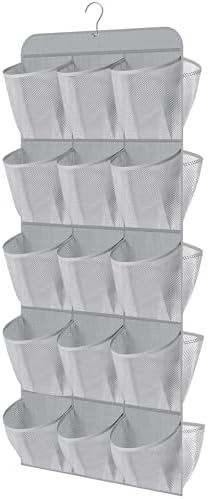
Hanging Closet Organizers (For Vertical Space)
If your closet feels cramped, it’s often because vertical space isn’t being used well.
Hanging organizers create extra sections without adding bulk. They’re useful for things like folded clothes, bags, or items that don’t hang easily.
The biggest advantage is visibility—you can see everything at once instead of stacking things on top of each other.


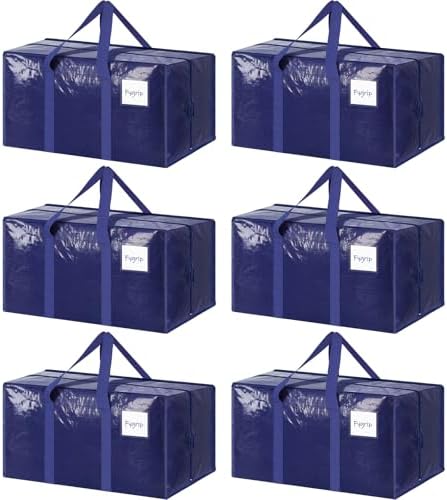
Storage Bins (For Low-Use or Seasonal Items)
Not everything needs to be within reach all the time.
Storage bins give you a way to separate what you use regularly from what you don’t.
Seasonal clothes, occasional items, or backups can be stored without taking up prime space in your closet.
This reduces visual clutter and makes your daily options much clearer.



Closet Shelf Dividers (To Keep Stacks Controlled)
Stacks of clothes tend to collapse over time.
You fold things neatly, but after a few uses, everything starts to mix together.
Shelf dividers help keep those sections contained so each category stays in place.
It’s a small detail, but it prevents you from constantly fixing and refolding things.


Over-the-Door Hooks (For Frequently Used Items)
Some items don’t need to be inside your closet at all.
Things like jackets, bags, or outfits you plan to wear soon can live on simple hooks.
This keeps them accessible without adding pressure to your main closet space.
The key is to use this for a few items only—otherwise it turns into another clutter zone.


Minimal Labeling Tools (Optional)
Labels can be helpful, especially if you’re sharing the space or using storage bins.
They remove the need to think about where things go, which makes it easier to maintain order.
But they’re optional.
If your setup already feels intuitive, you don’t need them.
They should support your system—not make it more complicated.



Final Thought
Getting dressed isn’t supposed to be complicated.
It’s one of those daily moments that should feel almost automatic.
When your closet is working against you, even simple choices start to feel heavier than they should.
But when things are easier to see, easier to reach, and more aligned with your routine, everything flows better.
Not because you changed everything.
But because you removed just enough friction to make it simple again.