Under $40 Closet Organization Ideas That Actually Work
At some point, your closet just stops feeling easy.
Not messy in an obvious way. Not completely out of control.
Just… slightly harder to use than it used to be.
You open it and pause for a second. Move a few hangers. Look for something you know is there but can’t see right away.
Nothing dramatic.
But it happens every day.
And over time, that small friction adds up.
Before: The Kind of Closet That Looks Fine From the Outside
If someone else looked at it, they probably wouldn’t see a problem.
Clothes were hung. Shelves had stacks. Things were technically “organized.”
It wasn’t chaotic.
But living with it felt different.
Because “organized” doesn’t always mean easy.
It just means everything has a place.
And sometimes… that place isn’t very practical.
Getting Dressed Took More Effort Than It Should
The biggest issue wasn’t clutter.
It was hesitation.
You’d open the closet and take a moment longer than expected.
Not because you didn’t have options…
But because it wasn’t clear what those options were.
Clothes were close together, slightly overlapping. Some pieces were hidden behind others. Some were folded in stacks that looked neat—but weren’t easy to go through.
So instead of exploring, you defaulted.
The same shirt. The same jeans. The same combinations.
Not because they were your favorites.
Just because they were the easiest to grab.
It Was Full… But Not in a Useful Way
There was space in the closet.
But it didn’t feel like it.
Because most of it was already taken.
Not just by what you wear often—but by everything else.
Items you rarely use. Clothes you keep “just in case.” Pieces that don’t really fit your current routine anymore.
Individually, none of them felt like a problem.
But together, they filled the space in a way that made everything harder to access.
So even though the closet wasn’t overflowing…
It felt full.
Visual Clutter Changes How You Use Your Closet
One thing people don’t talk about enough is how much visibility matters.
When everything is packed tightly together, your brain stops seeing individual items.
It just sees “a lot.”
And when that happens, decision-making gets harder.
You don’t want to sort through everything.
You want something quick.
So you default again.
That’s how you end up wearing a small percentage of your clothes most of the time.
Not because you don’t have variety.
But because it’s not easy to see.
The Real Problem Was Friction
At some point, it becomes clear.
The issue isn’t that you need a bigger closet.
It’s that your closet is making things harder than they need to be.
All those small actions—moving hangers, digging through stacks, adjusting things just to reach something—add up.
They slow you down.
They make getting dressed feel like more of a process than it should be.
And that’s what needs to change.
The Shift: Paying Attention to What Feels Slightly Annoying
Instead of trying to make the closet look better, the focus shifts to something simpler:
“What feels slightly annoying here?”
Not bad enough to fix immediately.
Not messy enough to bother you all day.
Just those small moments where something feels off.
Once you start noticing them, patterns show up quickly.
You see what you always move out of the way. What you avoid using. What feels just inconvenient enough to ignore.
And that’s where the real opportunity is.
Not in adding more systems.
Not in buying more storage.
Just in removing the small obstacles that make your closet harder to use than it should be.
After: Small Changes That Make Getting Dressed Easier
What happened next wasn’t a big reset.
There was no full closet overhaul, no dramatic cleanout where everything changed overnight.
Just a few small adjustments based on one simple idea:
Make the closet easier to use.
Some clothes were given a bit more space instead of being packed tightly together.
A few items that were rarely worn were moved out of the main area—not thrown away, just relocated.
Daily pieces were brought forward, where they were easier to see and reach.
At first, it didn’t even look that different.
But using the closet felt completely different.
The Closet Started Making Sense at a Glance
Before, you had to look a little longer.
Move things. Scan twice. Think for a second.
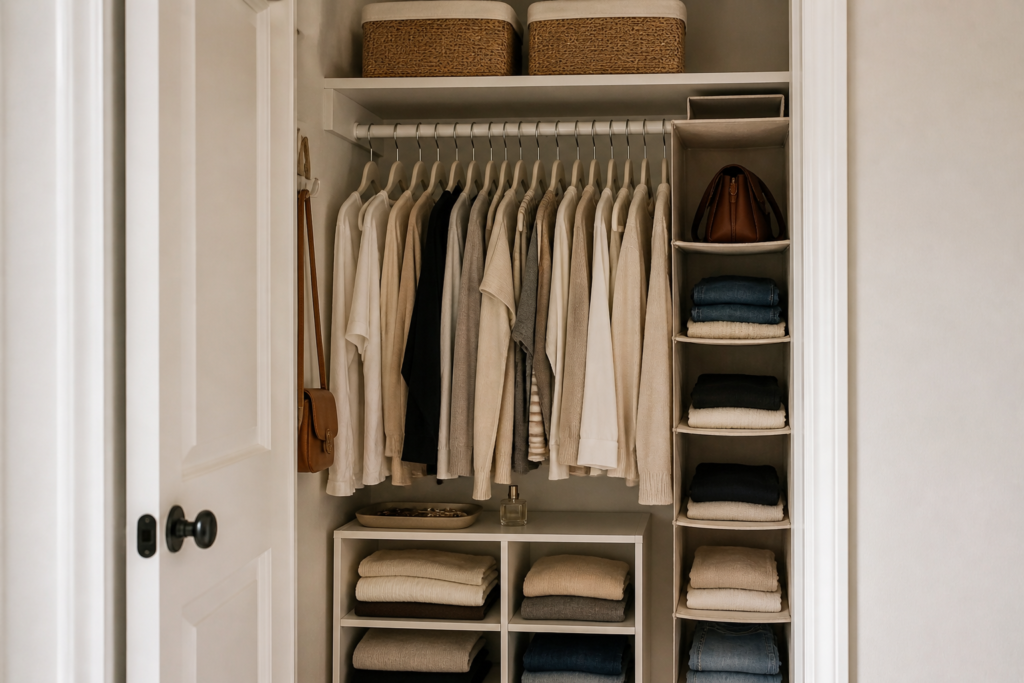
After, you open the closet and immediately understand what’s there.
Nothing is hidden behind something else.
Nothing requires effort just to see it.
And that clarity changes everything.
Because when your options are visible, choosing becomes easier.
Less Searching, More Choosing
One of the biggest shifts was how quickly decisions happened.
Before, there was always a small pause.
A moment of “where is that?” or “what else do I have?”
After, that pause got shorter.
Not because there were fewer clothes…
But because they were easier to access.
You stop searching.
You just choose.
And that makes getting dressed feel faster without actually rushing.
Space Feels Bigger When It’s Usable
This is where the “under $40” changes really show their value.
The closet didn’t get physically bigger.
But it felt like it did.
Because more of the space became usable.
When clothes aren’t crammed together, you naturally use more of what you have.
When shelves are structured, you stop avoiding them.
When drawers are organized, you don’t waste time digging through them.
So the same space starts working better.
And that’s what creates the feeling of having more room.
Daily Items Became Effortless to Reach
Another subtle but important change was prioritizing what you actually use.
Before, everything shared the same level of importance.
After, your most-used items had the best spots.
Easy to reach. Easy to see. Easy to put back.
And that removes a surprising amount of friction.
Because the things you interact with every day should never require effort.
The Closet Felt Lighter Without Removing Everything
Interestingly, nothing extreme had to happen.
You didn’t need to get rid of half your clothes.
You didn’t need a minimalist wardrobe.
Just a bit of separation between what you use often and what you don’t.
That alone made the closet feel lighter.
Less crowded. Less overwhelming.
More manageable.
What Stayed the Same (And Why That Matters)
The size didn’t change.
The structure didn’t change.
There was no expensive system installed.
Which is important.
Because it shows that most closet problems don’t require big solutions.
They require small adjustments that improve how the space works.
Less stacking. Less hiding. Less friction.
The Result: A Closet That Feels Easy Every Morning
After everything settled, the difference showed up in the simplest moments.
Opening the closet felt easier.
Getting dressed felt faster.
Putting things back didn’t feel like a chore.
And over time, that changes your entire routine.
Because when something you do every day becomes smoother…
You feel it.
Not in a dramatic way.
Just in a quiet sense that things are finally working the way they should.
Recommended Products That Actually Improve Your Closet (Under $40)
Slim Velvet Hangers (To Instantly Create More Space)
Bulky hangers take up more room than you think.
Slim velvet hangers free up space on your rod and keep clothes from slipping, making everything easier to see and access.
It’s one of the fastest and most noticeable upgrades you can make.


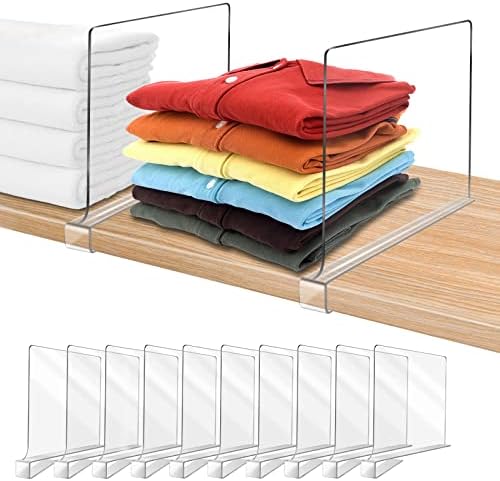
Shelf Dividers (To Keep Stacks From Falling Apart)
Folded clothes start neat… then slowly collapse.
Shelf dividers keep everything in place without extra effort.
They make shelves feel more structured and easier to maintain over time.


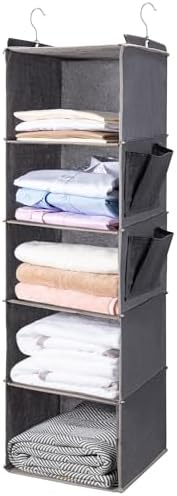
Hanging Closet Organizer (To Add Visible Storage)
Some items get lost when stacked or folded deep in shelves.
A hanging organizer gives you clear sections where everything is visible and easy to grab.
Perfect for everyday clothing you reach for often.


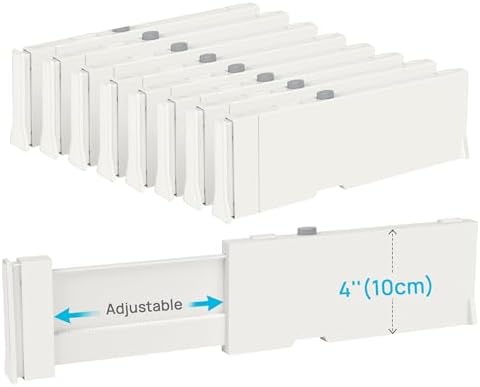
Drawer Organizers (To Control Small Item Clutter)
Socks, underwear, and accessories tend to create hidden chaos.
Drawer organizers break everything into simple sections so nothing gets mixed or lost.
You open the drawer and immediately find what you need.


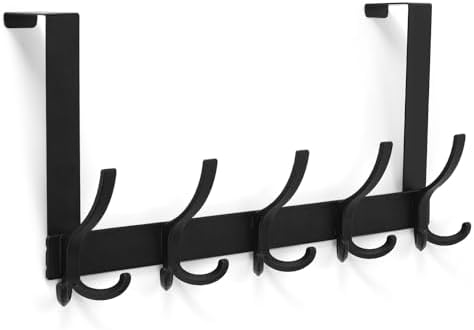
Over-the-Door Hooks (For Everyday Use Items)
Clothes you wear once but not ready to wash often end up on chairs or random spots.
Hooks give those items a place without taking up closet space.
Simple, practical, and effective.



Under-Bed Storage Containers (To Free Up Closet Space)
Seasonal or less-used clothes don’t need to stay in your main closet.
Under-bed storage keeps them accessible but out of the way.
This makes your closet feel lighter and more focused on what you actually wear.


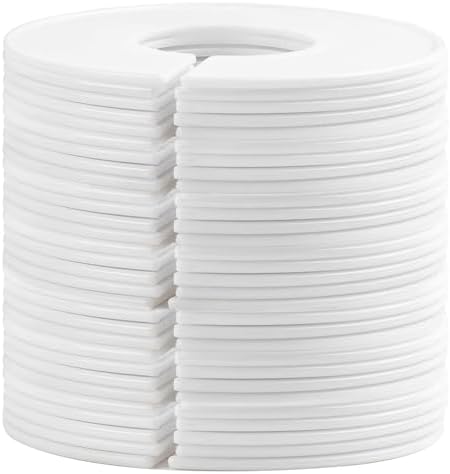
Closet Rod Dividers (To Create Simple Sections)
Instead of one crowded rod, dividers create clear zones.
Shirts, jackets, work clothes—everything has a defined space.
That clarity makes your closet easier to navigate every day.


Final Thought
You don’t need a perfect closet.
You need a functional one.
Most improvements don’t come from spending more or adding more systems.
They come from making things easier to see, easier to reach, and easier to use.
And when that happens…
Even a simple closet can feel like an upgrade.